
Roger Bannister Biography Quotes 30 Report mistakes
| 30 Quotes | |
| Known as | Sir Roger Gilbert Bannister |
| Occup. | Athlete |
| From | United Kingdom |
| Born | March 23, 1929 Harrow, England |
| Age | 96 years |
| Cite | |
Citation Formats
APA Style (7th ed.)
Roger bannister biography, facts and quotes. (2026, February 11). FixQuotes. https://fixquotes.com/authors/roger-bannister/
Chicago Style
"Roger Bannister biography, facts and quotes." FixQuotes. February 11, 2026. https://fixquotes.com/authors/roger-bannister/.
MLA Style (9th ed.)
"Roger Bannister biography, facts and quotes." FixQuotes, 11 Feb. 2026, https://fixquotes.com/authors/roger-bannister/. Accessed 22 Mar. 2026.
Early Life and Background
Roger Gilbert Bannister was born on March 23, 1929, in Harrow, Middlesex, and grew up in wartime England, a landscape of rationing, disrupted routines, and long walks that quietly hardened a generation. His family life was marked by aspiration rather than privilege - a household that valued education, self-control, and the idea that talent should be disciplined into usefulness. In the background was a social world still stratified by class, where professional sport carried a faint whiff of frivolity compared with medicine, law, or the civil service.The war years shaped his body and his temperament. Bannister later recalled the enforced simplicity of daily movement - “I lived on the top of one hill and the school was at the top of another hill. Nobody ever went to school by car - we didn't have any cars during the war. So that to and from school was itself a training”. It was less a romantic origin story than a biography of constraints: the ordinary miles of a boy walking through blackout-era streets, learning stamina before he learned celebrity.
Education and Formative Influences
He attended University College School in London and then Exeter College, Oxford, where he read medicine while training in the intensely amateur culture of British athletics. This double life became his defining crucible: the lab and lecture hall on one side, the track on the other, each sharpening the other. The Oxford milieu offered tradition and rivalry, but also a practical skepticism about sporting heroics; Bannister absorbed the era's belief that character was proven under pressure, and that achievement meant little if it cost one the future.Career, Major Works, and Turning Points
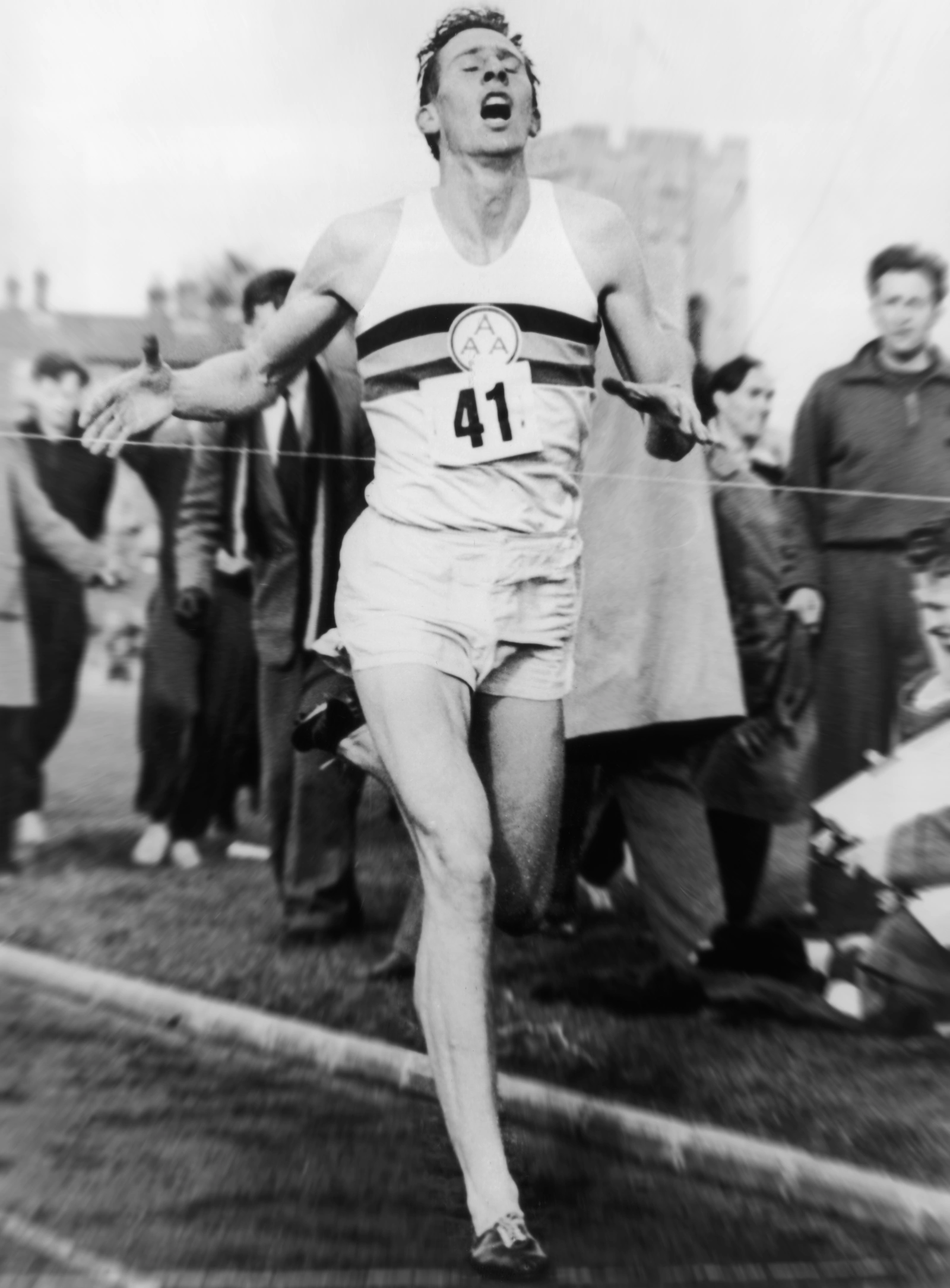
Bannister emerged as a top middle-distance runner in the early 1950s, representing Great Britain at the 1952 Helsinki Olympics and winning Commonwealth (then Empire) honors, but his career turned on a single, engineered afternoon. On May 6, 1954, at Oxford's Iffley Road Track, with Chris Brasher and Chris Chataway pacing, he ran the first sub-four-minute mile in 3:59.4 - a time achieved not through full-time training but through carefully rationed sessions squeezed between hospital work and study. Within weeks John Landy bettered the record, and Bannister, rather than chase a professional afterlife, retired from elite racing in 1954, choosing the longer arc of medicine over the shorter burn of fame.Philosophy, Style, and Themes
Bannister's inner life was defined by a tension between self-transcendence and self-governance. He never sold the myth that he was destined; he emphasized late arrival and deliberate construction: “I came from such a simple origin, without any great privilege, and I would say I also wanted to make a mark. It wasn't until I was about 15 that I appeared in a race”. The psychological subtext is important - an adolescent drive to locate identity through mastery, yet wary of being trapped by it, a temperament that sought proof without surrendering to vanity.His running style was similarly clinical: experimental, economical, and intensely aware of bodily mechanics and pain. He treated speed as something that could be designed, not merely wished into existence, and spoke with the small-instrument precision of a future physician: “Your spikes, which were really quite long then, would catch the material of the track and your shoe would get heavier. I was simply filing them down and rubbing some graphite on the spikes. I thought I would run more effectively”. Underneath that tinkering was a hard ethic of will - the belief that victory is often a private negotiation with discomfort: “The man who can drive himself further once the effort gets painful is the man who will win”. Bannister's defining theme, then, was not merely breaking a barrier but refusing to let the barrier define him - converting ambition into method, and method into freedom.
Legacy and Influence
Bannister became a neurologist and medical academic, eventually serving as Master of Pembroke College, Oxford, and as a public figure who embodied postwar Britain's ideal of the scholar-athlete. The four-minute mile, once described as physiologically impossible, proved instead to be psychologically contagious; after 1954, the barrier fell repeatedly, and his performance became a case study in pacing, preparation, and belief. Yet his deeper influence lies in the life he chose afterward: a model of achievement that treats fame as incidental, insisting that the mind that can orchestrate a record can also submit to the slower disciplines of medicine, institution-building, and service.Our collection contains 30 quotes written by Roger, under the main topics: Motivational - Dark Humor - Music - Doctor - Sports.
Source / external links