
Aaron Eckhart Biography Quotes 33 Report mistakes
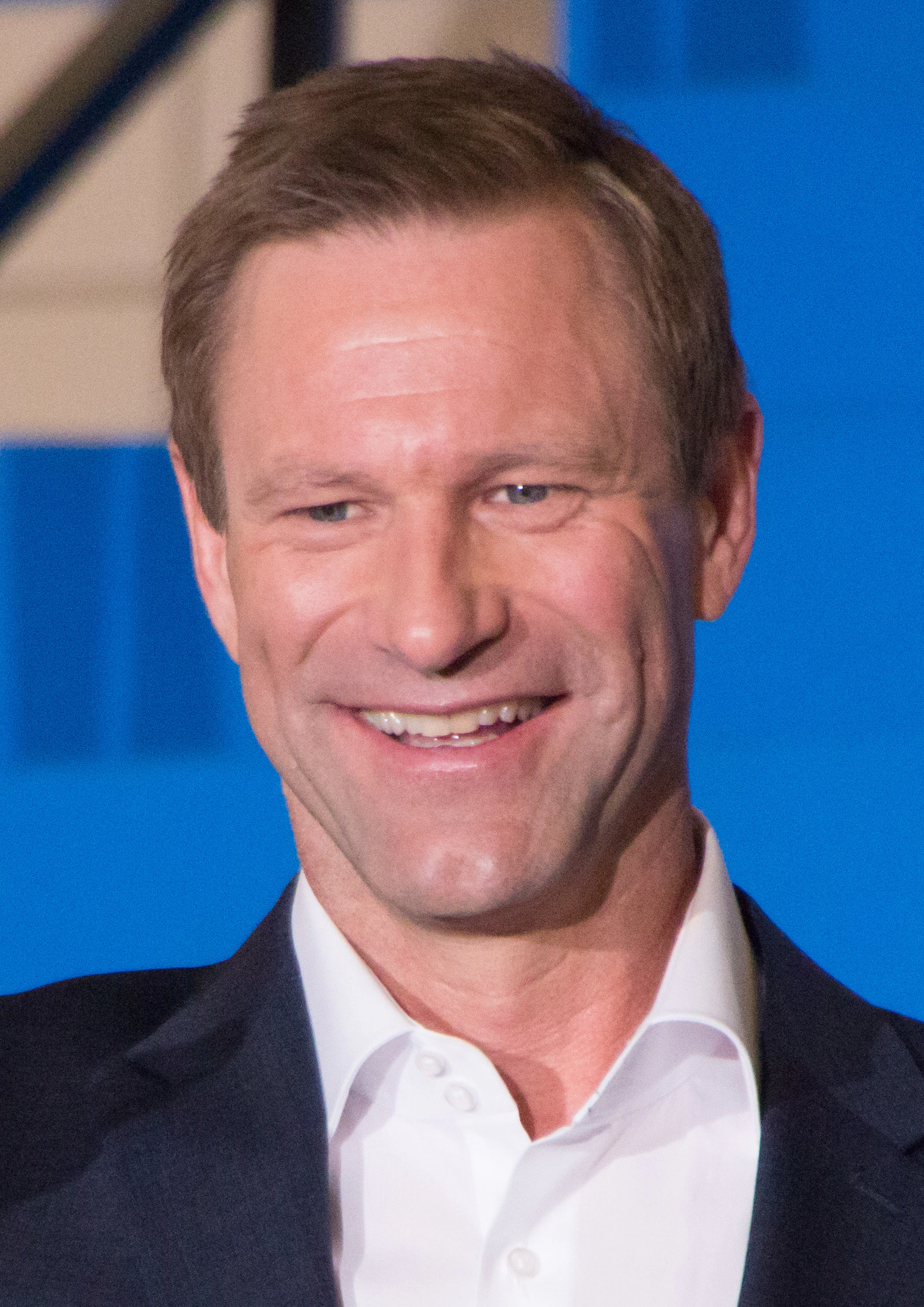
| 33 Quotes | |
| Born as | Aaron Edward Eckhart |
| Occup. | Actor |
| From | USA |
| Spouse | Megan Fox (m. 2009–2015) |
| Born | March 12, 1968 Cupertino, California, USA |
| Age | 58 years |
| Cite | |
Citation Formats
APA Style (7th ed.)
Aaron eckhart biography, facts and quotes. (2026, February 11). FixQuotes. https://fixquotes.com/actors/aaron-eckhart/
Chicago Style
"Aaron Eckhart biography, facts and quotes." FixQuotes. February 11, 2026. https://fixquotes.com/actors/aaron-eckhart/.
MLA Style (9th ed.)
"Aaron Eckhart biography, facts and quotes." FixQuotes, 11 Feb. 2026, https://fixquotes.com/actors/aaron-eckhart/. Accessed 27 Mar. 2026.
Early Life and Education
Aaron Edward Eckhart was born on March 12, 1968, in Cupertino, California. He grew up in a family that valued creativity and practicality in equal measure; his mother, Mary Martha, was a writer, and his father, James, worked as a computer executive. Eckhart is the youngest of three brothers, and the family lived abroad for stretches of his childhood, including time in the United Kingdom and Australia. Those moves broadened his view of the world and exposed him to different school systems and cultural settings. In Sydney he attended an American school and found his way to the stage through school productions, an experience that made acting feel both immediate and attainable. He left high school before graduating but later earned a GED, a step that allowed him to continue his education.Raised in The Church of Jesus Christ of Latter-day Saints, Eckhart has spoken about the grounding influence of his upbringing, even as his life later centered on film sets and theater stages. He returned to the United States for college and eventually enrolled at Brigham Young University, where he earned a Bachelor of Fine Arts degree. The single most consequential relationship of his student years was with playwright and filmmaker Neil LaBute. Eckhart performed in LaBute's stage work and learned a brutally honest style of character excavation that would become a hallmark of his screen presence.
Stage Beginnings and Breakthrough
After college, Eckhart spent time navigating the uncertainties that accompany a young actor's life: auditions, small parts, and commercial work that paid the bills. He carried forward lessons from workshops and stage performances, including material directed by Neil LaBute. That mentorship led directly to his breakthrough when LaBute cast him in the feature film In the Company of Men (1997). Eckhart's stark, chilling portrayal of Chad, a manipulative office worker, became one of the defining performances in American independent cinema of the 1990s. The film drew critical acclaim across festivals and critics groups and gave Eckhart recognition from the Independent Spirit Awards. With that single role he moved from an unknown to a compelling on-screen force, the kind of actor trusted to animate difficult, ethically charged material.He solidified that momentum by reuniting with LaBute on Your Friends & Neighbors (1998), further exploring flawed masculinity and conversational combat. These early collaborations built his reputation as an actor who could carry narratives driven more by character and moral tension than by plot mechanics.
Widening Recognition
Hollywood took notice, and Eckhart began to find a place within major studio films without abandoning the intelligence of his indie work. Steven Soderbergh cast him opposite Julia Roberts in Erin Brockovich (2000), where Eckhart played George, the biker neighbor and boyfriend whose unvarnished warmth provided a counterbalance to the film's legal crusade. He took on a very different tone in The Pledge (2001) with Jack Nicholson, playing a young detective under gathering moral strain, and then headlined the science-fiction adventure The Core (2003) as a geophysicist tasked with saving the planet.He navigated thrillers and dramas with equal ease, playing a corporate villain in Paycheck (2003) and shifting to mordant satire in Thank You for Smoking (2005). As Nick Naylor, a charismatic lobbyist for Big Tobacco directed by Jason Reitman, Eckhart delivered a career-defining performance that earned a Golden Globe nomination. He followed with the formally inventive Conversations with Other Women (2005) alongside Helena Bonham Carter, Brian De Palma's noir The Black Dahlia (2006), and No Reservations (2007) opposite Catherine Zeta-Jones. That blend of mainstream and offbeat choices showed a versatility that casting directors and filmmakers prized.
Leading Roles and Franchise Work
The Dark Knight (2008) propelled Eckhart to global fame. Under Christopher Nolan's direction, he portrayed Gotham's righteous district attorney Harvey Dent and, after the character's ruin, his scarred alter ego Two-Face. Playing opposite Christian Bale and Heath Ledger, Eckhart crafted a tragic arc that grounded the film's moral stakes; his Dent was not merely a foil but the emotional pivot point for Nolan's crime epic. The film's success and critical esteem placed Eckhart among the most recognizable actors of his generation.He continued to test different scales of storytelling. In the romantic drama Love Happens (2009) with Jennifer Aniston, the grief-laden Rabbit Hole (2010) with Nicole Kidman, and the war-on-the-streets sci‑fi Battle: Los Angeles (2011), he alternated between sensitive, inward-facing roles and physically demanding leadership parts. With Gerard Butler in Olympus Has Fallen (2013) and its sequel London Has Fallen (2016), he played President Benjamin Asher, grounding the action with a mix of vulnerability and resolve. He also ventured into genre reimagining with I, Frankenstein (2014), embracing the physical transformation and mythic stakes of the title role.
Collaboration and Craft
Eckhart's career is marked by collaborations with distinctive directors and actors. Beyond LaBute, Soderbergh, Nolan, De Palma, and Reitman, he worked with Clint Eastwood on Sully (2016), portraying First Officer Jeff Skiles opposite Tom Hanks. The film's restrained, procedural approach suited Eckhart's taste for grounded characterization. He later played trainer Kevin Rooney in Bleed for This (2016) with Miles Teller, diving into the specifics of boxing culture and the lived-in details of a veteran cornerman.His collaborations with co-stars such as Julia Roberts, Nicole Kidman, Jennifer Aniston, Christian Bale, Heath Ledger, Tom Hanks, and Gerard Butler chart a path through contemporary American cinema that spans prestige drama, intimate romance, and action spectacle. Across that range, Eckhart's through-line is the creation of characters whose charm is rarely uncomplicated and whose convictions are tested, whether he is satirizing spin in Thank You for Smoking or tracing the corruption of idealism in The Dark Knight.
Later Work
In the latter 2010s and beyond, Eckhart maintained a steady presence across studio projects and independent features. Highlights include The Rum Diary (2011), a tale of expatriate ambition and compromise, and the historical war film Midway (2019), where he contributed to a large ensemble portraying pivotal figures in the Pacific theater. He also led thrillers such as Erased (also released as The Expatriate, 2012), extending his portfolio of resolute, high-stakes protagonists. This period underscored his reliability as a lead and his value as a supporting player who can deepen a film's dramatic spine.Eckhart's choices reflect an actor comfortable with risk: minimalist two-handers, satirical character studies, and effects-driven action. He has moved between larger-than-life premises and intimately scaled stories without losing the specificity of gesture and cadence that make his characters readable.
Personal Life and Public Image
Eckhart has kept his private life largely out of the spotlight. He has spoken respectfully about his parents' influence, crediting his mother's commitment to writing and his father's pragmatic discipline for shaping his work ethic. He has acknowledged the lasting impact of his upbringing in the Latter-day Saint faith, even as his professional life has taken him far from his early communities. Colleagues frequently describe him as disciplined and prepared, a collaborator who is attentive to directors' notes and generous with scene partners.Although not a frequent presence on social media, Eckhart has built a public image through the work itself: a craftsman's reputation anchored by a handful of defining roles. From Chad in In the Company of Men to Nick Naylor in Thank You for Smoking and Harvey Dent in The Dark Knight, he has portrayed men whose choices carry moral consequence, and he has done so with an understated physicality and a clear, resonant voice. That combination of presence and restraint has made him a reliable center of gravity, whether as a leading man or as part of an ensemble.
Through decades of sustained work, Aaron Eckhart has remained aligned with filmmakers and co-stars who value character-driven storytelling. His path from a California childhood through international moves, formative years with Neil LaBute, and a filmography that bridges independent features and global blockbusters reflects a career shaped by curiosity, rigor, and an unshowy commitment to the craft of acting.
Our collection contains 33 quotes written by Aaron, under the main topics: Motivational - Justice - Love - Sarcastic - Writing.
Other people related to Aaron: Jason Patric (Actor), Bruce Greenwood (Actor)
Source / external links