
Al Pacino Biography Quotes 9 Report mistakes
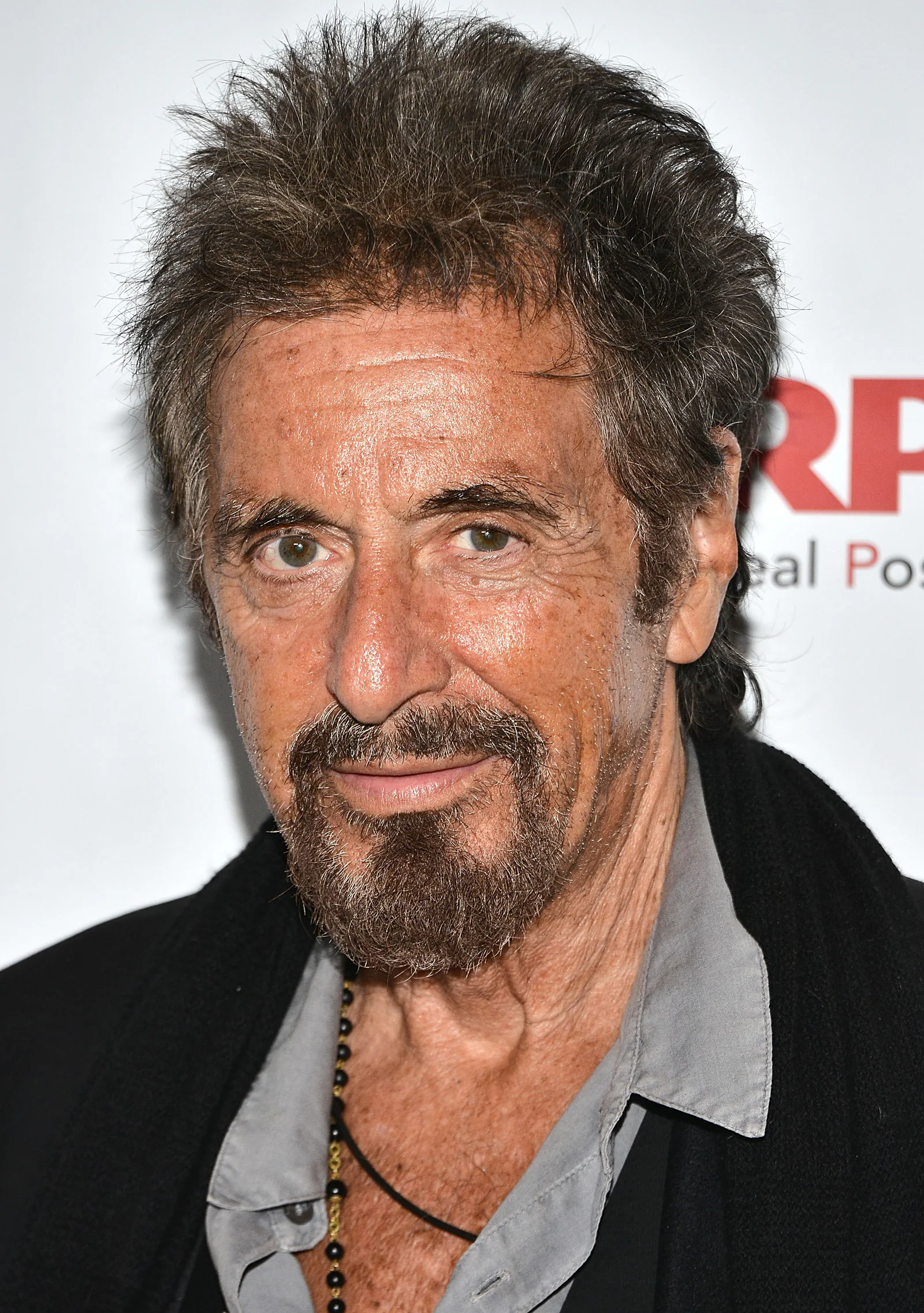
| 9 Quotes | |
| Born as | Alfredo James Pacino |
| Occup. | Actor |
| From | USA |
| Born | April 25, 1940 East Harlem, New York City |
| Age | 85 years |
| Cite | |
Citation Formats
APA Style (7th ed.)
Al pacino biography, facts and quotes. (2026, February 1). FixQuotes. https://fixquotes.com/actors/al-pacino/
Chicago Style
"Al Pacino biography, facts and quotes." FixQuotes. February 1, 2026. https://fixquotes.com/actors/al-pacino/.
MLA Style (9th ed.)
"Al Pacino biography, facts and quotes." FixQuotes, 1 Feb. 2026, https://fixquotes.com/actors/al-pacino/. Accessed 18 Mar. 2026.
Early Life and Background
Alfredo James Pacino was born on April 25, 1940, in New York City, the only child of Italian-American parents, Salvatore Pacino and Rose Gerardi. When the marriage ended early, he was raised largely by his mother and her parents in the South Bronx, a hard-pressed borough shaped by postwar migration, tight-knit immigrant life, and street-level volatility. The neighborhood gave him a quick ear for cadence and bravado, and a private instinct for watching people - the raw material of an actor who would later turn listening into menace, charm, and dread.As a teenager he drifted between school and the streets, drawn to the movies and the theater as escape and as proof that transformation was possible without erasing where you came from. The South Bronx in the 1950s and early 1960s was a place where toughness was currency and sensitivity could be liability; Pacino learned to mask feeling while storing it. That duality - the public shell and the inner pressure - would become one of his signatures onstage and on screen.
Education and Formative Influences
Pacino pursued acting seriously through New York training grounds rather than a conventional college path, studying at the HB Studio and winning a place at Lee Strasberg's Actors Studio, where the Method tradition prized emotional truth, sense memory, and behavioral detail. He absorbed the city theater ecosystem of the 1960s - repertory stages, experimental downtown energy, and the competition of hungry peers - while also learning discipline through rehearsal rooms that demanded craft, not charisma. Stage work, including early off-Broadway roles and the breakout The Indian Wants the Bronx (which won him an Obie Award), refined his ability to project intimacy to the back row.Career, Major Works, and Turning Points
Pacino's film breakthrough arrived with Francis Ford Coppola's The Godfather (1972), where his Michael Corleone moved from wary outsider to controlled predator with chilling inevitability; the performance made him a defining face of New Hollywood. The 1970s became a run of high-wire character studies - Serpico (1973), The Godfather Part II (1974), Dog Day Afternoon (1975), and ...And Justice for All (1979) - each calibrated to the era's distrust of institutions and fascination with antiheroes. After uneven stretches in the 1980s, he reasserted screen dominance with Scarface (1983) gaining cult stature, then found a late-career renaissance through Dick Tracy (1990), Glengarry Glen Ross (1992), Scent of a Woman (1992, Academy Award), and Heat (1995). Alongside film he repeatedly returned to theater, including landmark Shakespeare performances and a long relationship with David Mamet's work, keeping his roots in live craft even as celebrity grew.Philosophy, Style, and Themes
Pacino's inner life, as it surfaces in interviews and performances, is built around effort, insecurity, and an almost superstitious respect for the moment. “You're only as good as your last performance”. That credo reads less like bravado than a working actor's anxiety - a fear that talent is not a possession but a daily negotiation. It helps explain why he oscillates between understatement and eruption: the calm is preparation, the flare-up is the wager, a gamble that truth will break through technique before the scene ends.His style merges Method intensity with a streetwise instinct for status games: who holds the room, who fakes it, who is about to crack. “It's easy to fool the eye but it's hard to fool the heart”. This is the engine of his best roles - Michael Corleone's polite smile with deadened feeling behind it, Sonny Wortzik's desperate performance of control in Dog Day Afternoon, the salesman swagger in Glengarry Glen Ross that collapses into naked need. Even his humor carries self-diagnosis and self-mockery, as if the actor is watching the actor: “Vanity is my favourite sin”. In Pacino's work, pride is rarely triumphant; it is a defense against abandonment, poverty, anonymity - the old Bronx fears dressed up as power.
Legacy and Influence
Pacino endures as one of America's central actor-authors of the late 20th century, a performer who helped shift Hollywood toward psychologically exact, morally complicated protagonists and whose cadence, stare, and sudden crescendos became part of cultural shorthand. He influenced generations of actors balancing stage discipline with camera intimacy, and he normalized the idea that a movie star could remain, at core, a repertory player committed to text and rehearsal. Across gangster epics, courtroom tirades, love stories, and Shakespeare, his legacy is the same hard promise: that performance can be both disguise and confession, and that the audience will recognize the confession even when the character is lying.Our collection contains 9 quotes written by Al, under the main topics: Witty One-Liners - Motivational - Truth - Love - Movie.
Other people related to Al: Stella Adler (Actress), Javier Bardem (Actor), Joseph Stefano (Writer), Karen Allen (Actress), William Friedkin (Director), Mary Elizabeth Mastrantonio (Actress), Talia Shire (Actress), Xander Berkeley (Actor), Mike Nichols (Director), Michael Mann (Director)
Frequently Asked Questions
- Al Pacino height: About 5 ft 7 in (170 cm).
- Al Pacino Godfather: Played Michael Corleone in The Godfather trilogy (1972–1990).
- What is Al Pacino net worth? Reported around $120 million (estimate).
- Julie Pacino: His daughter, Julie Marie Pacino, a filmmaker (born 1989).
- Al Pacino wife: Never married.
- How old is Al Pacino? He is 85 years old
Source / external links