
Andrew McCarthy Biography Quotes 12 Report mistakes
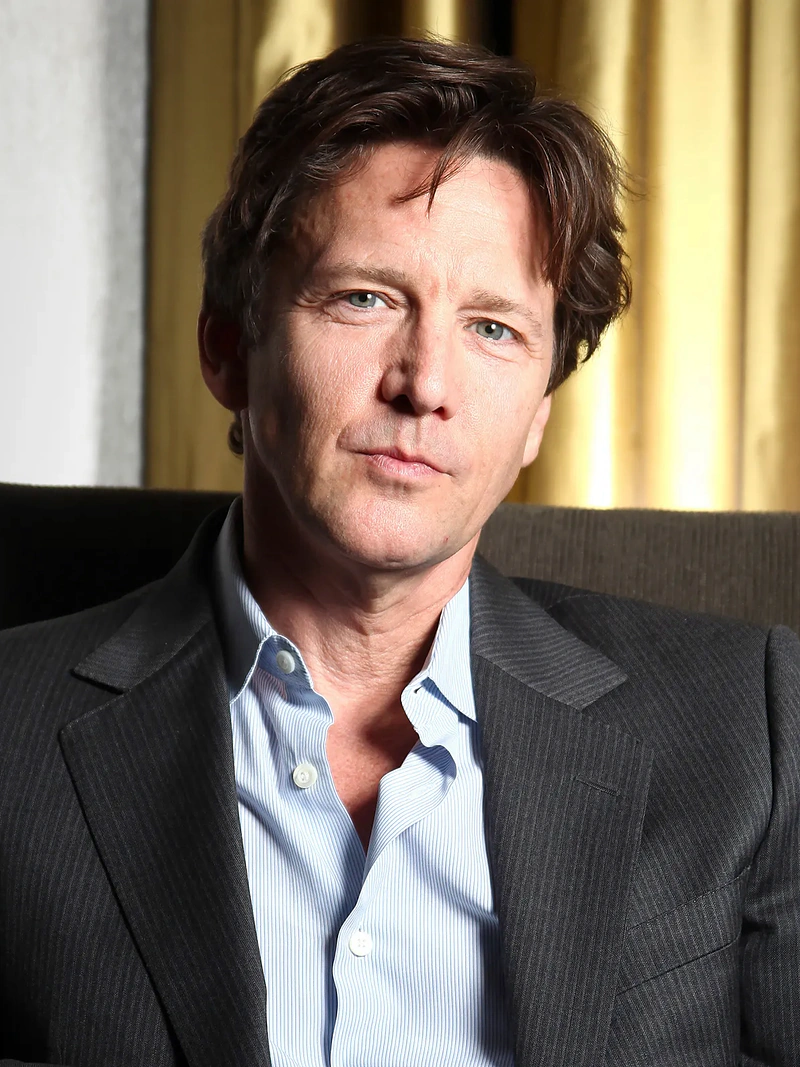
Attr: Seattle Times
| 12 Quotes | |
| Occup. | Actor |
| From | USA |
| Born | November 29, 1962 |
| Age | 63 years |
| Cite | |
Citation Formats
APA Style (7th ed.)
Andrew mccarthy biography, facts and quotes. (2026, February 11). FixQuotes. https://fixquotes.com/actors/andrew-mccarthy/
Chicago Style
"Andrew McCarthy biography, facts and quotes." FixQuotes. February 11, 2026. https://fixquotes.com/actors/andrew-mccarthy/.
MLA Style (9th ed.)
"Andrew McCarthy biography, facts and quotes." FixQuotes, 11 Feb. 2026, https://fixquotes.com/actors/andrew-mccarthy/. Accessed 5 Mar. 2026.
Early Life and Background
Andrew Thomas McCarthy was born November 29, 1962, in Westfield, New Jersey, a commuter-belt town shaped by postwar affluence, Catholic parishes, and the proximity of New York media. His childhood unfolded in the long shadow of Vietnam and Watergate, when American adulthood looked newly fallible and public narratives were being rewritten in real time. That atmosphere - institutions questioned, identities in flux - would later echo in the wary, self-scrutinizing young men he played.Family life was not cinematic glamour but suburban pressure: a household marked by expectations of steadiness and achievement, and a temperament drawn to observation. McCarthy has often seemed less interested in swagger than in the private calculus beneath it - how people decide what they can live with. Even before fame, he carried the look of someone listening while the room talks, then revising his own role in the story afterward.
Education and Formative Influences
He trained at the New York University Tisch School of the Arts, absorbing a city-based acting culture that prized craft over celebrity and a 1970s-into-1980s independent-film sensibility still haunted by Scorsese, Cassavetes, and theater realism. New York in that era also meant ambition under fluorescent light - auditions, survival jobs, and the lesson that a career is built by incremental choices rather than a single discovery.Career, Major Works, and Turning Points
McCarthy broke through in the mid-1980s, becoming one of the era's defining faces of youth-as-uncertainty: St. Elmo's Fire (1985) made him part of the so-called Brat Pack, while Pretty in Pink (1986) and Weekend at Bernie's (1989) showed his range from romantic unease to broad comedy. In the 1990s he pivoted toward steadier character work across film and television, including the long-running series The Dead Zone (2002-2007) and later recurring roles on shows such as Gossip Girl and Orange Is the New Black. A major turning point came when he expanded from actor to author-director: he published the travel memoir The Longest Way Home (2010) and moved decisively behind the camera, directing episodes of series like Orange Is the New Black, Blacklist, and The Sinner - a second career built on perspective rather than visibility.Philosophy, Style, and Themes
McCarthy's on-screen persona, at its best, is not triumphal but interrogative: men caught between appetite and ethics, yearning and performance. He is drawn to the paradox that moral certainty can be destructive, a fascination that fits both the idealism-and-regret of his 1980s roles and the darker procedural worlds he later directed. “The idea that we cause harm by doing what we perceive to be the right thing, that's another theme that interests me. Because most people don't intend to cause harm, they cause harm by doing the right thing - in their mind”. In his work, conflict often arrives not from villains but from people protecting their self-image.That preoccupation hardens into a psychological lens: righteousness as a blindfold, self-justification as a survival skill. “Nobody thinks that they're evil or bad, they think that they're doing the right thing”. As a director and writer, he also speaks like a craftsman who distrusts the first version of any story, insisting on rigor and adaptation under pressure: “I thought I understood the story very well, because I've lived with it for so long. But movies change and take on a life of their own once they start to be made, and you have to keep your eye on the real ball, not the ball that's in your head”. The throughline is humility before complexity - of character, of narrative, of the gap between intention and outcome.
Legacy and Influence
McCarthy endures as more than an emblem of 1980s Hollywood youth; his arc models reinvention without disowning the past. For audiences, he remains a touchstone of that decade's anxious romanticism, the face of a generation learning that adulthood is compromise. For peers and younger filmmakers, his later career underscores a different kind of longevity: shifting from star image to authorship, using experience to guide ensembles, and treating storytelling as a moral inquiry. His legacy is the quiet insistence that popularity is a phase, but craft - and the willingness to question one's own certainty - can be a lifelong identity.Our collection contains 12 quotes written by Andrew, under the main topics: Ethics & Morality - Writing - Deep - Movie - Happiness.
Other people related to Andrew: Judd Nelson (Actor), Kim Cattrall (Actress), Ted Kotcheff (Director), Bret Easton Ellis (Author)
Frequently Asked Questions
- Andrew McCarthy wife: He married Dolores Rice in 2011, and they have children.
- Andrew McCarthy height: Andrew McCarthy is commonly listed as about 5 ft 8 in (173 cm) tall, though exact measurements are not officially verified.
- Andrew McCarthy photographer: He is also known for travel writing and directing, but he is not widely documented as a professional photographer.
- Andrew McCarthy Condor: He appeared in the TV series "Condor" (2018–2020), playing the character Bob Partridge.
- Andrew McCarthy young: He rose to fame in the 1980s as part of Hollywood’s “Brat Pack,” gaining attention in films like "St. Elmo's Fire" and "Pretty in Pink".
- Andrew McCarthy movies: His best-known films include "St. Elmo's Fire" (1985), "Pretty in Pink" (1986), and "Weekend at Bernie's" (1989).
- Andrew McCarthy National Review: The actor Andrew McCarthy is not affiliated with National Review; that outlet is associated with a different Andrew C. McCarthy, a legal and political writer.
- How old is Andrew McCarthy? He is 63 years old
Source / external links