
Anne Hathaway Biography Quotes 3 Report mistakes
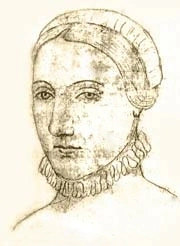
| 3 Quotes | |
| Occup. | Actress |
| From | England |
| Spouse | William Shakespeare |
| Born | January 1, 1555 Shottery, Warwickshire, England |
| Died | August 6, 1623 Stratford-upon-Avon, Warwickshire, England |
| Aged | 68 years |
| Cite | |
Citation Formats
APA Style (7th ed.)
Anne hathaway biography, facts and quotes. (2026, February 11). FixQuotes. https://fixquotes.com/actors/anne-hathaway/
Chicago Style
"Anne Hathaway biography, facts and quotes." FixQuotes. February 11, 2026. https://fixquotes.com/actors/anne-hathaway/.
MLA Style (9th ed.)
"Anne Hathaway biography, facts and quotes." FixQuotes, 11 Feb. 2026, https://fixquotes.com/actors/anne-hathaway/. Accessed 5 Mar. 2026.
Early Life and Background
Anne Hathaway was born in 1556 (often recorded as 1556/1557; a 1555-01-01 birth date is not supported by surviving parish records) in Shottery, a hamlet just outside Stratford-upon-Avon in Warwickshire, England. She grew up in the orbit of a prosperous rural household: her father, Richard Hathaway, was a well-to-do farmer, and the Hathaway family held land that placed them among the sturdier middling sort of Elizabethan Warwickshire. This was a countryside shaped by the rhythms of harvest and church calendar, but also by the pressure of enclosure, periodic dearth, and a legal culture that made property, reputation, and marriage contracts matters of public record.Hathaway entered history less through her own papers than through the paper-trail of marriage, litigation, and wills that survived her. In November 1582 she married William Shakespeare, then eighteen, when she was about twenty-six and already pregnant with their first child, Susanna (baptized 1583). Twins, Hamnet and Judith, followed in 1585. The marriage began in a community that read early pregnancy as urgency and potential scandal, and it matured under an arrangement that likely meant long separations once Shakespeare established himself in London. Hathaway lived most of her life in Stratford, anchoring a household whose public face was her husband's meteoric career but whose private stability depended on someone managing servants, rents, food stores, and kinship obligations.
Education and Formative Influences
No evidence survives of formal schooling for Hathaway, and in her station literacy was possible but not assured; what can be said with confidence is that she was formed by the domestic expertise and customary law that governed women in provincial England - household accounting, food production and preservation, childbirth and childrearing, and the social intelligence needed to navigate parish life. Her imaginative world would have been fed by sermons, seasonal festivity, and the oral culture of proverb, ballad, and local story; in such settings, a woman learned not only piety and restraint but also the arts of negotiation, endurance, and tact, especially when a husband's work or ambition pulled him away from home.Career, Major Works, and Turning Points
If Hathaway was an actress, it was not in the modern sense. Women did not perform professionally on the public stage in Shakespeare's England; female roles were played by boys, and acting was a male guild-like occupation tied to company patronage and often to London. Hathaway's "career", insofar as the record allows, was the labor of maintaining a household while her husband moved between provincial roots and metropolitan success: the purchase of New Place in 1597 placed the family among Stratford's leading residents, and Shakespeare's later investments in land and tithes suggest a strategy of converting theatrical earnings into durable status. The emotional hinge of her life may have been the death of her son Hamnet in 1596, a loss that coincided with Shakespeare's deepening engagement with grief, inheritance, and memory. In 1616, Shakespeare died; Hathaway survived him seven years, dying in 1623 and being buried in Holy Trinity Church, Stratford, near her husband.Philosophy, Style, and Themes
Hathaway left no memoir, letters, or attributed speeches, so any inner portrait must be built from context: the constraints on women's public voice, the legal shape of marriage and property, and the small but telling traces in wills and local memory. The famous bequest of the "second best bed" in Shakespeare's will has often been sensationalized as an insult; yet in early modern households the marital bed could be the most intimate and symbolically charged object, distinct from the "best" bed reserved for guests. Read through that lens, the bequest suggests a private history: a marriage that survived separation, a shared domestic space, and a recognition of a wife's claim to what was most personal rather than most marketable.To illuminate her psychology for a modern audience, it helps to contrast her world with the anachronistic quotations often circulated under her name. The sentiment “I believe I've always been a big believer in equality. No one has ever been able to tell me I couldn't do something because I was a girl”. is not Elizabethan in origin, yet it captures a useful tension: Hathaway lived in a society that defined women's legal identity through coverture, but daily survival required competence, agency, and quiet authority. Likewise, “I have no aspirations of world domination through the pop charts. None at all”. is modern, but it can be repurposed as a lens on her probable self-conception: not a seeker of public acclaim, but a custodian of the private sphere where reputation, solvency, and kin continuity were won or lost. In that sense, her "themes" are the untheatrical ones - marriage under scrutiny, motherhood under risk, and the long discipline of keeping a household coherent while fame accrues elsewhere.
Legacy and Influence
Anne Hathaway endures as a figure of interpretive gravity: the spouse at the edge of the Shakespearean archive, simultaneously obscured and indispensable. Feminist historians and biographers have used her to ask sharper questions about early modern marriage, women's work, and the cost of artistic vocation on those who keep the home functioning. In popular culture she is repeatedly reimagined - wronged wife, pragmatic partner, romantic confidante - because the silence of the sources invites projection; yet her real significance lies in reminding readers that the Elizabethan theater's triumphs were underwritten by provincial households, female labor, and the social networks that allowed a playwright to leave home, return, and convert ephemeral applause into enduring property and name.Our collection contains 3 quotes written by Anne, under the main topics: Witty One-Liners - Music - Equality.
Other people related to Anne: Christopher Nolan (Director), Ang Lee (Director), Stanley Tucci (Actor), Tom Hooper (Director), Amanda Seyfried (Actress), Rebecca Miller (Director), Jonathan Demme (Director), Meg Cabot (Author), Adrian Grenier (Actor), Larry Miller (Comedian)
Source / external links