
Antonio Banderas Biography Quotes 12 Report mistakes
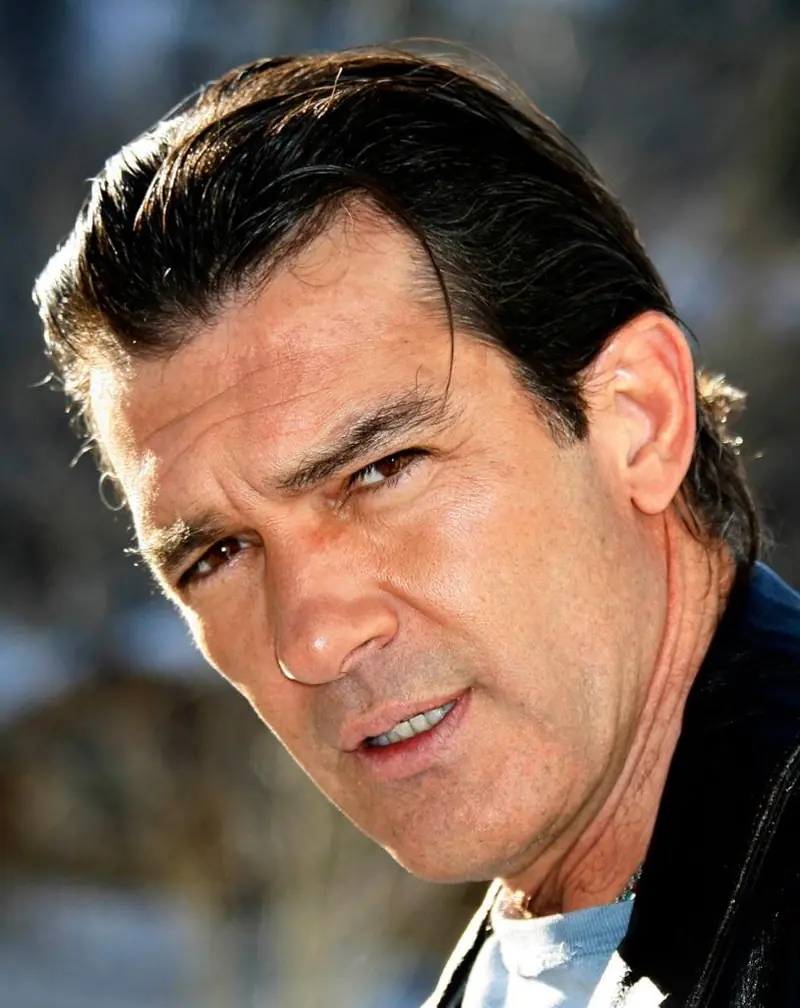
| 12 Quotes | |
| Born as | José Antonio Domínguez Banderas |
| Occup. | Actor |
| From | Spain |
| Born | August 10, 1960 Málaga, Spain |
| Age | 65 years |
Jose Antonio Dominguez Banderas was born on August 10, 1960, in Malaga, Andalusia, Spain, a port city whose Catholic processions, street theater, and working-class directness formed an early sense of performance as something public and physical. His father, Jose Dominguez, served in the Guardia Civil, and his mother, Ana Banderas, was a schoolteacher; from them he absorbed both discipline and a taste for story and language. He grew up under the long shadow of late-Franco Spain, where modern celebrity culture existed but ambition still carried provincial limits.
As a boy he dreamed less of cinema than of sport, training seriously as a footballer until a broken foot as a teenager rerouted his competitive energy toward the stage. The injury did not simply change a career plan - it forced a new identity, trading the clarity of a team role for the uncertainty of art. That early rupture helps explain the later pattern: bold leaps, quick recoveries, and an instinct to keep moving rather than mourn the closed door.
Education and Formative Influences
Banderas studied dramatic art in Malaga and was drawn to theater companies that were part of Spain's post-dictatorship cultural opening; he later joined the National Theatre of Spain in Madrid in the early 1980s. The Madrid of the Movida Madrilena - loud, erotic, politically unbuttoned - offered him a living education in reinvention, and it put him within reach of the young filmmaker who would define his first era: Pedro Almodovar, whose mix of melodrama and satire mirrored a country testing freedom in real time.
Career, Major Works, and Turning Points
Banderas broke through in Almodovar films including Labyrinth of Passion (1982), Matador (1986), and Women on the Verge of a Nervous Breakdown (1988), becoming a face of Spain's new cinematic confidence. He then pivoted to English-language work with The Mambo Kings (1992), Philadelphia (1993), and Interview with the Vampire (1994), staking his place in Hollywood as both romantic lead and volatile antagonist; later landmarks included Desperado (1995), Evita (1996), The Mask of Zorro (1998), Spy Kids (2001), and voice work as Puss in Boots in the Shrek franchise (beginning 2004). He also expanded into directing with Crazy in Alabama (1999) and returned repeatedly to Almodovar, most notably for The Skin I Live In (2011) and the semi-autobiographical Pain and Glory (2019), which brought him Cannes Best Actor and an Academy Award nomination - an older artist turning his own life into material with disarming restraint.
Philosophy, Style, and Themes
Across languages and genres, Banderas built a screen persona around kinetic charm under pressure: the lover who can turn dangerous, the outlaw with a code, the comic father whose warmth hides anxiety. His best performances are physical but not merely athletic; they are attentive to impulse - a glance held too long, a smile that arrives late, the body making decisions before the mind admits them. That quality helped him navigate Hollywood without surrendering to a single mold, moving from sultry art-house to family franchises to intimate autobiography.
Psychologically, he has described his career as less strategized than risk-embraced. "I've never worried about what audiences would accept or had a game plan regarding the career. I never had an idea of how I should look to my fans or anybody else". That refusal of calculation reads not as naivete but as a defense of inner sovereignty - a way to keep ambition from hardening into self-caricature. It connects to a craftsman's gambler ethic: "I completely take on the risk, the poker game, which being an artist means, and I'm going to try to make a film which honestly reflects what I have in my head". Even his nostalgia is productive rather than sentimental; he frames missteps as training rather than shame: "There are some movies that I would like to forget, for the rest of my life. But even those movies teach me things". Legacy and Influence
Banderas became one of the first Spanish actors of the modern era to achieve sustained leading-man status in mainstream American film while continuing to renew ties with European auteurs, helping normalize the presence of Spanish and Latino performers as more than a trend. Beyond the roles, his influence lies in the model of the bilingual, genre-fluid artist: comfortable in melodrama, action, comedy, and voice performance, and willing late in life to interrogate his own history on screen. In doing so he has served as a bridge between post-Franco Spanish cultural modernity and global popular cinema, proving that international stardom can coexist with artistic return and self-reckoning.
Our collection contains 12 quotes who is written by Antonio, under the main topics: Equality - New Beginnings - Movie - Embrace Change - Learning from Mistakes.
Other people realated to Antonio: Sylvester Stallone (Actor), Steven Soderbergh (Director), Bille August (Director), Eva Mendes (Actress), Neil Jordan (Director), Rebecca Romijn (Actress), Chita Rivera (Actress), Don Johnson (Actor), Jean-Jacques Annaud (Director), Rebecca De Mornay (Actress)
Source / external links