
Audrey Hepburn Biography Quotes 35 Report mistakes
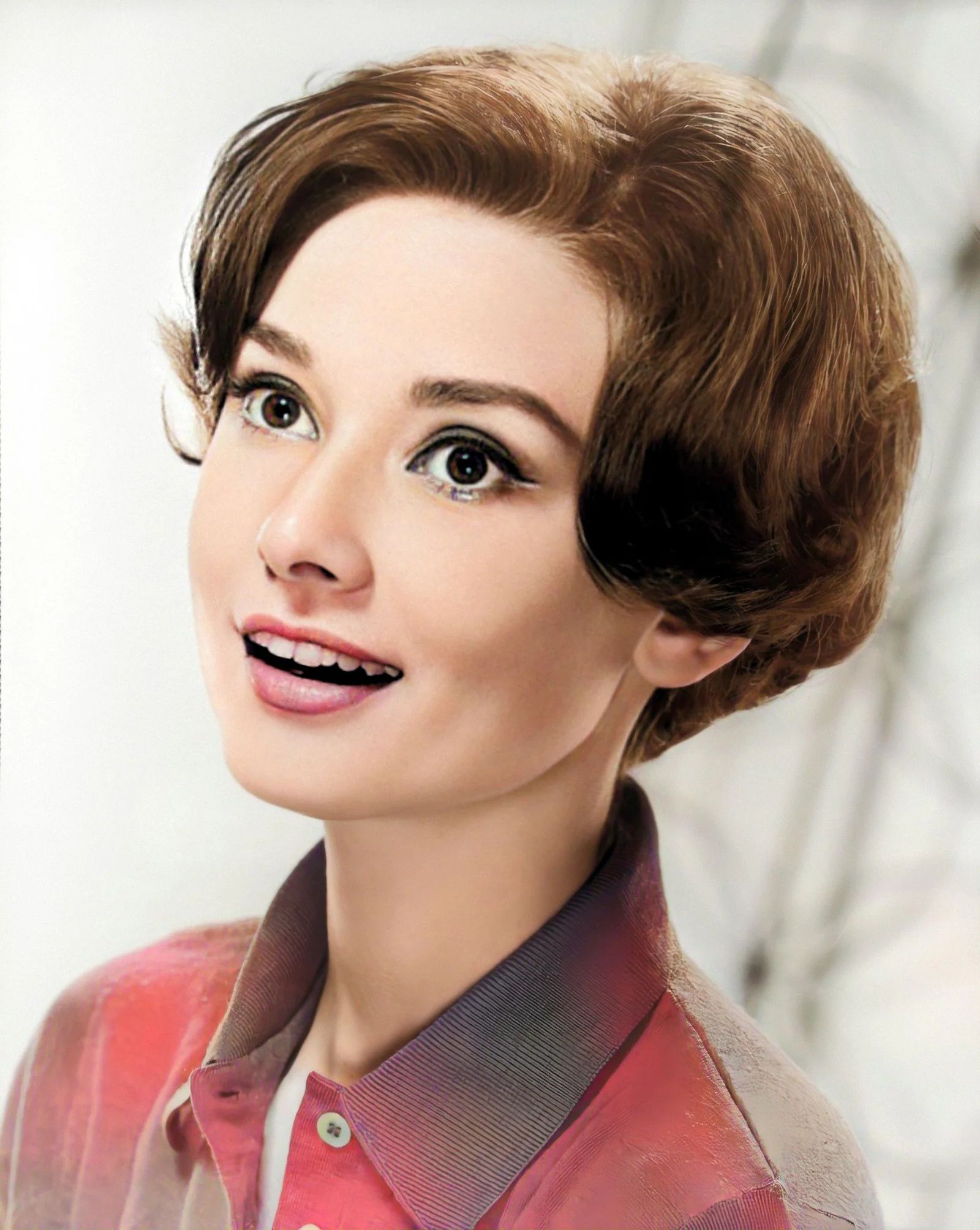
| 35 Quotes | |
| Born as | Audrey Kathleen Ruston |
| Occup. | Actress |
| From | Belgium |
| Born | May 4, 1929 Ixelles, Belgium |
| Died | January 20, 1993 Tolochenaz, Switzerland |
| Cause | Appendiceal cancer |
| Aged | 63 years |
| Cite | |
Citation Formats
APA Style (7th ed.)
Audrey hepburn biography, facts and quotes. (2026, February 1). FixQuotes. https://fixquotes.com/actors/audrey-hepburn/
Chicago Style
"Audrey Hepburn biography, facts and quotes." FixQuotes. February 1, 2026. https://fixquotes.com/actors/audrey-hepburn/.
MLA Style (9th ed.)
"Audrey Hepburn biography, facts and quotes." FixQuotes, 1 Feb. 2026, https://fixquotes.com/actors/audrey-hepburn/. Accessed 26 Mar. 2026.
Early Life and Background
Audrey Kathleen Ruston was born on 1929-05-04 in Ixelles, Brussels, to Joseph Victor Anthony Ruston and Baroness Ella van Heemstra, a Dutch aristocrat. Her parentage gave her a passport into privilege, but not into safety: the marriage was unstable, her father left when she was still a child, and the ache of abandonment became a private undertow beneath the public image of serenity.Her early years unfolded across borders - Belgium, England, and the Netherlands - just as Europe slid toward catastrophe. During the German occupation she lived in Arnhem, where food shortages, fear, and the forced narrowing of daily life marked her body and memory; the wartime hunger that stunted her health also sharpened her empathy for the displaced and the starving. Long before she became a symbol of elegance, she had learned what it cost to survive quietly and what dignity looked like when it had nothing to do with glamour.
Education and Formative Influences
Hepburn trained rigorously in ballet, studying in Amsterdam and later in London with Marie Rambert, who judged her talent real but her wartime-weakened physique and late start limiting for a top classical career. That verdict did not crush ambition so much as redirect it: dancing taught her discipline, physical storytelling, and the ability to project feeling with restraint - skills that later made her film acting seem effortless. The postwar entertainment world in London also offered a practical education in work: chorus lines, small roles, diction, and the unromantic grind of auditions.Career, Major Works, and Turning Points
She moved from stage to screen through British films, then broke open internationally after Colette discovered her for Broadway's Gigi (1951). Hollywood followed fast: Roman Holiday (1953) made her a star and won her an Academy Award; Sabrina (1954), Funny Face (1957), The Nun's Story (1959), Breakfast at Tiffany's (1961), Charade (1963), and My Fair Lady (1964) built a canon that fused modernity with moral clarity. Later work was more selective - Wait Until Dark (1967) showed steel beneath refinement - as her life tilted toward marriage, motherhood, and eventual withdrawal from constant production. In her final decade she returned to the public eye with a different mission, becoming a prominent UNICEF Goodwill Ambassador and traveling repeatedly to some of the world's most devastated communities.Philosophy, Style, and Themes
Hepburn's screen persona was not simply "chic"; it was a studied alternative to the era's louder sex symbols - a blend of alertness, vulnerability, and ethical pressure. Her thinness, often aestheticized, also carried history: audiences saw a silhouette, but she carried the memory of ration lines and uncertainty. She played women who looked fragile yet chose decisively, as if elegance were a form of self-command. Even her humor had a protective function, a way of keeping pain from hardening into bitterness, which aligns with her own insistence on joy as medicine: “I love people who make me laugh. I honestly think it's the thing I like most, to laugh. It cures a multitude of ills. It's probably the most important thing in a person”.Underneath the composure was a pronounced emotional appetite, and she did not hide its intensity: “I was born with an enormous need for affection, and a terrible need to give it”. That confession reads like a key to her romantic choices and to the way she performed intimacy on screen - not as conquest, but as pleading, reciprocity, and hope. Over time, the need to be loved widened into a creed of service, distilled in one of her most repeated moral formulations: “As you grow older, you will discover that you have two hands, one for helping yourself, the other for helping others”. In her films, the arc often runs from self-protection to openness; in her life, it ran from fame to usefulness.
Legacy and Influence
Hepburn died on 1993-01-20, but her afterlife in culture is unusually durable: a fashion template (the Givenchy partnership, the "Tiffany" silhouette), an acting model of minimalism and moral tension, and a celebrity blueprint for humanitarian legitimacy. Her influence persists because it is double-edged - the icon of effortless grace paired with a biography that explains the effort - and because her late work with UNICEF reframed glamour as a tool rather than a destination. In a century that repeatedly tried to turn women into surfaces, Hepburn remains compelling as a person whose deepest signature was not beauty but attentive compassion.Our collection contains 35 quotes written by Audrey, under the main topics: Witty One-Liners - Motivational - Funny - Justice - Love.
Other people related to Audrey: Julie Andrews (Actress), Edith Head (Designer), Eddie Albert (Actor), Anthony Perkins (Actor), John Barry (Composer), Terence Young (Director), George Kennedy (Actor), Gina Lollobrigida (Actress), Eleanor Bron (Actress), Ben Gazzara (Actor)
Source / external links