
Barney Stinson Biography Quotes 11 Report mistakes
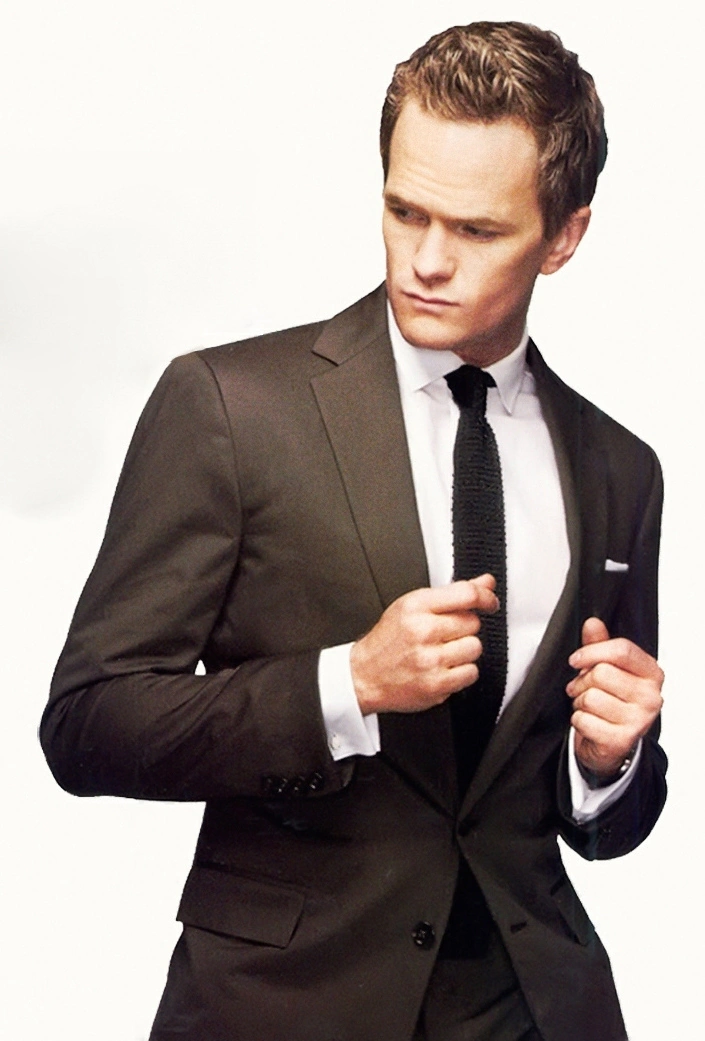
| 11 Quotes | |
| Occup. | Actor |
| From | USA |
| Born | March 26, 1975 New York City, New York, USA |
| Age | 50 years |
| Cite | |
Citation Formats
APA Style (7th ed.)
Barney stinson biography, facts and quotes. (2026, February 11). FixQuotes. https://fixquotes.com/actors/barney-stinson/
Chicago Style
"Barney Stinson biography, facts and quotes." FixQuotes. February 11, 2026. https://fixquotes.com/actors/barney-stinson/.
MLA Style (9th ed.)
"Barney Stinson biography, facts and quotes." FixQuotes, 11 Feb. 2026, https://fixquotes.com/actors/barney-stinson/. Accessed 5 Mar. 2026.
Early Life and Background
Barney Stinson was born March 26, 1975, in the United States and came of age in the long shadow of late-20th-century American spectacle - a culture of malls, cable TV, Wall Street swagger, and self-invention. His origin story, as he later narrated it to friends, was built around performance: the boy who learned early that confidence could be manufactured, that a punchline could outrun a pain, and that the version of you people applauded often mattered more than the one you privately nursed.Behind the practiced charm was a young man marked by absence and uncertainty, particularly around family identity and belonging. That tension - wanting intimacy while distrusting it - became the engine of his adult persona. He fashioned a public self that never seemed to need anyone, then tested others with escalating antics to see who would stay, treating loyalty as the rarest currency in his world.
Education and Formative Influences
Details of Stinson's formal education are less publicly fixed than the legend he curated, but his formative influences are unmistakably urban and media-driven: salesmanship, status signaling, and the myth of the effortless winner. He absorbed the rhythms of New York ambition - the idea that you can dress success into existence - and he studied the social mechanics of attention the way a serious student studies law or medicine, learning to read rooms, control narratives, and turn insecurity into an act that could pass for certainty.Career, Major Works, and Turning Points
Stinson became widely known to audiences through his on-screen persona as an actor and performer within a friend-group sitcom frame, in which his real craft was the continual creation of scenes: elaborate schemes, catchphrases, and set pieces that transformed ordinary nights into stories worth retelling. His "major works" were less a filmography than a repertoire - the suit, the pitch, the perfected entrance line, the escalation to a final reveal - and his turning points arrived when the persona met consequences: friendships frayed by manipulation, romance complicated by sincerity, and the slow realization that a life designed to avoid vulnerability can become its own cage.Philosophy, Style, and Themes
Stinson's philosophy is a defense mechanism refined into a worldview. He presents identity as something you can put on like clothing, with the suit as both armor and brand, and he insists on momentum over reflection: “Suit up!” The command is comic, but psychologically revealing - when feelings threaten to surface, he reaches for costume, routine, and bravado, making style itself a moral stance. His humor is fast, declarative, and certainty-scented, as if hesitation might let the grief in.The deeper theme is narrative control. For Stinson, truth is negotiable, not because he is simply amoral, but because he fears what unvarnished truth might demand of him. That is why he can say, with a wink that doubles as a confession, “A lie is just a great story that someone ruined with the truth”. His self-help mantra pushes the same lever: “When I get sad I stop being sad and be AWESOME instead. True story!” It reads as motivational comedy, yet it functions as an emotional veto - a ritualized refusal to sit with loss, a way to convert sadness into performance before it can become need. Across his stories, the recurring conflict is not whether he can win a room, but whether he can tolerate being seen when he is not winning.
Legacy and Influence
Barney Stinson endures as a distinctly early-21st-century American archetype: the salesman-philosopher of nightlife, a character built from catchphrases and confidence tricks who nonetheless smuggles in a study of loneliness. In the broader culture of quotes and memes, his lines became shorthand for swagger, but his longer influence lies in how he framed masculinity as simultaneously theatrical and fragile - a reminder that charisma can be both a gift and a hiding place, and that the hardest role to play is the one without an audience.Our collection contains 11 quotes written by Barney, under the main topics: Witty One-Liners - Dark Humor - Sarcastic.
Other people related to Barney: Wayne Brady (Comedian)