
Bea Arthur Biography Quotes 15 Report mistakes
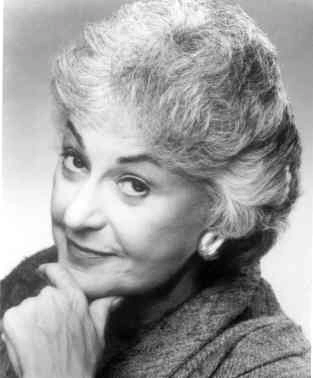
| 15 Quotes | |
| Occup. | Actress |
| From | USA |
| Born | May 13, 1923 |
| Died | April 25, 2009 |
| Aged | 85 years |
| Cite | |
Citation Formats
APA Style (7th ed.)
Bea arthur biography, facts and quotes. (2026, February 11). FixQuotes. https://fixquotes.com/actors/bea-arthur/
Chicago Style
"Bea Arthur biography, facts and quotes." FixQuotes. February 11, 2026. https://fixquotes.com/actors/bea-arthur/.
MLA Style (9th ed.)
"Bea Arthur biography, facts and quotes." FixQuotes, 11 Feb. 2026, https://fixquotes.com/actors/bea-arthur/. Accessed 12 Feb. 2026.
Early Life and Background
Bernice Frankel was born on May 13, 1923, in New York City to Philip and Sadie Frankel, a Jewish family shaped by the churn of interwar America and the pressure to appear solid, respectable, and uncomplaining. Her early years carried the restlessness of a country between boom and depression: the family moved to Cambridge, Maryland, and later to the greater Detroit area, where her father ran clothing businesses. That movement left her with a sharp ear for regional cadences and the small humiliations people inflict to feel secure - raw material she would later refine into comedy that never floated above pain so much as stared it down.By temperament she was disciplined, skeptical of sentimentality, and unusually direct for a young woman being trained to be agreeable. She was tall, plainspoken, and not naturally interested in the soft-focus femininity mid-century culture rewarded; what she absorbed instead was a sense that authority is often performance and that survival requires timing. Those instincts, forged in ordinary domestic spaces, would become the engine of characters who could wound with a look, then reveal the bruise underneath.
Education and Formative Influences
After high school in Michigan, she enrolled at Adrian College and later transferred to Blackstone College for Girls in Virginia, graduating in 1947, but her decisive education arrived earlier and harder: World War II. In 1943 she joined the U.S. Marine Corps Women's Reserve, working as a typist and truck driver, and left as a staff sergeant - a rare rank for women at the time. The military gave her a lifelong intolerance for nonsense, a taste for hierarchy she could puncture, and a practical confidence that made later stage terror feel survivable; she also married fellow Marine Robert Arthur (divorced 1950) and kept his surname, a choice that quietly acknowledged how women were forced to borrow legitimacy while building their own.Career, Major Works, and Turning Points
Arthur entered New York theater in the 1950s, studying and working steadily until Broadway made her unavoidable: she won the Tony Award in 1966 for Mame as Vera Charles, a performance that fused martini-dry authority with vulnerability flashed like a blade. Film and television followed - notably as Maude Findlay on All in the Family (1972) and in her landmark spinoff Maude (1972-1978), where the show's frankness about marriage, aging, and abortion pressed network TV into social argument. She later led The Golden Girls (1985-1992) as Dorothy Zbornak, turning middle-aged female friendship into prime-time architecture, and returned to Broadway to win a second Tony in 1988 for Jerome Lawrence and Robert E. Lee's The Trolley Song. Later work ranged from television guest roles and theater to voice acting (including Disney's The Emperor's New Groove, 2000), but the turning point remained her discovery that her power lay not in likability but in precision - how a pause, a glare, or an unsentimental aside could expose a whole moral landscape.Philosophy, Style, and Themes
Arthur's method was frequently mistaken for abrasiveness when it was, in fact, an ethic: say the line as if it matters, play the moment as if it costs something. She described the core of her comic identity with disarming candor: "I'm not playing a role. I'm being myself, whatever the hell that is". That admission reads less like ego than like a portrait of an actor who distrusted masks even while wearing them professionally; her best characters are armored, but the armor is a response to life, not a substitute for it. In Dorothy, Maude, and Vera Charles, sarcasm operates as self-defense and truth-telling at once, and the audience laughs partly because the honesty lands before comfort can catch up.Her realism also functioned as a quiet rebuke to the fake signals audiences are trained to expect from comedy. "I suddenly realized that comedy, for me, was just being honest, and playing it for real". That principle explains her signature: the joke was never a wink, it was an observation with consequences. Just as important, her public commitments suggested that her toughness was never cruelty for its own sake; she channeled her voice into advocacy, especially for animal welfare, arguing for persistence and moral imagination rather than fashionable outrage: "PETA has a proven track record of success. Each victory PETA wins for the animals is a stepping stone upon which we build a more compassionate world for all beings - and we will never give up our fight until all animals are treated with respect and kindness". In her work and her activism, the through-line is refusal - refusal to sentimentalize pain, to flatter power, or to pretend that compassion is incompatible with blunt speech.
Legacy and Influence
Bea Arthur died on April 25, 2009, in Los Angeles, leaving behind a template for American screen acting that still feels radical: the middle-aged woman as moral center, comic engine, and intellectual authority. She helped normalize sharp-edged heroines on television, proving that audiences would follow a character who was not designed to be adorable, only true. In an era that often demanded women soften themselves to be heard, Arthur made severity a kind of music - and by doing so, widened the emotional and political range available to performers who came after her.Our collection contains 15 quotes written by Bea, under the main topics: Witty One-Liners - Funny - Art - Love - Leadership.
Other people related to Bea: Norman Lear (Producer), Adrienne Barbeau (Actress), Bruce Davison (Actor)
Source / external links