
Bette Davis Biography Quotes 46 Report mistakes
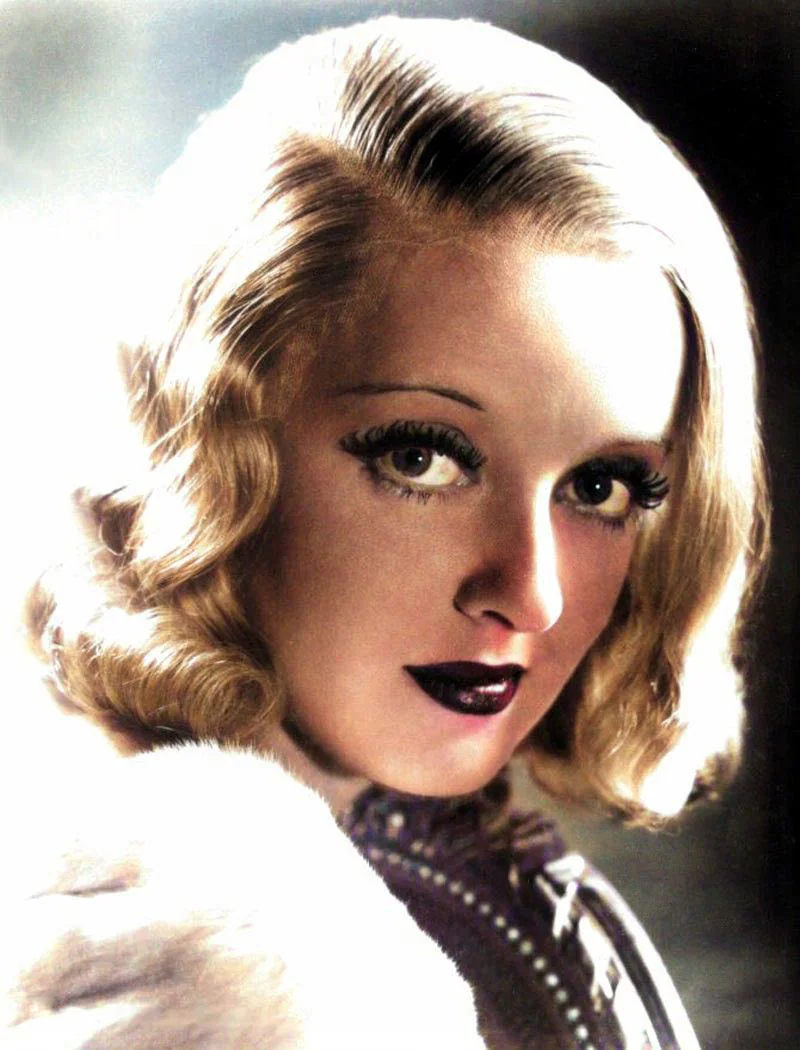
| 46 Quotes | |
| Born as | Ruth Elizabeth Davis |
| Occup. | Actress |
| From | USA |
| Born | April 5, 1908 Lowell, Massachusetts, U.S. |
| Died | October 6, 1989 Neuilly-sur-Seine, France |
| Cause | Breast cancer |
| Aged | 81 years |
| Cite | |
Citation Formats
APA Style (7th ed.)
Bette davis biography, facts and quotes. (2026, February 1). FixQuotes. https://fixquotes.com/actors/bette-davis/
Chicago Style
"Bette Davis biography, facts and quotes." FixQuotes. February 1, 2026. https://fixquotes.com/actors/bette-davis/.
MLA Style (9th ed.)
"Bette Davis biography, facts and quotes." FixQuotes, 1 Feb. 2026, https://fixquotes.com/actors/bette-davis/. Accessed 27 Mar. 2026.
Early Life and Background
Ruth Elizabeth Davis was born on April 5, 1908, in Lowell, Massachusetts, to Harlow Morrell Davis, a patent attorney, and Ruth Augusta Davis. Her early years were shaped by fracture and motion: her parents separated when she was young, and she and her younger sister Barbara (later known in entertainment as Barbara Bel Geddes) were raised largely by their mother. The dislocation of a divided household, and the necessity of self-possession in public, would later surface in Davis's screen persona - armored, alert, unwilling to be softened by anyone else's expectations.As a girl she was nicknamed "Bette" after Balzac's La Cousine Bette, a choice that hints at the literary, adult flavor of the identity she grew into. The Davis family moved through New England, and she attended schools in Massachusetts, including time in the Boston area. Long before the camera fixed her face into American mythology, she learned the hard lesson of reinvention: the ability to enter a room, take its measure, and decide, with willpower rather than permission, who she would be.
Education and Formative Influences
Davis trained for the theater at the John Murray Anderson School of Theatre in New York, absorbing the discipline of voice, movement, and text at a moment when American acting was tilting from stage declamation toward a more intimate, psychological realism. She watched established performers closely - not to imitate prettiness, but to master timing, control, and the emotional mechanics of a scene. Broadway work followed, and with it the lesson that talent alone was not enough; she would have to fight for material worthy of it, a habit that later made her both feared and indispensable in Hollywood.Career, Major Works, and Turning Points
After early film work and a rocky start, Davis broke through at Warner Bros. with Of Human Bondage (1934), earning major acclaim despite studio resistance, then secured stardom with Dangerous (1935) and her first Academy Award. She became the studio era's most formidable actress through Jezebel (1938, Oscar), Dark Victory (1939), The Letter (1940), The Little Foxes (1941), and Now, Voyager (1942), carving women of desire, damage, calculation, and grit. A turning point came when she challenged Warner Bros. in court in 1936-37 over inferior roles; she lost legally, but the confrontation signaled a new kind of star - one who treated scripts as a battleground. Later peaks included All About Eve (1950), which retooled her image into a weaponized self-awareness, and the late-career resurgence of What Ever Happened to Baby Jane? (1962), proof that she could convert age and severity into box-office power.Philosophy, Style, and Themes
Davis's inner life reads, in retrospect, as a constant negotiation between hunger and control. She prized competence - the kind that shows up on time, knows the lines, and can turn a close-up into a confession. Her acting was built on precision: a clipped rhythm, a hard stare, a sudden quiet, the way she could let self-disgust or longing flicker across her face without explaining it. She refused the soft-focus ideal, pushing instead for emotional truth, even when it made her "unlikable". That stance is summarized in her own blunt credo: “Hollywood always wanted me to be pretty, but I fought for realism”. It was not modesty; it was strategy - she understood that realism could outlast glamour.Again and again her films stage the costs of ambition, the punishments meted out to female desire, and the loneliness of power. In All About Eve, her Margo Channing is not only afraid of youth but furious at the industry's demand that women disappear politely; Davis plays that fury as both vanity and grief. Her private life - marriages to Harmon Nelson and Arthur Farnsworth, then to William Grant Sherry, and her later partnership with Gary Merrill - never fully delivered the stability the public assumed stars possessed. She voiced the solitude at the heart of celebrity with an almost clinical candor: “We movie stars all end up by ourselves. Who knows? Maybe we want to”. And she treated endurance as a moral test, not a sentimental one, distilling her late-life toughness into a line that doubles as self-portrait: “Old age is no place for sissies”.
Legacy and Influence
Davis died on October 6, 1989, in Neuilly-sur-Seine, France, after years marked by illness and unrelenting will, leaving behind a career that helped redefine what American screen acting could permit a woman to be: sharp, difficult, erotic, aging, funny, cruel, vulnerable, and still central. She normalized the idea that a female star could be valued for nerve and intelligence as much as beauty, and her battles for better roles foreshadowed later fights for artistic control. Generations of actors have studied her for the same reason audiences still do: she made character destiny, and turned survival itself into an art form.Our collection contains 46 quotes written by Bette, under the main topics: Witty One-Liners - Motivational - Art - Sarcastic - Resilience.
Other people related to Bette: Humphrey Bogart (Actor), Elizabeth Moss (Actress), Edith Head (Designer), Teresa Wright (Actress), Karen Black (Actress), Norman Reilly Raine (Screenwriter), Robert Hamer (Director), William Wyler (Director), Dan Duryea (Actor), Mary Astor (Actress)
Source / external links