
Billy Dee Williams Biography Quotes 2 Report mistakes
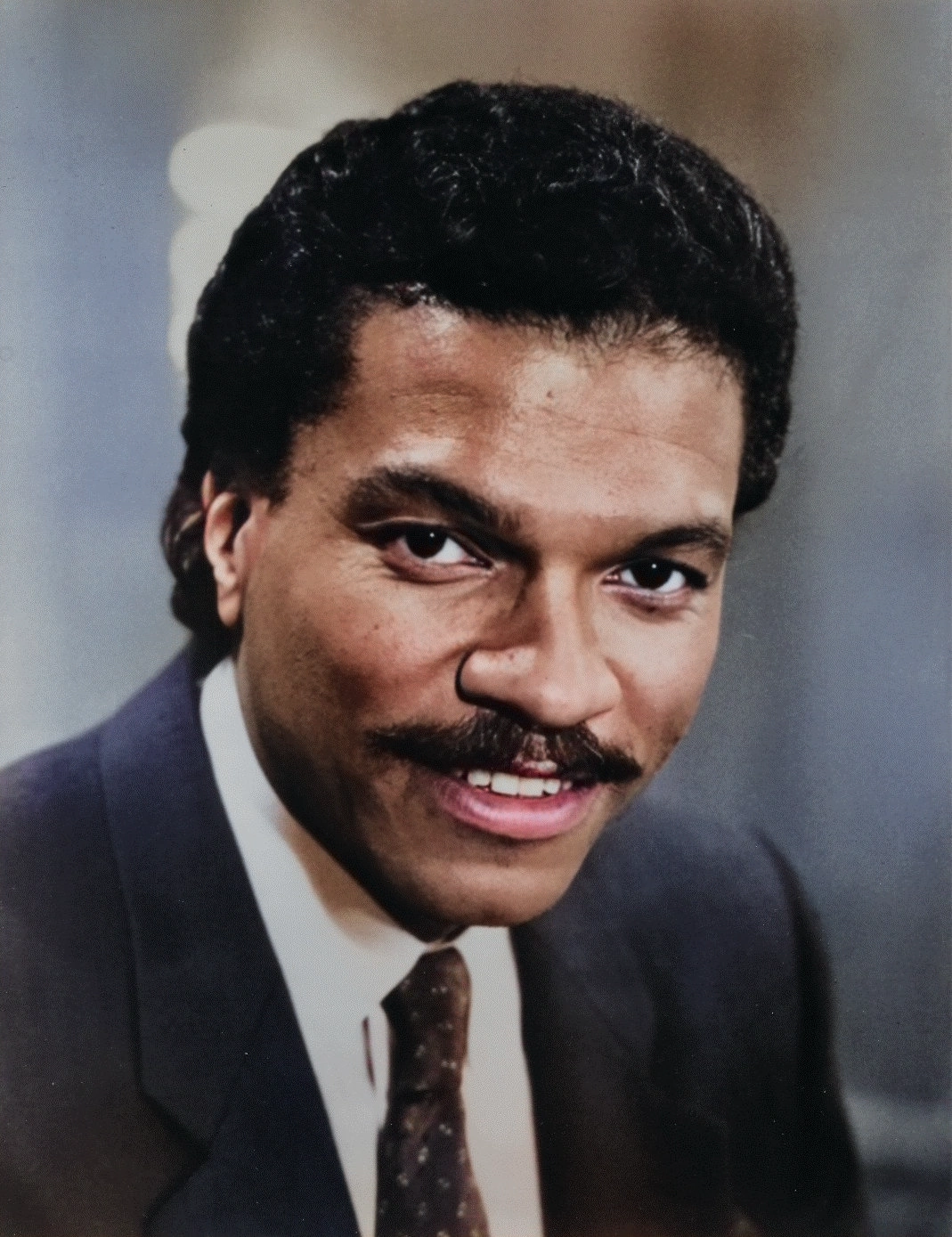
| 2 Quotes | |
| Born as | William December Williams Jr. |
| Occup. | Actor |
| From | USA |
| Spouses | Audrey Sellers (1959-1963) Marlene Clark (1968-1971) Teruko Nakagami (1972) |
| Born | April 6, 1937 New York City, New York, USA |
| Age | 88 years |
| Cite | |
Citation Formats
APA Style (7th ed.)
Billy dee williams biography, facts and quotes. (2026, March 8). FixQuotes. https://fixquotes.com/actors/billy-dee-williams/
Chicago Style
"Billy Dee Williams biography, facts and quotes." FixQuotes. March 8, 2026. https://fixquotes.com/actors/billy-dee-williams/.
MLA Style (9th ed.)
"Billy Dee Williams biography, facts and quotes." FixQuotes, 8 Mar. 2026, https://fixquotes.com/actors/billy-dee-williams/. Accessed 28 Mar. 2026.
Early Life and Background
Billy Dee Williams was born William December Williams Jr. on April 6, 1937, in New York City, into a household where ambition and performance were ordinary facts of life rather than distant dreams. His mother, Loretta Anne, worked in the West Indian-born elevator-operator world of Harlem and pursued acting; his father, William December Williams Sr., was a caretaker and later a painter with roots in Texas. He was born alongside his twin sister, Loretta, and the pair were raised largely by their maternal grandmother while their mother sought work. Harlem in the 1930s and 1940s - culturally brilliant, economically unstable, racially stratified - gave Williams an early education in resilience, style, and public self-possession.
That environment mattered. He grew up amid the afterglow of the Harlem Renaissance and the hard realities of wartime and postwar Black urban life, where polish could be a form of armor and artistry a route to dignity. As a child he appeared in the 1945 film The Firebrand of Florence, an early brush with performance that did not yet define him but suggested how naturally he could occupy a stage or screen. Just as important, he developed as a visual artist. Before audiences knew him as suave, romantic, or slyly amused, he was a boy learning to observe faces, gesture, and color - habits that later shaped the unusual quietness and composure of his acting.
Education and Formative Influences
Williams attended the High School of Music and Art in Manhattan, studying painting seriously and earning a scholarship-based path toward a life in the visual arts. He was not formed only by theater but by draftsmanship, composition, and the discipline of looking, and that artistic training stayed visible in the elegance of his screen presence. He later studied at the National Academy of Fine Arts and Design, though acting increasingly took precedence as New York's stage world opened before him. The postwar city offered competing models of Black masculinity - boxer, jazzman, laborer, political radical, entertainer - and Williams absorbed them without becoming reducible to any one type. Early stage work, including an eventual Broadway appearance in A Taste of Honey, helped him sharpen an approach based less on overt demonstration than on control, listening, and timing.
Career, Major Works, and Turning Points
Williams worked steadily in television and theater through the 1950s and 1960s, but the decisive turn came with Brian's Song (1971), in which he played Gale Sayers opposite James Caan's Brian Piccolo. The performance gave national visibility to his emotional range and to a new image of Black leading-man intimacy on American television. He followed it with one of his defining film roles, opposite Diana Ross in Lady Sings the Blues (1972), bringing warmth and maturity rather than mere glamour. In the 1970s he also became a widely recognized commercial figure through Colt 45 advertisements, a lucrative association that amplified his public image of effortless charm. His most enduring global role arrived in The Empire Strikes Back (1980) and Return of the Jedi (1983) as Lando Calrissian - gambler, entrepreneur, survivor, and eventual rebel hero - one of the first prominent Black characters in the Star Wars universe. Later decades brought work across film, television, voice acting, and fandom culture, including the television movie The Jacksons: An American Dream and a return to Lando in Star Wars: The Rise of Skywalker (2019). Though he never became a conventional Hollywood chameleon, he built something rarer: a durable persona flexible enough to move between romance, adventure, comedy, and iconography.
Philosophy, Style, and Themes
Williams's acting style rests on the intelligence of restraint. He rarely attacks a scene; he enters it already in command of himself, allowing irony, seduction, fatigue, or pain to register in increments. That composure helped make him a breakthrough Black sex symbol in mainstream American film and television, but his significance is deeper than image. He brought to popular culture a version of Black masculinity that was urbane, articulate, tender, and unapologetically elegant at a time when the industry often preferred caricature or threat. His performances suggest a man who understands social theater - how clothes, voice, and manners can function as protection as well as invitation. The painter's eye remained visible in the way he arranged his body in frame, balancing stillness against sudden warmth.
His public remarks also reveal a psychology of cultivated equilibrium. “Failure's not a bad thing. It builds character. It makes you stronger”. That sentence sounds less like slogan than autobiography: the creed of an actor who worked for decades without always receiving the breadth of roles his talent merited, yet refused bitterness as an identity. Even his whimsical aside, “Originally I planned on starting a teapot collection. I really like them”. , hints at the private collector's mind behind the famous smile - amused, aesthetic, a little oblique, resistant to being flattened into swagger alone. In that tension between public smoothness and inwardly observant reserve lies the key to Williams's appeal: he made coolness seem not empty but hard won.
Legacy and Influence
Billy Dee Williams occupies a singular place in American screen history. He helped widen the imaginative space available to Black actors in mainstream entertainment, not through manifesto but through presence - by making refinement, romantic authority, and emotional steadiness visible and desirable on a mass scale. For many viewers, especially in the 1970s and 1980s, he modeled a charisma that was neither submissive nor stereotypically hypermasculine. As Lando Calrissian, he entered modern mythology; as the star of Brian's Song and Lady Sings the Blues, he helped humanize interracial and intraracial emotional life for broad audiences. Later generations of actors inherited a landscape partly altered by his example: that a Black leading man could be witty, sensual, vulnerable, mature, and iconic all at once. His career endures not simply because he was memorable, but because he made elegance itself feel like a form of strength.
Our collection contains 2 quotes written by Billy, under the main topics: Failure - Tea.
Other people related to Billy: Jeremy Bulloch (Actor)
Source / external links