
Bob Geldof Biography Quotes 31 Report mistakes
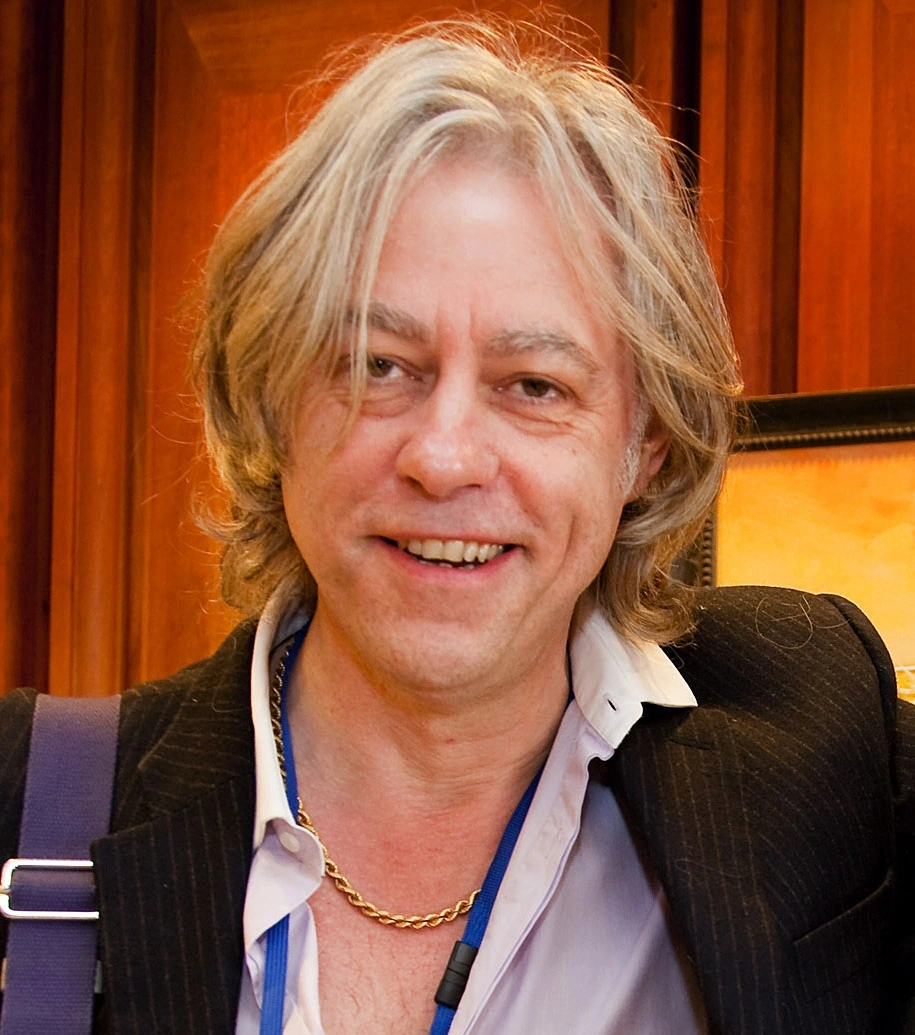
| 31 Quotes | |
| Born as | Robert Frederick Zenon Geldof |
| Occup. | Actor |
| From | Ireland |
| Born | October 5, 1951 Dún Laoghaire, County Dublin, Ireland |
| Age | 74 years |
| Cite | |
Citation Formats
APA Style (7th ed.)
Bob geldof biography, facts and quotes. (2026, February 11). FixQuotes. https://fixquotes.com/actors/bob-geldof/
Chicago Style
"Bob Geldof biography, facts and quotes." FixQuotes. February 11, 2026. https://fixquotes.com/actors/bob-geldof/.
MLA Style (9th ed.)
"Bob Geldof biography, facts and quotes." FixQuotes, 11 Feb. 2026, https://fixquotes.com/actors/bob-geldof/. Accessed 25 Mar. 2026.
Early Life and Background
Robert Frederick Zenon Geldof was born on October 5, 1951, in Dun Laoghaire, County Dublin, Ireland, and grew up in a country still marked by postwar austerity, Catholic social authority, and the push-pull of emigration. His father worked in commerce; his mother, Evelyn, died when he was young, a loss that left a lasting emotional seam in his life and a sharpened sensitivity to absence, injustice, and the abruptness with which the ordinary can be shattered. Ireland in the 1960s offered limited horizons for restless, secular-minded youth; Geldof developed early the habit of arguing his way out of inherited pieties.He moved through adolescence with the impatience of someone who felt Ireland was too small, but also with a strong sense of communal obligation - a paradox that later defined him. The era was saturated with televised crisis: Biafra, Vietnam, and the first modern grammar of humanitarian catastrophe. Those images met a temperament already inclined to moral urgency. Long before global celebrity, he was drawn to the idea that public speech should have consequences, and that irreverence was not the opposite of seriousness but its tool.
Education and Formative Influences
Geldof attended Blackrock College, a prominent Dublin school, and later left Ireland for Canada, working a sequence of jobs before turning to journalism. As a music writer in Vancouver, he absorbed punk and pub rock not as style alone but as an ethic - direct language, impatience with elites, and distrust of polished narratives. That apprenticeship in reporting and scene-making taught him how to translate subculture into mass attention, a skill he later redeployed on a geopolitical scale.Career, Major Works, and Turning Points
Returning to Ireland, Geldof fronted The Boomtown Rats, formed in 1975, which became one of the first Irish rock groups to break internationally; their UK No. 1 single "Rat Trap" (1978) and the globally known "I Dont Like Mondays" (1979) captured his gift for marrying pop hooks to social unease. The defining turn came in 1984, when BBC coverage of famine in Ethiopia radicalized his sense of what celebrity could do: he co-wrote "Do They Know Its Christmas?" for Band Aid, then co-organized Live Aid in July 1985, a transatlantic concert broadcast that raised major funds and redefined pop philanthropy. Later campaigns included Live 8 (2005) and advocacy tied to debt relief and African development; he also built a parallel career in media and acted notably as "Bunny" in Alan Parkers film Pink Floyd - The Wall (1982), using performance to dramatize volatility and bruised authority.Philosophy, Style, and Themes
Geldofs public persona - abrasive, fast, funny, unembarrassed by anger - is often read as charisma, but it is also armor. He speaks like someone who expects institutions to fail the vulnerable, and who has little patience for the comfortable language of process. His activism is fueled less by utopian belief than by pragmatic emergency: “Its really very simple, Governor. When people are hungry they die. So spare me your politics and tell me what you need and how youre going to get it to these people”. That sentence compresses his inner logic: moral clarity first, logistics second, ideology last. It also reveals a biographical through-line - the childhood lesson that loss is final, and therefore delay is culpable.At the same time, he distrusts the very platform he uses, extending skepticism even to himself: “You cant trust politicians. It doesnt matter who makes a political speech. Its all lies - and it applies to any rock star who wants to make a political speech as well”. The self-indictment matters. It shows a mind alert to hypocrisy, aware that spectacle can become substitute for change, and determined to keep pressure on power without pretending purity. In music, the Rats blended sardonic narrative with a barked tenderness; in public life, he turned outrage into coordination. Underneath the confrontational style lies a hard, almost tragic hope: “Mankind at its most desperate is often at its best”. Desperation, for him, is not romance but evidence that humans can choose solidarity when stripped of excuses.
Legacy and Influence
Geldof endures as a catalyst - a figure who proved that mass entertainment could be redirected, however imperfectly, toward relief and political leverage. Live Aid changed broadcasting, charity branding, and the expectations placed on celebrity, inspiring later benefit concerts and advocacy models while also attracting criticism about simplification, power dynamics, and who gets to speak for whom. Yet even critiques confirm his central impact: he forced a debate about responsibility in a global media age. As musician, actor, organizer, and agitator, he embodied the late-20th-century collision of pop culture and geopolitics, leaving a template for urgent, messy, results-driven public action that still shapes humanitarian campaigning today.Our collection contains 31 quotes written by Bob, under the main topics: Music - Resilience - Parenting - Honesty & Integrity - Equality.
Source / external links