
Bruce Boxleitner Biography Quotes 28 Report mistakes
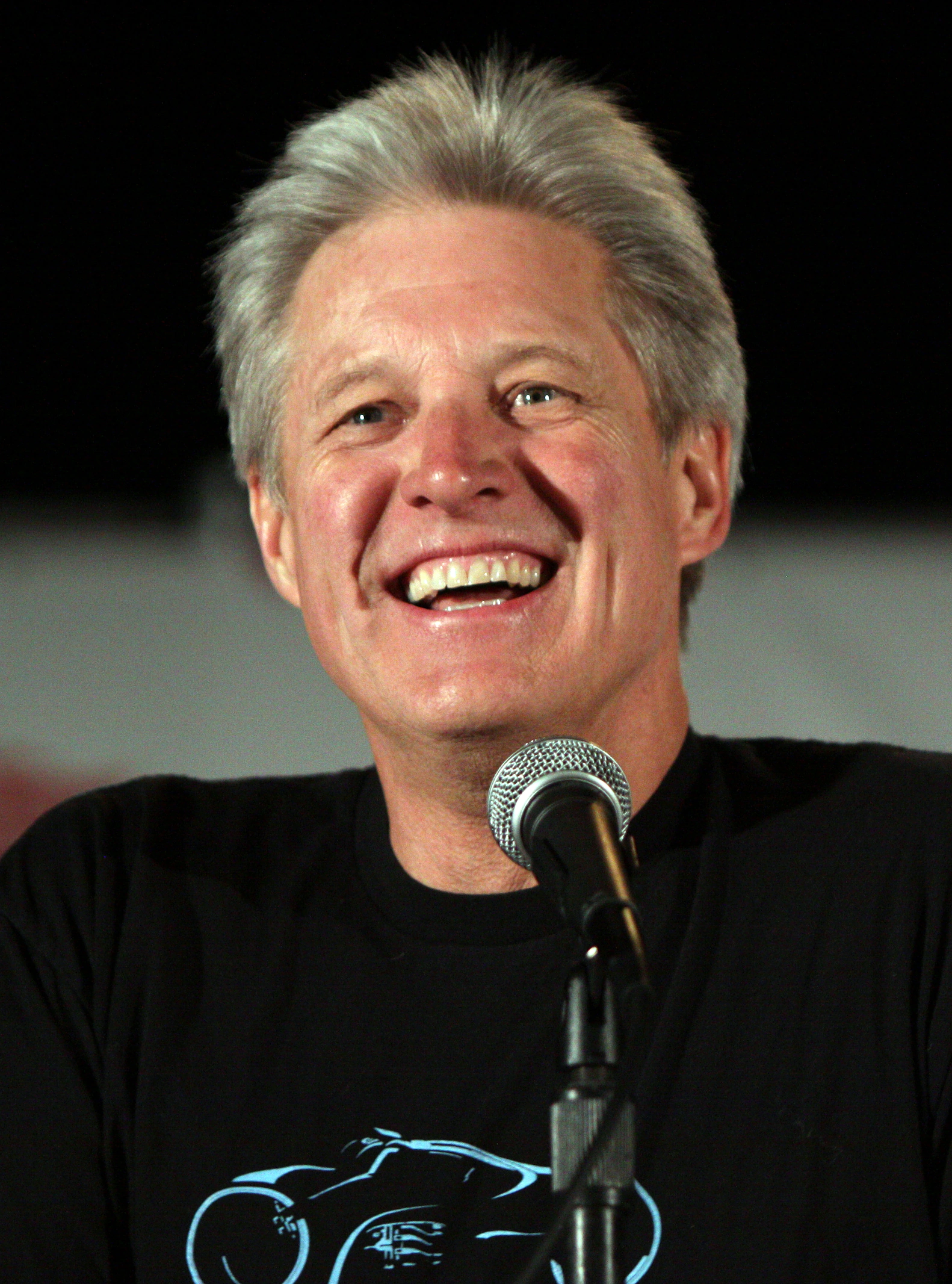
| 28 Quotes | |
| Born as | Bruce William Boxleitner |
| Occup. | Actor |
| From | USA |
| Born | May 12, 1950 Elgin, Illinois, USA |
| Age | 75 years |
| Cite | |
Citation Formats
APA Style (7th ed.)
Bruce boxleitner biography, facts and quotes. (2026, February 14). FixQuotes. https://fixquotes.com/actors/bruce-boxleitner/
Chicago Style
"Bruce Boxleitner biography, facts and quotes." FixQuotes. February 14, 2026. https://fixquotes.com/actors/bruce-boxleitner/.
MLA Style (9th ed.)
"Bruce Boxleitner biography, facts and quotes." FixQuotes, 14 Feb. 2026, https://fixquotes.com/actors/bruce-boxleitner/. Accessed 25 Mar. 2026.
Early Life and Background
Bruce William Boxleitner was born on May 12, 1950, in Elgin, Illinois, a Midwestern manufacturing corridor where postwar prosperity mixed with the anxieties of the Cold War and the rapid spread of television. In that environment, mass media was both escape and instruction: Westerns, war stories, and space-age fantasies offered models of masculinity and heroism, while suburban normalcy demanded restraint and steadiness. Boxleitner would later become recognizable precisely for that steady center - a calm, readable presence that made audiences trust him with command roles.He has described a childhood temperament that leaned inward, the kind of self-sufficiency that often becomes an actor's private engine: “As a boy, I didn't need a lot of playmates to have a good time”. That line hints at a lifelong comfort with imagination as a companion, and it helps explain why his most enduring characters often project solitude even in leadership - men who carry responsibility quietly, letting silence do as much as speech.
Education and Formative Influences
Boxleitner's path was not a sudden discovery but an early commitment shaped by school stages and then formal craft training. He traced it plainly: “I started in high school and then I went onto professional training after that”. Coming of age when American acting was split between classical technique, Method intensity, and a fast-expanding television industry, he learned to balance interior life with the practical demands of episodic storytelling - hitting marks, landing lines, and still making the viewer believe a man is thinking.Career, Major Works, and Turning Points
Beginning professional work as a young adult - he has noted, “I started acting professionally at age 19”. - Boxleitner built a durable career across stage, television, and film. Early visibility came through TV movies and series work, but his public image consolidated in projects that required authority without hardness: he played an idealistic lawman in the long-running Western series How the West Was Won (1970s), and decades later became iconic in science-fiction television as John Sheridan on Babylon 5 (1990s), a role that asked for moral evolution under political pressure and the ability to sell cosmic stakes through human-scale conviction. He also entered pop-culture immortality as Alan Bradley in Disney's Tron (1982), embodying the era's optimism that computers could be both mysterious and humane. Alongside acting, he published fiction - notably the Frontiers series of sci-fi novels - extending his career into authorship while keeping his public persona grounded in craft rather than celebrity.Philosophy, Style, and Themes
Boxleitner's work repeatedly returns to the problem of identity under role-pressure: the leader who must stay credible, the decent man inside an institution that tests decency, the technician or soldier who discovers that systems have souls. He has articulated the actor's paradox with unusual candor: “I think every leading man wants to be a character actor, and every character actor wants to be a leading man”. That observation maps onto his own choices - a career that oscillates between clean-lined heroism and the itch for texture, suggesting an inner life attracted to complexity even when the face on screen reads as reassurance.His affinity for speculative storytelling is not merely professional but aesthetic, tied to the sensory pleasure of imagined worlds and the visual culture that surrounds them. “The most colorful section of a bookstore is the display of SF books, with art by people like Wayne Barlow, who is a terrific artist”. For Boxleitner, science fiction is a mood as much as a genre: color, design, and scale become emotional cues that let audiences feel the future before they understand it. Yet he also frames the craft in older terms, emphasizing narration over novelty: “A storyteller is basically what actors and writers are”. The through-line is service to story - a psychology oriented toward clarity, forward motion, and the belief that character is revealed by decisions made under pressure.
Legacy and Influence
Boxleitner's enduring influence rests on how reliably he embodied competent decency during an era when television heroes shifted from straightforward exemplars to morally stressed protagonists. Tron helped define the early cinematic imagination of the digital age; Babylon 5 helped prove that American TV science fiction could sustain long-arc political and philosophical storytelling with theatrical seriousness; and his Western and television-movie work kept him visible as a face audiences associated with steadiness. For fans, he remains a bridge figure between genres - frontier myth, cyber myth, space opera - and for performers, an example of a long career built less on reinvention-by-scandal than on disciplined craft and a temperament that treats imagination as both refuge and responsibility.Our collection contains 28 quotes written by Bruce, under the main topics: Motivational - Art - Writing - Learning - Book.
Other people related to Bruce: Jerry Doyle (Actor), Claudia Christian (Actress)
Source / external links