
Carrie Snodgress Biography Quotes 7 Report mistakes
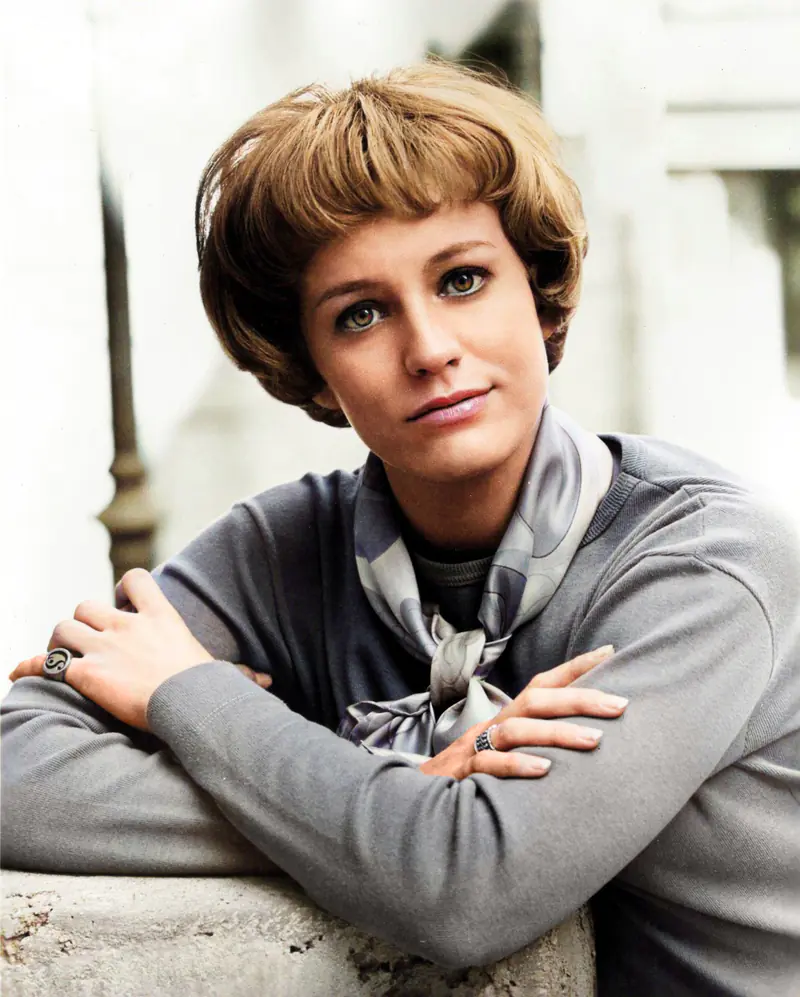
| 7 Quotes | |
| Born as | Caroline Louise Snodgress |
| Occup. | Actress |
| From | USA |
| Spouse | Neil Young |
| Born | October 27, 1945 Barrington, Illinois, USA |
| Died | April 1, 2004 Los Angeles, California, USA |
| Cause | Heart failure |
| Aged | 58 years |
Caroline Louise Snodgress, known professionally as Carrie Snodgress, was born on October 27, 1945, in Park Ridge, Illinois, and grew up in the American Midwest before pursuing a career in acting. By the late 1960s she had begun appearing on television and building a reputation for naturalism and emotional acuity, qualities that would distinguish her screen work when she moved into feature films.
Breakthrough and Acclaim
Snodgress rose to prominence with Diary of a Mad Housewife (1970), directed by Frank Perry from the novel by Sue Kaufman. Playing Tina Balser, a Manhattan wife trapped in a life of suffocating expectations, she gave a performance that balanced quiet wit with raw vulnerability. The role earned her an Academy Award nomination for Best Actress and brought her significant recognition at the Golden Globes, where she won Best Actress in a Motion Picture (Musical or Comedy) and New Star of the Year. The film also set her alongside notable collaborators and co-stars, including Richard Benjamin as the abrasive husband and Frank Langella as the seductive lover, establishing her as a leading figure in the new wave of nuanced, character-driven American cinema.
Personal Life and Hiatus
At the height of her acclaim, Snodgress made a deeply personal choice that reshaped her career. In the early 1970s she entered into a relationship with musician Neil Young. They had a son, Zeke Young, and she stepped away from the relentless pace of Hollywood to focus on motherhood, a decision that reflected both her sense of responsibility and her independence from industry pressures. Neil Young, then coming into his own as a major voice in rock, wrote songs that openly reflected his feelings about her, most famously A Man Needs a Maid, which references an actress he admired after seeing her on screen. The couple eventually parted, but the period remained a defining chapter in her life.
Return to the Screen
By the late 1970s Snodgress returned to film with a series of memorable performances. In Brian De Palma's The Fury (1978), she joined an ensemble that included Kirk Douglas, John Cassavetes, and Amy Irving, finding a place in a chilling story about psychic power and parental bonds. She followed with the psychological thriller The Attic (1980), a cult favorite that showcased her ability to inhabit complex, troubled characters. Mid-decade, she appeared in Pale Rider (1985), directed by and starring Clint Eastwood, bringing quiet gravity to a frontier drama that became a box-office success, and then in Murphy's Law (1986) opposite Charles Bronson, adding dimension to a hard-edged action thriller. These roles demonstrated her range, from restrained interior drama to genre fare, and reaffirmed her presence in American film after years largely outside the spotlight.
Relationships and Challenges
Snodgress's life included turbulence as well as triumphs. After her relationship with Neil Young ended, she became involved with producer-arranger Jack Nitzsche, a figure closely connected to the same music scene. Their relationship was troubled and publicly ruptured in 1979, when Nitzsche was charged in an assault on Snodgress; he subsequently faced legal consequences. The episode, widely reported at the time, underscored the personal challenges she navigated while sustaining a career that demanded resilience and focus.
Craft and Character
On screen, Snodgress was celebrated for understatement rather than flourish. She specialized in characters who carried their histories lightly, with weary humor, intelligence, and flashes of defiance. Even in supporting roles, she suggested inner lives that exceeded the frame. Directors like Frank Perry and Brian De Palma valued that equilibrium; collaborators such as Richard Benjamin, Frank Langella, Clint Eastwood, and Charles Bronson benefited from the grounded presence she brought to ensembles. Critics often noted that her emotional precision made even ordinary lines feel lived-in, a quality that helped define the 1970s shift toward more psychologically layered female leads.
Later Work
Through the late 1980s and 1990s, Snodgress worked steadily across films and television projects. She gravitated toward parts that offered moral ambiguity or quiet strength, and her mature performances often leaned into themes of endurance, compromised choices, and the costs of independence. Though she never again courted the sort of stardom that followed Diary of a Mad Housewife, her body of work from this period demonstrated professional longevity and an artist's commitment to craft over celebrity.
Legacy
Carrie Snodgress remains emblematic of a generation of actresses who helped transform the portrayal of women on screen. Her early honors, including the Academy Award nomination and Golden Globes for Diary of a Mad Housewife, marked not only individual achievement but a broader cultural shift toward complex, interior female roles in American film. Her decision to pause a meteoric rise in order to prioritize her family, particularly her son with Neil Young, added a resonant dimension to her legacy. Younger performers and filmmakers have continued to cite her naturalistic style, and her best work rewards rediscovery by audiences interested in finely observed, character-centered storytelling.
Death
Snodgress died on April 1, 2004, in Los Angeles, California, at the age of 58. Her passing prompted renewed attention to the elegance of her earliest performances, the courage of her personal choices, and the quiet durability of a career that, while unevenly visible, remained grounded in integrity and depth. Her life's arc, from Midwestern beginnings to international acclaim, pause, return, and reflective late work, continues to stand as a testament to an artist who made her own terms and left an enduring, human-scale imprint on American cinema.
Our collection contains 7 quotes who is written by Carrie, under the main topics: Music - Life - Heartbreak - Soulmate - Career.
Source / external links