
Cary Grant Biography Quotes 13 Report mistakes
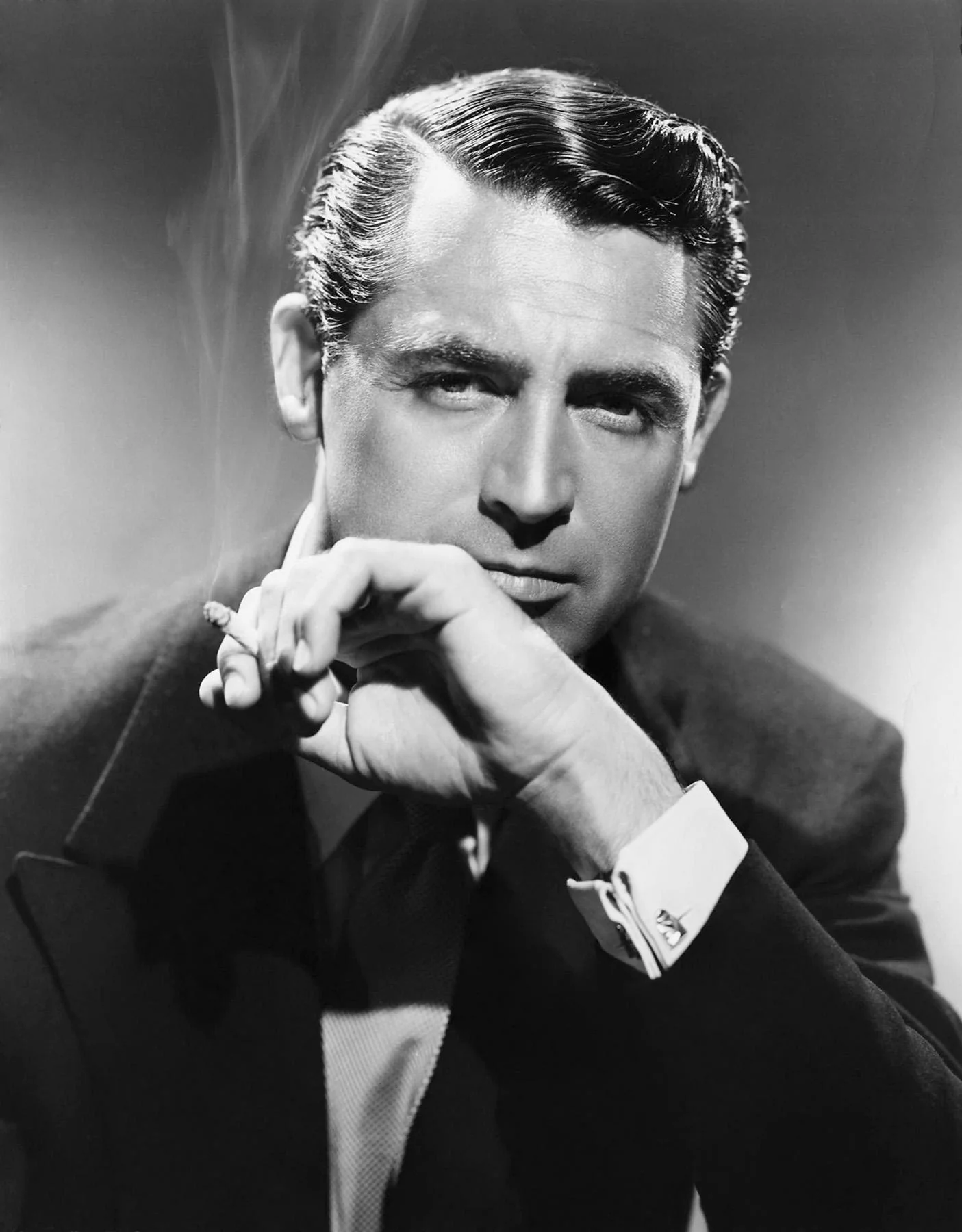
| 13 Quotes | |
| Born as | Archibald Alexander Leach |
| Occup. | Actor |
| From | USA |
| Born | January 18, 1904 Bristol, England, United Kingdom |
| Died | November 29, 1986 Davenport, Iowa, United States |
| Aged | 82 years |
| Cite | |
Citation Formats
APA Style (7th ed.)
Cary grant biography, facts and quotes. (2026, February 3). FixQuotes. https://fixquotes.com/actors/cary-grant/
Chicago Style
"Cary Grant biography, facts and quotes." FixQuotes. February 3, 2026. https://fixquotes.com/actors/cary-grant/.
MLA Style (9th ed.)
"Cary Grant biography, facts and quotes." FixQuotes, 3 Feb. 2026, https://fixquotes.com/actors/cary-grant/. Accessed 26 Mar. 2026.
Early Life and Background
Archibald Alexander Leach was born on January 18, 1904, in Horfield, Bristol, England, the only child of Elias and Elsie Leach. He grew up in a tight working-class world of terraced streets and music-hall entertainments, absorbing the rhythms of performance long before he had a name for it. Bristol in the Edwardian and wartime years offered few routes upward; the theater, with its discipline and bright false light, became an imaginative escape hatch.His inner life was shaped by a private catastrophe. When Grant was still a boy, his mother disappeared from the household; his father told him she had gone away, and only much later did he learn she had been committed to an institution for mental illness. The loss hardened into a lifelong vigilance about abandonment, control, and self-invention. The polished man the public would adore was built over a childhood defined by uncertainty and by the idea that a story can be rewritten if you sell it convincingly enough.
Education and Formative Influences
Grant attended Bishop Road Primary and then Fairfield Grammar School, but his real education came from the stage. As a teenager he joined Bob Pender's troupe, touring Britain in acrobatic and musical comedy work, training his body into precision and his face into legibility from the back row. In 1920 he traveled with the company to the United States, where vaudeville circuits and Broadway sharpened his timing and taught him that charm could be engineered - a craft of pauses, posture, and restraint that would later read as effortless.Career, Major Works, and Turning Points
Settling in America, he entered film in the early 1930s, and by the end of that decade had become the archetype of sophisticated screen masculinity - witty, athletic, romantic, and just ironic enough to puncture his own glamour. Key turning points included his collaborations with Howard Hawks (Bringing Up Baby, His Girl Friday) and Alfred Hitchcock (Suspicion, Notorious, To Catch a Thief, North by Northwest), where his lightness was tested against danger, erotic tension, and moral ambiguity. He also anchored popular comedies and dramas such as The Philadelphia Story, Arsenic and Old Lace, Monkey Business, Charade, and Father Goose. He was nominated for Academy Awards for Penny Serenade and None but the Lonely Heart, then famously retired in the mid-1960s while still bankable, later receiving an honorary Oscar in 1970. Grant became an American citizen in 1942, married multiple times, and in later years devoted himself to fatherhood after the birth of his daughter Jennifer in 1966.Philosophy, Style, and Themes
Grant's screen identity was not merely a mask but a method: a way to keep fear orderly. He openly acknowledged the manufactured nature of his persona, and the admission illuminates his psychology. “I pretended to be somebody I wanted to be until finally I became that person. Or he became me”. The sentence is both confession and coping strategy - a man solving pain with performance, turning aspiration into armor until the armor fused with skin. In his best films, the comedy often comes from watching that armor get tugged at: the suave man dragged into chaos, forced to improvise sincerity without losing grace.His style depended on paradox - virile yet delicate, aristocratic yet streetwise, seductive yet self-mocking. That self-mockery was not casual; it was a pressure valve for perfectionism and for the anxiety of being found out. “Everyone wants to be Cary Grant. Even I want to be Cary Grant”. In that joke sits the core theme of his career: the split between Archibald Leach, who knew what he had fled, and Cary Grant, the ideal he kept refining. Grant's performances repeatedly dramatize identity as a negotiation - between desire and decorum, romance and independence, image and truth - while his clipped diction and controlled physicality make emotion feel earned rather than displayed.
Legacy and Influence
Cary Grant died on November 29, 1986, in Davenport, Iowa, but the figure he created remains one of cinema's most enduring templates: the modern leading man as both fantasy and critique of fantasy. His influence runs through later stars who blend comedy with elegance and self-awareness, from romantic-comedy leads to action heroes who weaponize charm. Directors still study his ability to play intelligence without heaviness, to suggest longing without pleading, and to let a micro-gesture change a scene's temperature. More quietly, his life helped popularize the idea that identity can be authored - that reinvention is an American art - while also serving as a cautionary tale about the cost of living inside a perfected image.Our collection contains 13 quotes written by Cary, under the main topics: Witty One-Liners - Work Ethic - Movie - Father - Aging.
Other people related to Cary: Dyan Cannon (Actress), Tony Goldwyn (Actor), Carole Lombard (Actress), Imogen Cunningham (Photographer), George Stevens (Director), George Kennedy (Actor), Herbert Marshall (Actor), Irene Dunne (Actress), C. S. Forester (Novelist), Charles Lederer (Screenwriter)
Source / external links