
Casey Kasem Biography Quotes 30 Report mistakes
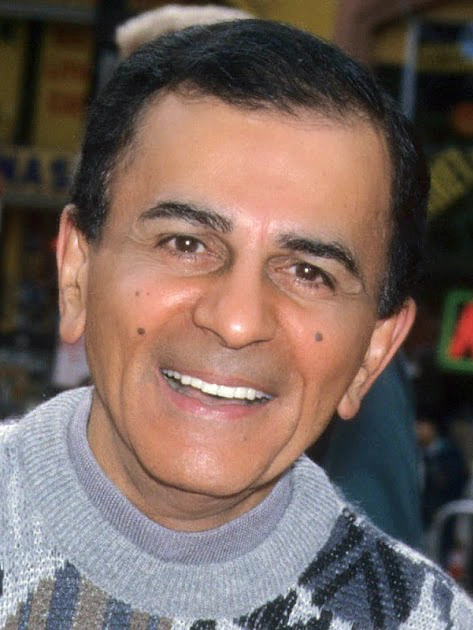
Attr: Ken Levine
| 30 Quotes | |
| Born as | Kemal Amin Kasem |
| Occup. | Actor |
| From | USA |
| Born | April 27, 1932 Detroit, Michigan, USA |
| Died | June 15, 2014 Gig Harbor, Washington, USA |
| Aged | 82 years |
| Cite | |
Citation Formats
APA Style (7th ed.)
Casey kasem biography, facts and quotes. (2026, February 16). FixQuotes. https://fixquotes.com/actors/casey-kasem/
Chicago Style
"Casey Kasem biography, facts and quotes." FixQuotes. February 16, 2026. https://fixquotes.com/actors/casey-kasem/.
MLA Style (9th ed.)
"Casey Kasem biography, facts and quotes." FixQuotes, 16 Feb. 2026, https://fixquotes.com/actors/casey-kasem/. Accessed 11 Mar. 2026.
Early Life and Background
Kemal Amin Kasem was born on April 27, 1932, in Detroit, Michigan, to Lebanese Druze immigrant parents, a household shaped by the pressures and possibilities of Arab American life between the Depression and World War II. Detroit was a radio town and a factory town, tuned to nightly voices and daytime noise, and Kasem grew up learning how sound could make a private room feel like a public square. Early on he absorbed both the discipline of immigrant ambition and the American appetite for entertainment - a pairing that would later let him move easily between sincerity and showmanship.As a teenager he gravitated toward microphones, adopting the more American-sounding name "Casey Kasem" as he began to imagine a career that would depend on instant intimacy with strangers. The era rewarded polished voices and clean optimism, and Kasem had both, but underneath was a listener's temperament: he could study rhythm, timing, and the small emotional cues that made an audience stay. That sensitivity to mood would become his signature across radio, television, and voice acting, even as he guarded his private self behind a famously smooth delivery.
Education and Formative Influences
Kasem attended Wayne State University in Detroit while working in broadcasting, and his education was as much studio apprenticeship as classroom training. The postwar boom expanded local stations and national syndication, and he learned to treat radio as craft - pacing, diction, and audience psychology - rather than mere chatter. Military service also sharpened his production instincts; drafted during the Korean War, he helped build morale programming, an early rehearsal for the blend of warmth, structure, and narrative that later defined his best-known work.Career, Major Works, and Turning Points
By the 1960s Kasem had become a recognizable on-air personality, and in 1970 he launched American Top 40, the countdown that made his voice a weekly national ritual. His restrained drama - the long pause, the soft emphasis, the careful setup to a hook - turned chart positions into storytelling, and the show helped standardize a national pop conversation in an age when FM radio, youth culture, and record promotion were rapidly professionalizing. Parallel to radio, Kasem became a prolific voice actor: he voiced Shaggy Rogers in Scooby-Doo (from 1969 onward) and later characters such as Robin in Super Friends, proving his range while keeping his core persona intact - friendly, slightly mischievous, and emotionally legible. He also became one of the most recorded commercial voices in America, a mass-media ubiquity that both financed and reinforced his brand. Later years brought public family conflict over his care as dementia advanced, and his death on June 15, 2014, closed a life whose public sound had long outlasted the private body.Philosophy, Style, and Themes
Kasem approached pop culture as an emotional system with rules that could be described without draining the magic. “Songs used to be short, then they became longer, and now they're getting shorter”. For him, format changes were surface weather; the deeper constants were human needs. His on-air manner treated the listener as a solitary person - driving, working late, feeling unseen - and offered them a dependable weekly ceremony. The countdown was never just numbers; it was reassurance that someone was paying attention, that your feelings had a place in public.His psychology as a broadcaster centered on translation: turning the chaos of the marketplace into intelligible, humane narrative. “If the beat gets to the audience, and the message touches them, you've got a hit”. That sentence is less a music theory than a theory of empathy, and it explains his calm, non-cynical tone even when pop became louder, more fragmented, or more ironic. He also insisted that the core emotional vocabulary stayed stable: “For the most part, that message hasn't changed a lot over the years - love is still love, and heartbreak is still heartbreak”. In practice, this meant he favored clear diction, moral tidiness, and a controlled tenderness - a style that made him credible to teenagers and safe to parents, and that allowed his voice acting to feel instantly trustworthy.
Legacy and Influence
Kasem helped define the modern radio host as curator, counselor, and narrator, shaping how countdowns, dedications, and human-interest interludes became portable national culture. American Top 40 set a template for syndicated personality radio, while his work as Shaggy gave generations a comforting vocal landmark that traveled across reruns, films, and new series. His legacy is the paradox of mass intimacy: a man heard by millions who sounded like he was speaking to one, proving that in an era of accelerating media change, the most enduring technology can be a human voice trained to listen back.Our collection contains 30 quotes written by Casey, under the main topics: Witty One-Liners - Music - Long-Distance Relationship - Success - Self-Discipline.
Other people related to Casey: Ryan Seacrest (Entertainer)
Source / external links