
Catherine Deneuve Biography Quotes 59 Report mistakes
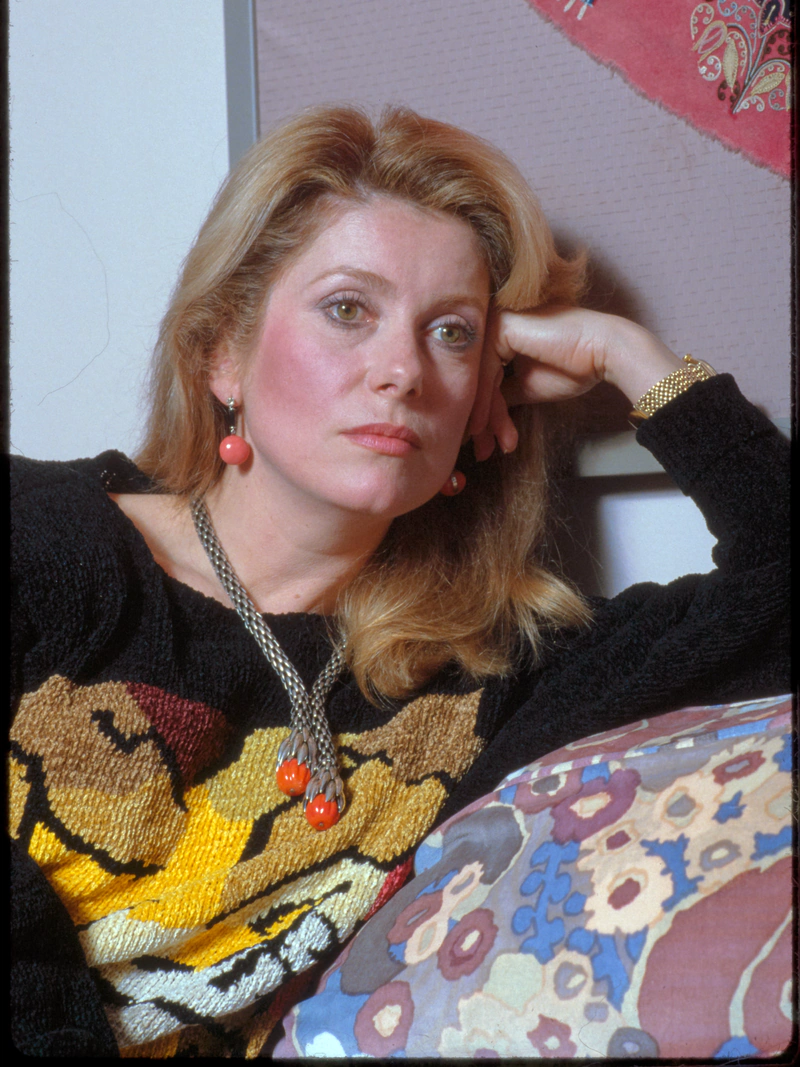
Attr: Bernard Gotfryd
| 59 Quotes | |
| Occup. | Actress |
| From | France |
| Born | October 22, 1943 |
| Age | 82 years |
| Cite | |
Citation Formats
APA Style (7th ed.)
Catherine deneuve biography, facts and quotes. (2026, March 6). FixQuotes. https://fixquotes.com/actors/catherine-deneuve/
Chicago Style
"Catherine Deneuve biography, facts and quotes." FixQuotes. March 6, 2026. https://fixquotes.com/actors/catherine-deneuve/.
MLA Style (9th ed.)
"Catherine Deneuve biography, facts and quotes." FixQuotes, 6 Mar. 2026, https://fixquotes.com/actors/catherine-deneuve/. Accessed 24 Mar. 2026.
Early Life and Background
Catherine Deneuve was born Catherine Fabienne Dorleac on October 22, 1943, in Paris, into a family where acting was less a glamorous exception than a household trade. Her father, Maurice Dorleac, was a stage and screen actor; her mother, Renee Simonot, was an actress and noted dubbing performer. She grew up among sisters who also acted, most famously Francoise Dorleac, and from the beginning her identity was shaped by doubleness: private child and public image, family member and future icon. She adopted "Deneuve", her mother's maiden name, early in her career, partly to distinguish herself from Francoise, partly to define a self that could survive inside a profession built on projection.
Her adolescence unfolded during a France remaking itself after war, empire, and social upheaval. Paris in the 1950s and 1960s was becoming the capital of modern cinema, and Deneuve came of age just as the French New Wave loosened the old studio order. Yet she was never fully of that movement in the doctrinal sense. Instead, she emerged from its neighboring currents - art cinema, musical fantasy, psychological drama, commercial stardom - and turned reserve itself into an instrument. A defining early wound deepened that reserve: in 1967, Francoise Dorleac died in a car accident at twenty-five, a loss that haunted Deneuve's life and sharpened the melancholy, self-possession, and emotional opacity that audiences would later read as mystery.
Education and Formative Influences
Deneuve did not follow an academic path so much as an apprenticeship in performance, camera awareness, and self-command. She appeared on screen as a teenager, with early roles in films such as Les Collegiennes and L'Homme a femmes, learning quickly how cinema magnifies stillness. Her decisive formation came through directors who recognized that her cool exterior could carry contradictory charges - innocence, eroticism, intelligence, danger, grief. Roger Vadim, with whom she had a son, Christian, cast her in vice-and-virtue fantasies; Jacques Demy transformed her into a figure of luminous modern longing in The Umbrellas of Cherbourg in 1964; Roman Polanski discovered her capacity for psychic fracture in Repulsion in 1965; Luis Bunuel saw in her the ideal vessel for bourgeois ritual and forbidden desire in Belle de Jour in 1967 and later Tristana. These collaborations taught her that the camera loved not confession but control, and that secrecy could be more expressive than demonstrative feeling.
Career, Major Works, and Turning Points
Deneuve's career is unusually broad because she refused to let any one success become a cage. The Umbrellas of Cherbourg made her an international star through a role that merged pop color, sung dialogue, and romantic fatalism. Repulsion, Belle de Jour, and Tristana established her as European cinema's supreme paradox: an actress whose composure made transgression more disturbing, not less. She moved between auteur cinema and mainstream work with rare agility - Mississippi Mermaid with Francois Truffaut, The Last Metro in 1980, for which she won a Cesar, Indochine in 1992, which brought her an Academy Award nomination, and later films by Andre Techine, Regis Wargnier, Lars von Trier, Francois Ozon, and Arnaud Desplechin. She also became a fashion and national style symbol, notably associated with Yves Saint Laurent, but the image never exhausted the worker beneath it. Turning points often came through risk: playing emotionally bruised, morally ambiguous, or sexually unsettling women when safer prestige was available; surviving the deaths, scandals, and reinventions that undo many stars; and aging on screen without surrendering authority. By the late twentieth century she was not merely famous in France but one of the few European actresses whose face signified an entire tradition of cinema.
Philosophy, Style, and Themes
Deneuve's art rests on the tension between distance and disclosure. She does not perform emotion as overflow; she lets it gather under the skin until the audience feels the pressure of what is withheld. That is why directors repeatedly used her to explore fetish, repression, class performance, and the unstable border between freedom and role-playing. Her characters often appear composed by social codes - wife, prostitute, aristocrat, mother, star - only to reveal secret appetites or wounds. She understood that spectators often confused her blond poise with predation, and she resisted that flattening with dry clarity: “I was never a dangerous woman. I'm not the prissy blonde woman that could take your husband away”. The remark is revealing not because it denies erotic power, but because it rejects cliche and insists on self-definition against fantasy.
Just as important was her refusal of actorly mythology. “Actors have to be there and do the work, and that's enough”. That sentence captures her anti-romantic professionalism - punctual, exacting, unseduced by theories of genius. Yet she also admitted that craft required provocation from outside: “Directors have to push me. I have to be pushed up. Not all the time, but often”. This combination of discipline and resistance helps explain her greatest performances. She rarely dissolves into a role; instead she creates a charged negotiation between self and part, preserving an inner sovereignty even while submitting to the frame. The result is a style of modern screen acting in which enigma is not emptiness but moral and psychological density.
Legacy and Influence
Catherine Deneuve endures as more than a star, more even than a national emblem. She became a model for how an actress can inhabit beauty without being consumed by it, can work across commercial and art-house cinema without diluting either, and can age into greater complexity rather than nostalgic self-imitation. Generations of performers have borrowed from her stillness, tonal control, and refusal to overexplain feeling. Directors continue to cast against or through the "Deneuve image", knowing it carries decades of cinematic memory: Demy's romantic ache, Bunuel's icy eroticism, Techine's emotional intelligence, Ozon's play with persona. In France she has occupied the rare space where mass recognition, artistic seriousness, and cultural symbolism meet. Internationally she remains one of the last performers whose face evokes not just celebrity but the long history of European film itself.
Our collection contains 59 quotes written by Catherine, under the main topics: Witty One-Liners - Motivational - Art - Music - Love.
Other people related to Catherine: Emmanuelle Beart (Actress), Agnes Varda (Director), Marcello Mastroianni (Actor), Michel Legrand (Composer), Tony Scott (Director), Gerard Depardieu (Actor), Whitley Strieber (Writer)