
Chow Yun-Fat Biography Quotes 9 Report mistakes
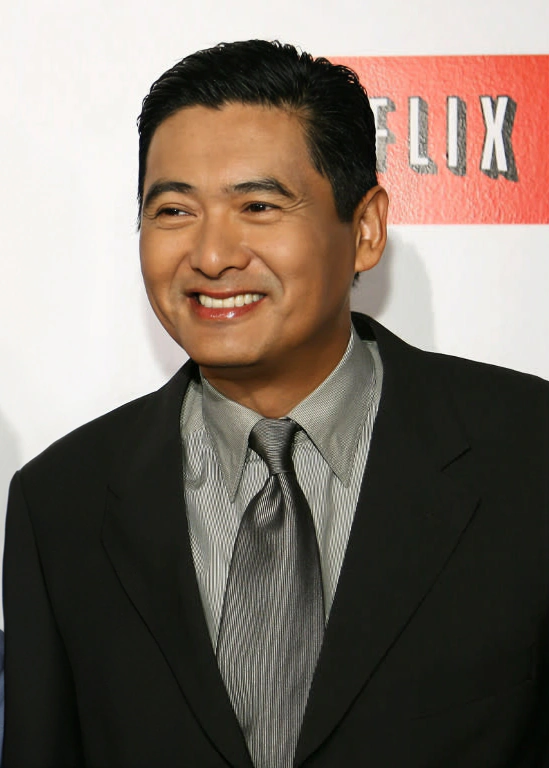
| 9 Quotes | |
| Born as | 周润发 |
| Occup. | Actor |
| From | China |
| Born | May 18, 1955 Lamma Island, Hong Kong |
| Age | 70 years |
| Cite | |
Citation Formats
APA Style (7th ed.)
Chow yun-fat biography, facts and quotes. (2026, February 11). FixQuotes. https://fixquotes.com/actors/chow-yun-fat/
Chicago Style
"Chow Yun-Fat biography, facts and quotes." FixQuotes. February 11, 2026. https://fixquotes.com/actors/chow-yun-fat/.
MLA Style (9th ed.)
"Chow Yun-Fat biography, facts and quotes." FixQuotes, 11 Feb. 2026, https://fixquotes.com/actors/chow-yun-fat/. Accessed 25 Mar. 2026.
Early Life and Background
Chow Yun-Fat (Zhou Runfa, 周润发) was born on 1955-05-18 on Lamma Island, a small, working waterfront outpost of Hong Kong that still carried the cadence of fishing villages and rural southern China. His family lived close to the edge of subsistence, and the boy learned early that charisma does not substitute for wages. That background mattered: the later screen image of effortless cool was forged against a childhood in which effort was visible and dignity had to be protected.He left school young to help support the household, taking a run of jobs that trained his observational sense - messenger, hotel worker, even labor that put him among strangers and status rituals. Those years gave him an instinct for how people perform class, desire, and fear, an actor's raw material. They also seeded a lifelong frugality that cut against celebrity excess and kept his public persona unusually plainspoken.
Education and Formative Influences
Chow entered the orbit of professional acting through Hong Kong's television pipeline, training with TVB in the early 1970s when the station functioned as an unofficial academy for Cantonese stardom. Television forced speed, discipline, and emotional clarity across long serial narratives; it also taught him how quickly an image can be manufactured and discarded in a city where entertainment and commerce were tightly interlocked. The era's Cantonese pop culture, the boom in local production, and the shadow of colonial modernity shaped his sensitivity to identity - a performer learning to be both intimate and iconic.Career, Major Works, and Turning Points
After early TV fame, Chow broke decisively into film with Ringo Lam's "A Better Tomorrow" (1986), where the trench coat and matchstick became shorthand for a new kind of Hong Kong masculinity - romantic, doomed, and stylishly lethal. Rather than stay locked in that mold, he stretched: "The Killer" (1989) and "Hard Boiled" (1992) with John Woo refined the "heroic bloodshed" archetype into operatic movement and moral melancholy, while dramas like "All About Ah-Long" (1989) revealed a gentler, working-class tenderness. A major pivot came with Ang Lee's "Crouching Tiger, Hidden Dragon" (2000), which carried him to global audiences as Li Mu Bai, followed by uneven Hollywood years ("The Replacement Killers", "Anna and the King", "Bulletproof Monk", later "Pirates of the Caribbean: At World's End") and a return to Chinese-language prestige in films such as "The Assassins" (2012). Throughout, his career mirrored Hong Kong's own shifts - from local golden age to post-handover repositioning within a larger Chinese and international market.Philosophy, Style, and Themes
Chow's acting style is built on contradiction: a relaxed surface that conceals restless calculation, and a comic lightness that can pivot into sorrow without warning. He has long resisted being reduced to a single exported persona, noting, “In the West audiences think I am a stereotyped action star, or that I always play hitmen or killers. But in Hong Kong, I did a lot of comedy, many dramatic films, and most of all, romantic roles, lots of love stories. I was like a romance novel hero”. Psychologically, that insistence is less vanity than self-preservation - a refusal to let international branding erase the full range of his inner repertoire, and a reminder that Hong Kong stardom demanded versatility, not specialization.Just as telling is his unromantic view of the profession, a defense against the industry's tendency to deify and then consume its faces. “An actor is only merchandise”. Underneath the bluntness is an ethic of craft over entitlement, which helps explain his steady work habits and his ability to subordinate ego to directors while still projecting authority on screen. The tension between freedom and constraint becomes a recurring theme in his best roles: killers who dream of redemption, swordsmen who renounce violence, lovers who cannot outrun duty. Even the international transition sharpened this theme, as language and cultural translation limited spontaneity and widened the gap between the actor he felt himself to be and the actor a foreign camera could easily read.
Legacy and Influence
Chow Yun-Fat endures as a defining face of late-20th-century Hong Kong cinema and as one of the clearest bridges between its local genres and global taste. His "A Better Tomorrow" silhouette helped codify modern action iconography, while his performances with John Woo became a grammar for filmmakers far beyond Asia. Yet his deeper legacy is range: the same actor could embody gangster fatalism, romantic longing, and wuxia restraint without losing the essential decency that audiences sensed beneath the style. In an era when Hong Kong's cultural autonomy and film industry have faced profound pressures, Chow remains a symbol of what that cinema once did best - turning speed, risk, and emotional sincerity into myth.Our collection contains 9 quotes written by Chow, under the main topics: Learning - Work Ethic - Overcoming Obstacles - Book - Movie.
Source / external links