
Clint Eastwood Biography Quotes 20 Report mistakes
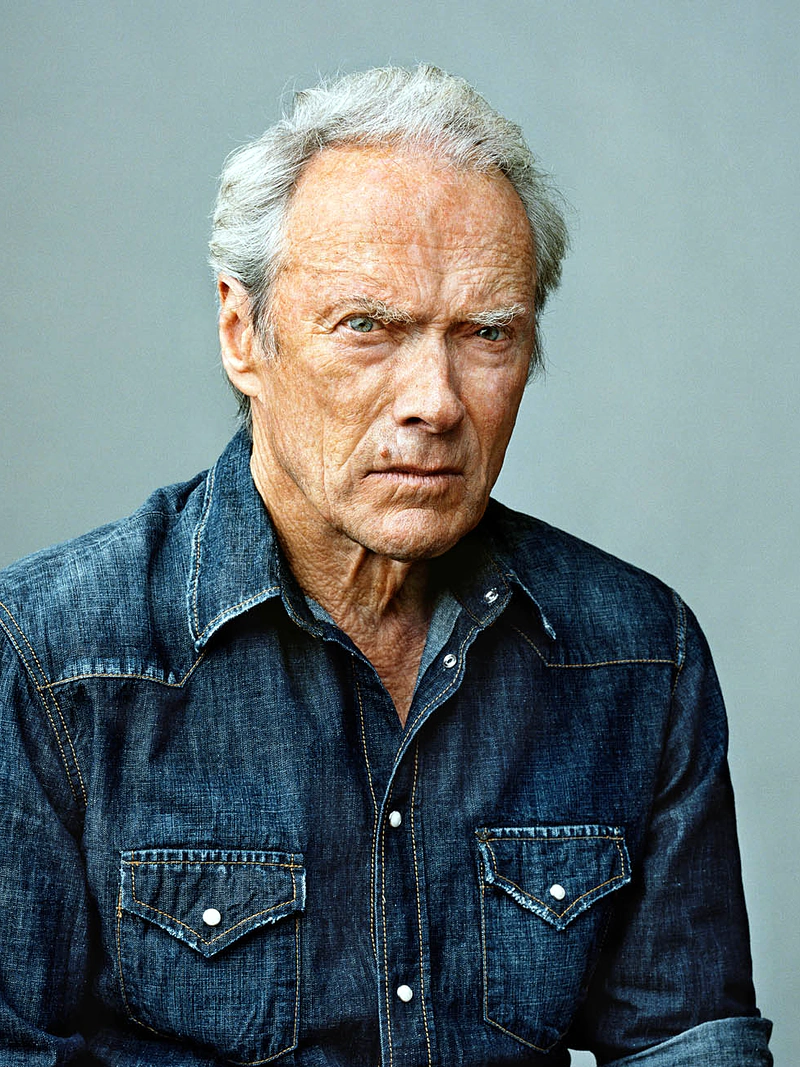
Attr: Martin Schoeller
| 20 Quotes | |
| Occup. | Actor |
| From | USA |
| Born | May 31, 1930 |
| Age | 95 years |
| Cite | |
Citation Formats
APA Style (7th ed.)
Clint eastwood biography, facts and quotes. (2026, February 11). FixQuotes. https://fixquotes.com/actors/clint-eastwood/
Chicago Style
"Clint Eastwood biography, facts and quotes." FixQuotes. February 11, 2026. https://fixquotes.com/actors/clint-eastwood/.
MLA Style (9th ed.)
"Clint Eastwood biography, facts and quotes." FixQuotes, 11 Feb. 2026, https://fixquotes.com/actors/clint-eastwood/. Accessed 25 Mar. 2026.
Early Life and Background
Clinton Eastwood Jr. was born May 31, 1930, in San Francisco, California, during the aftershocks of the Great Depression. His father, Clinton Sr., worked a moving sequence of jobs, and the family drifted around Northern California before settling more steadily in the East Bay. That early instability produced a private temperament: watchful, self-contained, and alert to shifts in power and mood. Eastwood grew up amid working-class pragmatism and the mythology of the American West that still lingered in California's towns and movie houses.He came of age in the long mobilization of World War II and the boom that followed it, when masculinity was publicly coded as competence, restraint, and readiness. Eastwood was a tall, athletic teenager with a rebellious streak and a taste for speed; brushes with authority and routine labor left him suspicious of institutions but fascinated by discipline. The era offered him two competing scripts: join the postwar corporate order or chase a more improvisational life. He leaned toward the latter, but without romanticizing it.
Education and Formative Influences
Eastwood attended schools in Northern California and graduated from Oakland Technical High School, then drifted through jobs - lifeguard, gas station attendant, lumber worker - before a stint in the U.S. Army during the Korean War period. He avoided combat but absorbed the military's lessons about hierarchy, procedure, and the thin line between competence and catastrophe, experiences that later fed his onscreen authority and his offscreen insistence on efficiency. He studied acting informally, learned by watching older stars and directors, and was especially drawn to the minimalist screen presence of performers like Gary Cooper, whose stillness suggested control rather than emptiness.Career, Major Works, and Turning Points
After early contract work at Universal and bit parts, Eastwood broke through on television as Rowdy Yates in "Rawhide" (1959-1965), a steady platform that trained him for long production schedules and audience expectations. His defining reinvention came in Italy with Sergio Leone's "Dollars Trilogy" - "A Fistful of Dollars" (1964), "For a Few Dollars More" (1965), and "The Good, the Bad and the Ugly" (1966) - where the laconic antihero and the economic visual style hardened his screen identity into a modern archetype. Back in the United States he became a box-office force with Don Siegel's "Dirty Harry" (1971), then moved increasingly behind the camera, founding Malpaso Productions and directing with a reputation for speed and understatement. His later career broadened from star vehicles to reflective, morally knotted films: "Unforgiven" (1992) reframed his Western mythology; "Mystic River" (2003) and "Million Dollar Baby" (2004) probed grief and obligation; "Flags of Our Fathers" and "Letters from Iwo Jima" (both 2006) treated war as memory and misrecognition rather than glory. Turning points often arrived when he interrogated what had made him famous, converting iconography into self-critique.Philosophy, Style, and Themes
Eastwood's public persona - the squint, the spare dialogue, the implied violence - can mislead; his most consistent subject is not force but restraint. His characters often operate inside a private code because public systems fail or arrive too late, and the drama comes from how much damage that code can justify. The psychology is calibrated to limits: “Men must know their limitations”. In Eastwood's world, that line is less swagger than diagnosis - the recognition that power without boundaries becomes chaos, and that a man who cannot measure himself will eventually be measured by consequences.As a director, he favors uncluttered staging, patient takes, and performances that trust silence, a craft philosophy he learned by watching older Hollywood minimalists and by practicing economy on set. “My old drama coach used to say, 'Don't just do something, stand there.' Gary Cooper wasn't afraid to do nothing”. That aesthetic of stillness becomes an ethical stance: let the audience feel the weight of choice before the act, and let aftermath linger longer than the trigger pull. Yet Eastwood is not a pacifist; he is fascinated by control, especially when violence is near. “I have a very strict gun control policy: if there's a gun around, I want to be in control of it”. Read psychologically, it is a confession of temperament - an insistence that danger must be contained by competence - and a clue to why his best films test whether anyone truly stays in control once the moral line is crossed.
Legacy and Influence
Eastwood endures as one of the rare American figures who became both a screen myth and a sustained auteur, spanning the studio era's last echoes and the modern industry's fragmentation. He helped globalize the Western through Leone, then later helped mature it by exposing its costs, making the genre a vehicle for regret as much as for legend. His influence runs through the taciturn antiheroes of action cinema, the stripped-down realism of many contemporary directors, and the idea that a star can age into harder truths rather than softer nostalgia. Whether celebrated or contested, his body of work remains a long argument about agency, responsibility, and the uneasy American desire to believe that one competent individual can carry what institutions cannot.Our collection contains 20 quotes written by Clint, under the main topics: Witty One-Liners - Motivational - Wisdom - Mortality - Nature.
Other people related to Clint: J. Michael Straczynski (Producer), Ryan Phillippe (Actor), Sean Penn (Actor), Matt Damon (Actor), Laurence Fishburne (Actor), Paul Haggis (Director), Forest Whitaker (Actor), Donna Mills (Actress), Fred Thompson (Politician), Bradley Cooper (Actor)