
Connie Stevens Biography Quotes 8 Report mistakes
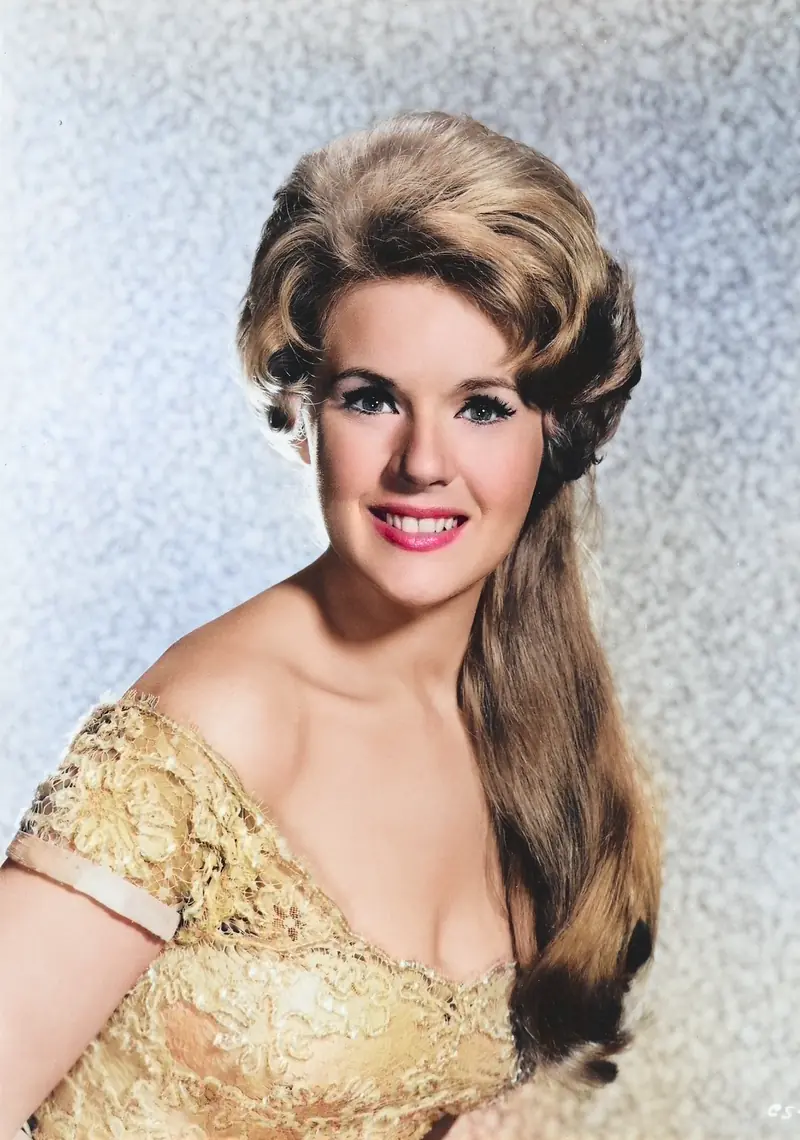
Attr: Studio publicity photo, Public domain
| 8 Quotes | |
| Born as | Concetta Rosalie Ann Ingolia |
| Occup. | Actress |
| From | USA |
| Spouses | James Stacy (1963-1966) Eddie Fisher (1967-1969) |
| Born | August 8, 1938 Brooklyn, New York, USA |
| Age | 87 years |
Connie Stevens was born Concetta Rosalie Ann Ingoglia on August 8, 1938, in Brooklyn, New York. She grew up in a musical household: her father, Peter Ingoglia, was a jazz musician who worked under the professional name Teddy Stevens, and her mother, Eleanor McGinley, was a singer. That family background shaped both her stage name and her early ambitions. After her parents separated, she spent stretches of her youth moving between relatives and schools, absorbing popular music and classic standards, and developing a poised stage presence that would become her professional signature. By her mid-teens she had begun singing publicly and edging toward acting, taking small parts and training her voice with the goal of a career in entertainment. A move to California opened the door to studio auditions and the network of musicians and producers connected to Hollywood and television.
Breakthrough in Television and Music
Stevens's breakthrough came after she signed with Warner Bros., which was then building an impressive slate of television dramas tied to youthful stars and briskly paced storytelling. In 1959 she was cast as Cricket Blake on Hawaiian Eye, a detective-adventure series set in Honolulu. Playing a resourceful photographer and occasional nightclub singer, she became a core part of the ensemble alongside Anthony Eisley, Robert Conrad, and Poncie Ponce. The series, which ran from 1959 to 1963, gave her a weekly showcase for acting and singing, and it cemented her appeal with audiences.
Capitalizing on the show's popularity, Stevens recorded a string of singles. She teamed with Edd Byrnes on Kookie, Kookie (Lend Me Your Comb), a playful novelty track tied to Warner's teen-idol wave, and followed with her own hit, Sixteen Reasons, which brought her onto national radio and television variety stages. The records highlighted a blend of sweetness and savvy that matched her screen persona. As Hawaiian Eye circulated in syndication and abroad, Stevens toured, appeared on music programs, and became a familiar presence in fan magazines, balancing on-screen work with a budding recording career.
Film Career
Before and during her Warner Bros. tenure, Stevens appeared in features that positioned her within the youth-oriented cinema of the era. She played perky, energetic ingénues in films such as Rock-a-Bye Baby and The Party Crashers, and soon moved into higher-profile studio dramas. Under director Delmer Daves she appeared in Parrish (1961), opposite Troy Donahue, and took the title role in Susan Slade (1961), which gave her a rare chance to play a complex dramatic arc as a young woman navigating love, reputation, and family expectations. The combination of glamour, vulnerability, and steady comic timing made her a versatile contract player across the early 1960s.
Stevens also headlined the suspense film Two on a Guillotine (1965), opposite Dean Jones and Cesar Romero, broadening her repertoire with gothic-tinged thrills, and she joined the ensemble of Palm Springs Weekend (1963), a sunny Warner Bros. holiday romp featuring several of the studio's rising names. After the heyday of the studio system, she kept a foothold in feature films, notably returning to a classroom-set musical world with Grease 2 (1982), where her poised, lightly comic presence connected her with a new generation of moviegoers.
Television, Stage, and Touring
As the television landscape shifted in the 1970s and 1980s, Stevens navigated variety shows, guest appearances, and television movies, often blending acting with musical performance. She worked steadily in Las Vegas showrooms and on national tours, cultivating a nightclub act that drew on standards, stories from her Warner Bros. years, and her pop hits. The ability to adapt, moving from series regular to guest star to headlining vocalist, helped sustain her long career. She frequently reunited with colleagues from her early series and maintained ties to the Warner Bros. community, reflecting the lasting network built during Hawaiian Eye's run.
Entrepreneurship and Directing
Beyond performing, Stevens became a successful entrepreneur. She founded the cosmetics and skincare brand Forever Spring, leveraging television retailing to reach a wide audience. Her warm, conversational style translated well to direct-response platforms, and the venture became a notable second act, giving her independence beyond the traditional studio and nightclub circuits. Later, she added filmmaking to her portfolio by writing, directing, and producing Saving Grace B. Jones, a feature released in the late 2000s that drew on personal stories and underscored her interest in telling character-driven narratives from behind the camera.
Service and Philanthropy
Stevens devoted considerable energy to entertaining American service members, joining USO tours to perform for troops overseas, including during the Vietnam era and in subsequent decades. Those engagements, often undertaken alongside other Hollywood and music figures, reflected a sense of duty and connection to audiences far from home stages. She also lent her name and time to benefit events and industry charities, participating in the civic and philanthropic traditions that have long linked performers to broader community work.
Personal Life
The most visible chapters of Stevens's personal life included marriages to actor James Stacy and singer Eddie Fisher. With Fisher she had two daughters, Joely Fisher and Tricia Leigh Fisher, both of whom became actresses and singers in their own right. Through that branch of the family, her daughters share half-sibling ties with Carrie Fisher and Todd Fisher, figures well known in film and literature through their mother, Debbie Reynolds. These connections, while often drawing public curiosity, also marked a tight-knit constellation of performers who navigated the changing contours of Hollywood from the studio years into contemporary media.
Stevens's close professional relationships were just as formative. Working with Robert Conrad, Anthony Eisley, and Poncie Ponce on Hawaiian Eye, collaborating with Edd Byrnes on a charting single, and sharing screens with Troy Donahue, Dean Jones, and Cesar Romero, she occupied a central place in a cohort that defined youth entertainment at the turn of the 1960s. Those partnerships reflected an era when studio casting, television exposure, and radio airplay intertwined to create fast-rising, cross-platform careers.
Legacy
Connie Stevens's legacy rests on a rare combination: she was a television star with a signature role, a pop singer with enduring hits, a film lead in both dramas and lighthearted youth films, an entrepreneur who built a resilient brand, and a director unafraid to author her own material. The continuity across these phases is her rapport with audiences, approachable, melodic, and quick-witted, shaped early by the musical home of Teddy Stevens and Eleanor McGinley and refined by years on soundstages and stages around the world. As her daughters Joely and Tricia Leigh Fisher continued the family tradition in entertainment, Stevens's place in American popular culture has remained secure: a versatile, self-directed performer whose work captures the evolution of Hollywood from the studio system to the age of independent ventures, and whose connections to peers and family knit her story firmly into the broader tapestry of 20th-century show business.
Our collection contains 8 quotes who is written by Connie, under the main topics: Love - Legacy & Remembrance - Pet Love - Dog - Perseverance.
Other people realated to Connie: Joely Fisher (Actress)
Source / external links