
Corey Haim Biography Quotes 17 Report mistakes
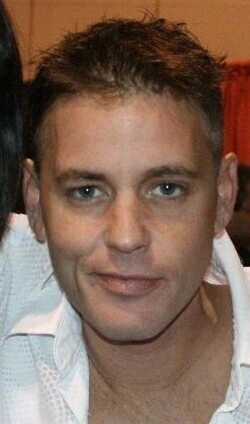
| 17 Quotes | |
| Born as | Corey Ian Haim |
| Occup. | Actor |
| From | Canada |
| Born | December 23, 1971 Toronto, Ontario, Canada |
| Died | March 10, 2010 Burbank, California, United States |
| Cause | Pneumonia |
| Aged | 38 years |
| Cite | |
Citation Formats
APA Style (7th ed.)
Corey haim biography, facts and quotes. (2026, February 11). FixQuotes. https://fixquotes.com/actors/corey-haim/
Chicago Style
"Corey Haim biography, facts and quotes." FixQuotes. February 11, 2026. https://fixquotes.com/actors/corey-haim/.
MLA Style (9th ed.)
"Corey Haim biography, facts and quotes." FixQuotes, 11 Feb. 2026, https://fixquotes.com/actors/corey-haim/. Accessed 12 Feb. 2026.
Early Life and Background
Corey Ian Haim was born on December 23, 1971, in Toronto, Ontario, into a middle-class Jewish Canadian family whose stability would be tested by the machinery of child stardom. In the late 1970s and early 1980s, as North American entertainment leaned hard into youth-driven television and glossy teen films, Haim became the kind of camera-ready boy that casting directors could translate into a brand: quick smile, open face, anxious energy held in check by charm.His adolescence unfolded in the cross-border shuttle between Canada and the United States, where opportunity increasingly meant Los Angeles. Fame arrived before emotional defenses did, and with it came the pressure to perform a version of boyhood that was both marketable and endlessly repeatable. That pressure - and the adult world surrounding it - would shape his private life as much as any script, setting the stage for a career defined by early triumphs, public vulnerability, and a long fight to be seen as more than a nostalgic icon.
Education and Formative Influences
Haim attended school intermittently as his acting workload increased, learning his trade less in classrooms than on sets where adult expectations governed a child-led product. His formative influences were practical rather than academic: directors who demanded usable takes under time constraints, publicists who taught him the value of likability, and an industry that rewarded immediate emotional transparency while discouraging true privacy. The result was an actor whose instincts were sharp but whose personal development took place under fluorescent lights, call sheets, and the constant implication that he was replaceable if he stopped being easy to sell.Career, Major Works, and Turning Points
Haim broke through in the mid-1980s and quickly became a defining face of the era, starring in Lucas (1986) and then anchoring teen-oriented hits including The Lost Boys (1987), License to Drive (1988), and Dream a Little Dream (1989). His on-screen persona - earnest, funny, wounded, and game - made him a natural lead, and his friendship and frequent co-starring with Corey Feldman crystallized into the "Two Coreys" phenomenon, a shorthand for 1980s youth culture as much as for two working actors. But the same period brought a steep personal cost: Los Angeles offered access and exposure, but also predation, temptation, and the normalization of self-medication inside a system built to keep productions running. By the 1990s his film opportunities narrowed, his health and addiction struggles became tabloid material, and attempts at comeback work - including reality television and lower-budget acting projects - unfolded under the shadow of his earlier fame. Haim died on March 10, 2010, in Los Angeles, at 38, closing a life that had been public for nearly as long as he had been alive.Philosophy, Style, and Themes
Haim acted from the nerve endings outward. His best performances show a childlike sincerity that reads as truth rather than technique: the sense that he is reacting, not presenting. That quality made him magnetic in stories about belonging and longing - the outsider who wants in, the kid who jokes to cover fear, the friend who needs rescue but does not know how to ask for it. He understood the teen-movie surface - romance, adventure, the rush of firsts - yet often played it with a tremor underneath, as if the pleasures were never entirely safe. Even his lightest scenes carry a telltale intensity, the feeling of someone trying to hold the moment together before it slips away.His interviews and later reflections reveal an inner life split between hopeful self-authorship and the grim arithmetic of dependency. The dream of total escape into luxury and calm - "I think maybe ten years from now, I'm hopefully going to be, in like, Tahiti or something. Kicking back like in my huge mansion, if everything goes right, it's all up to me". - reads as more than fantasy; it is the language of a young man trying to locate control in an industry that commercialized his adolescence. The darker counterpoint was chemical management of anxiety and exhaustion: "I started on the downers which were a hell of a lot better than the uppers because I was a nervous wreck". When he later quantified the scale of reliance - "But one led to two, two led to four, four led to eight, until at the end it was about 85 a day - the doctors could not believe I was taking that much. And that was just the valium - I'm not talking about the other pills I went through". - it exposed a psychology shaped by survival tactics mistaken for solutions, and by a culture that offered sedation more readily than protection.
Legacy and Influence
Haim endures as one of the emblematic faces of 1980s youth cinema, a performer whose vulnerability helped define the emotional temperature of teen storytelling in that decade. The Lost Boys remains a durable pop-cultural touchstone, and Lucas still reads as a humane portrait of adolescence that benefits from his unguarded, almost documentary honesty. Yet his broader legacy is inseparable from the cautionary history of child stardom: the gap between public adoration and private safety, and the long afterlife of early fame when work slows but scrutiny does not. In remembering Corey Haim, audiences return not only to a body of beloved films, but also to a life that illuminated - painfully and publicly - what the entertainment industry can take from the young even as it turns them into icons.Our collection contains 17 quotes written by Corey, under the main topics: Witty One-Liners - Love - Music - Writing - Movie.
Other people related to Corey: Corey Feldman (Actor), Courtney Thorne Smith (Actress), Jason Patric (Actor)
Source / external links