
Dougray Scott Biography Quotes 30 Report mistakes
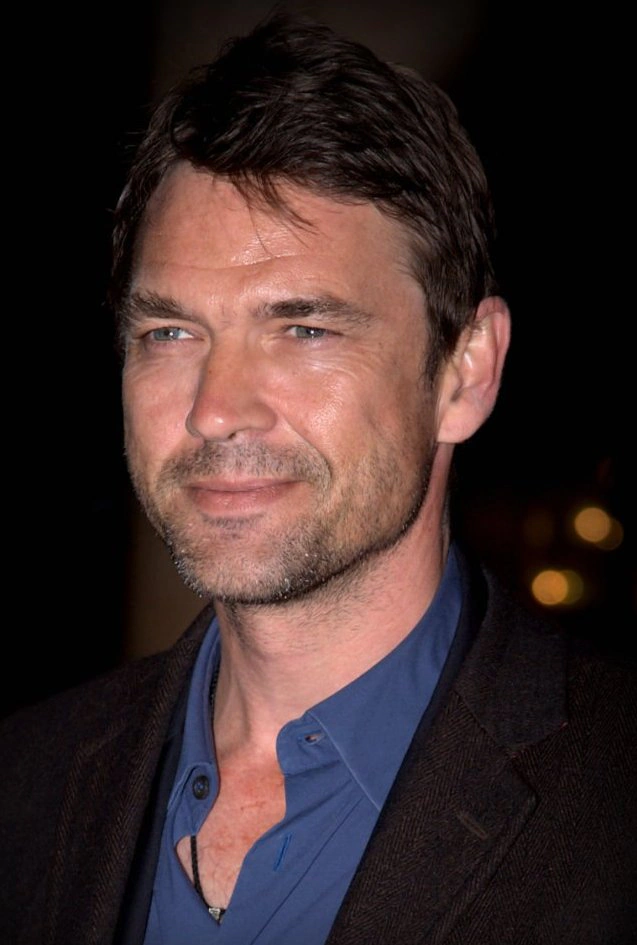
Attr: Ian Smith, CC BY-SA 2.0
| 30 Quotes | |
| Occup. | Actor |
| From | United Kingdom |
| Born | November 25, 1965 Glenrothes, Fife, Scotland |
| Age | 60 years |
| Cite | |
Citation Formats
APA Style (7th ed.)
Dougray scott biography, facts and quotes. (2026, February 11). FixQuotes. https://fixquotes.com/actors/dougray-scott/
Chicago Style
"Dougray Scott biography, facts and quotes." FixQuotes. February 11, 2026. https://fixquotes.com/actors/dougray-scott/.
MLA Style (9th ed.)
"Dougray Scott biography, facts and quotes." FixQuotes, 11 Feb. 2026, https://fixquotes.com/actors/dougray-scott/. Accessed 26 Mar. 2026.
Early Life and Background
Stephen Dougray Scott was born on November 25, 1965, in Glenrothes, Fife, Scotland, part of a postwar new-town landscape built for work, routine, and social mobility rather than glamour. His father worked in insurance and his mother was a nurse, and the household carried the mix of pragmatism and aspiration common to working- and lower-middle-class Scotland in the 1970s - steady jobs, tight budgets, and a sharp awareness that opportunity often came through performance: at school, on the pitch, or on the stage.That environment gave Scott an outwardly sturdy, inwardly restless temperament. He has often been described as intense on camera, and that intensity reads less like cultivated mystique than like a learned focus - the kind forged in communities where standing out is permitted only if you can justify it with effort. Sport mattered, competition mattered, and so did the discipline of showing up; those habits later translated naturally into an actorly method built on preparation and physical commitment.
Education and Formative Influences
After early schooling in Fife, Scott trained at the Royal Welsh College of Music and Drama in Cardiff, one of the UKs key conservatoires feeding British repertory and screen acting. The late-1980s British acting world he entered prized technical craft - voice, movement, text - but also demanded adaptability as television dramas, soaps, and mid-budget films became the most reliable routes to employment. For Scott, that meant learning to hold emotional truth inside commercial formats: to be specific without being precious, and to treat every role, however small, as a test of stamina and clarity.Career, Major Works, and Turning Points
Scott emerged through British television in the early 1990s, notably as the roguish Prince Edward in the historical drama series "The Prince and the Pauper" (1996), before breaking wider with films such as "Twin Town" (1997) and "Deep Impact" (1998). A major turning point - and a famous near-miss - came when he was cast as Wolverine in "X-Men" but was forced to withdraw after a "Mission: Impossible 2" (2000) injury and scheduling conflicts, a sliding-doors moment that might have made him a long-term franchise icon. Instead, his career settled into a deliberately varied pattern: glossy studio work like "Enigma" (2001) and "Hitman" (2007), prestige-leaning fare such as "Ripley's Game" (2002), and television reinventions including the long-running series "Desperate Housewives" (as Ian Hainsworth) and later crime drama "Hemlock Grove". The throughline was a willingness to oscillate between leading-man charisma and character-actor risk, using each to refresh the other.Philosophy, Style, and Themes
Scott acts as if the body is an argument: posture, gait, a held breath, a sudden stillness. His best performances lean into ordinary masculinity under stress - men who believe in rules until the rules stop working. That interest is explicit in his approach to "Ripley's Game": “When I'm playing a character like Jonathan in Ripley's Game I want to be in the moment when he's feeling pain; this very ordinary person who finds himself in extraordinary circumstances”. Psychologically, that choice reveals an actor drawn to thresholds - the instant a self-image breaks - and confident that audience empathy is earned through specificity rather than pleading.He is also notably unsentimental about the business while remaining romantic about storytelling. “People go to see a film because it's a great story and it's visually exciting to watch”. The line reads like common sense, but it points to a pragmatic aesthetic: clarity, pace, and image as the delivery system for feeling. At the same time, Scott has learned - sometimes publicly, through projects that almost happened - how fragile financing can be: “It quite often happens that they attach a name to a project and it doesn't get all the financing it needs”. Taken together, these positions sketch an inner life balancing craft idealism with hard-earned realism: he commits to emotional truth on set, while understanding that careers are shaped by calendars, money, and timing as much as talent.
Legacy and Influence
Dougray Scott endures less as a single definitive role than as a model of the modern British actor navigating a globalized industry: Scottish roots, classical training, American television visibility, and an ongoing willingness to take supporting parts that deepen a story rather than merely decorate it. His "almost" franchise destiny has become part of his legend, yet his steadier impact lies in showing how to sustain a screen life without being owned by one character - by treating the industry as changeable, but the work as permanent.Our collection contains 30 quotes written by Dougray, under the main topics: Witty One-Liners - Never Give Up - Sports - Live in the Moment - War.
Source / external links