
Ed Harris Biography Quotes 29 Report mistakes
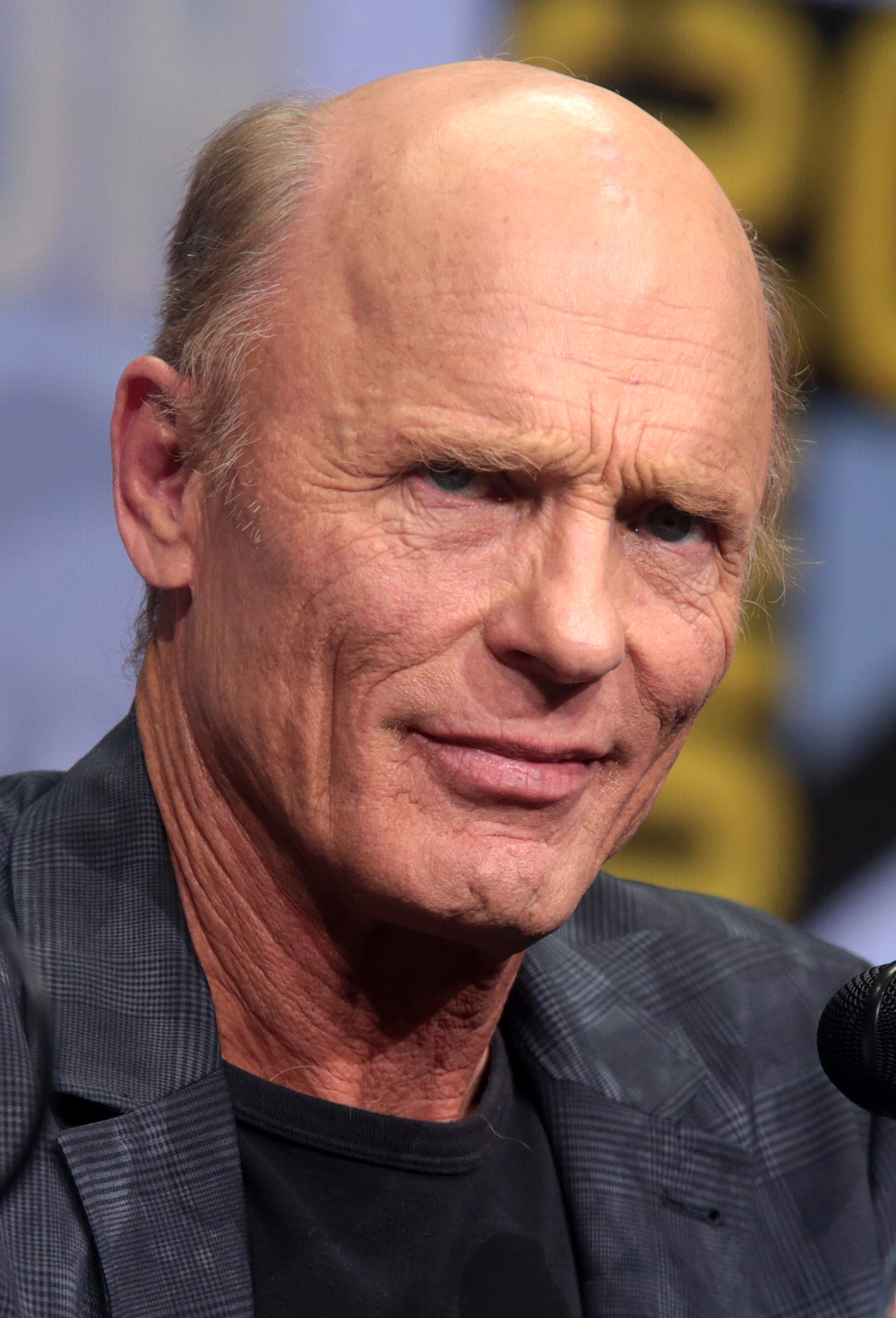
Attr: By Gage Skidmore, CC BY-SA 3.0
| 29 Quotes | |
| Occup. | Actor |
| From | USA |
| Born | November 28, 1950 |
| Age | 75 years |
| Cite | |
Citation Formats
APA Style (7th ed.)
Ed harris biography, facts and quotes. (2026, February 28). FixQuotes. https://fixquotes.com/actors/ed-harris/
Chicago Style
"Ed Harris biography, facts and quotes." FixQuotes. February 28, 2026. https://fixquotes.com/actors/ed-harris/.
MLA Style (9th ed.)
"Ed Harris biography, facts and quotes." FixQuotes, 28 Feb. 2026, https://fixquotes.com/actors/ed-harris/. Accessed 26 Mar. 2026.
Early Life and Background
Edward Allen Harris was born on November 28, 1950, in Englewood, New Jersey, into the prosperous, postwar commuter belt of the New York metropolitan area. His father, Robert Harris, worked as a book salesman and later in travel; his mother, Margaret, was a travel agent. The family moved often, and the constant resetting of neighborhoods and schools left him with an observers stance - watch first, then decide where you belong - a habit that later read on screen as contained intensity rather than easy charm.As a teenager he discovered two parallel routes to self-definition: competitive athletics and performance. At Columbia High School in Maplewood, New Jersey, he excelled in sports, including baseball, and for a time seemed headed toward a conventional, team-centered adulthood. But the 1960s and early 1970s also rewarded dissent and self-invention, and Harris gravitated toward the stage as a place where discipline could be redirected inward - from winning points to mastering feeling.
Education and Formative Influences
Harris attended California Institute of the Arts before transferring to the University of Oklahoma, where he studied drama and graduated in 1972; he later trained at the Los Angeles Theatre Academy. His education crossed regions and cultural climates - experimental West Coast arts, Midwestern pragmatism, then the craft tradition of actor training - and it produced a performer who prized work ethic over mystique. In an era when film stardom could seem like a lifestyle brand, he was shaped more by rehearsal rooms, touring productions, and the moral seriousness of American theater.Career, Major Works, and Turning Points
Harris built his reputation through stage work and television before breaking out in cinema, notably with his cold-blooded hitman in The Rock (1996) and the tightly coiled astronaut John Glenn in The Right Stuff (1983). The 1990s cemented his standing as a premier character lead: his Oscar-nominated turns in Apollo 13 (1995), The Truman Show (1998) as the godlike producer Christof, Pollock (2000) as Jackson Pollock (which he also directed), and The Hours (2002) displayed a rare ability to play authority figures who are haunted rather than merely powerful. Later work ranged from A History of Violence (2005) and Gone Baby Gone (2007) to Westworld (2016-2022), where his Man in Black suggested a lifetime of appetites curdled into philosophy. His turning point was Pollock: by taking on directing, he proved his intensity was not only an acting instrument but an organizing vision, capable of shaping tone, period detail, and a tragic arc without sentimental relief.Philosophy, Style, and Themes
Harris acting is built on compression - emotion held under pressure until it leaks out through posture, rhythm, and a stare that seems to be thinking faster than the dialogue. He is drawn to men who prize control, then discover control is a story they tell themselves: astronauts and generals, artists and executives, cowboys of the psyche. Even when he plays mentors or bosses, he often gives them a private, bruised interior, as if responsibility were both identity and wound.That interiority also explains his selective career and public posture. He has framed his risk-taking as personal rather than performative: “If I'm daring at all, I guess it would be emotionally. I try to keep things interesting for myself and to do things that challenge me”. The line reads like a working credo - he seeks parts that demand exposure, not spectacle - and it clarifies why his best performances feel lived-in rather than displayed. His politics, when voiced, follow the same ethic of earned speech rather than celebrity posture: “I'm not an activist per se, but I have strong feelings about things. People can jump on celebrities for being ill-informed or naive, but I've got a right to say what I believe”. And his sense of craft remains unfinished, a psychological guard against complacency: “I feel like my place in this industry is still progressing”. Across decades, his themes recur - authority under stress, masculine codes failing to protect the self, and the price of turning sensitivity into steel.
Legacy and Influence
Ed Harris endures as one of the defining American actors of his generation: not a chameleon who disappears, but a truth-teller who deepens whatever story he enters by insisting on consequence. His influence is visible in the modern prestige template for the severe, intelligent screen presence - actors who lead with restraint and let vulnerability arrive late, like weather. As director of Pollock, he also modeled a path for actor-authors committed to historical specificity and psychological honesty. In an industry that cycles through hype, Harris has built something quieter and harder to replace: a body of work where intensity is never decoration, and where the inner life - disciplined, skeptical, and still reaching - remains the real subject.Our collection contains 29 quotes written by Ed, under the main topics: Motivational - Art - Friendship - Freedom - Meaning of Life.
Other people related to Ed: Marcia Gay Harden (Actress), Fred Ward (Actor), Richard Russo (Novelist), Maggie Gyllenhaal (Actress), Madeleine Stowe (Actress), Philip Kaufman (Director), Richard Benjamin (Actor), Mary Elizabeth Mastrantonio (Actress)