
Edward Norton Biography Quotes 44 Report mistakes
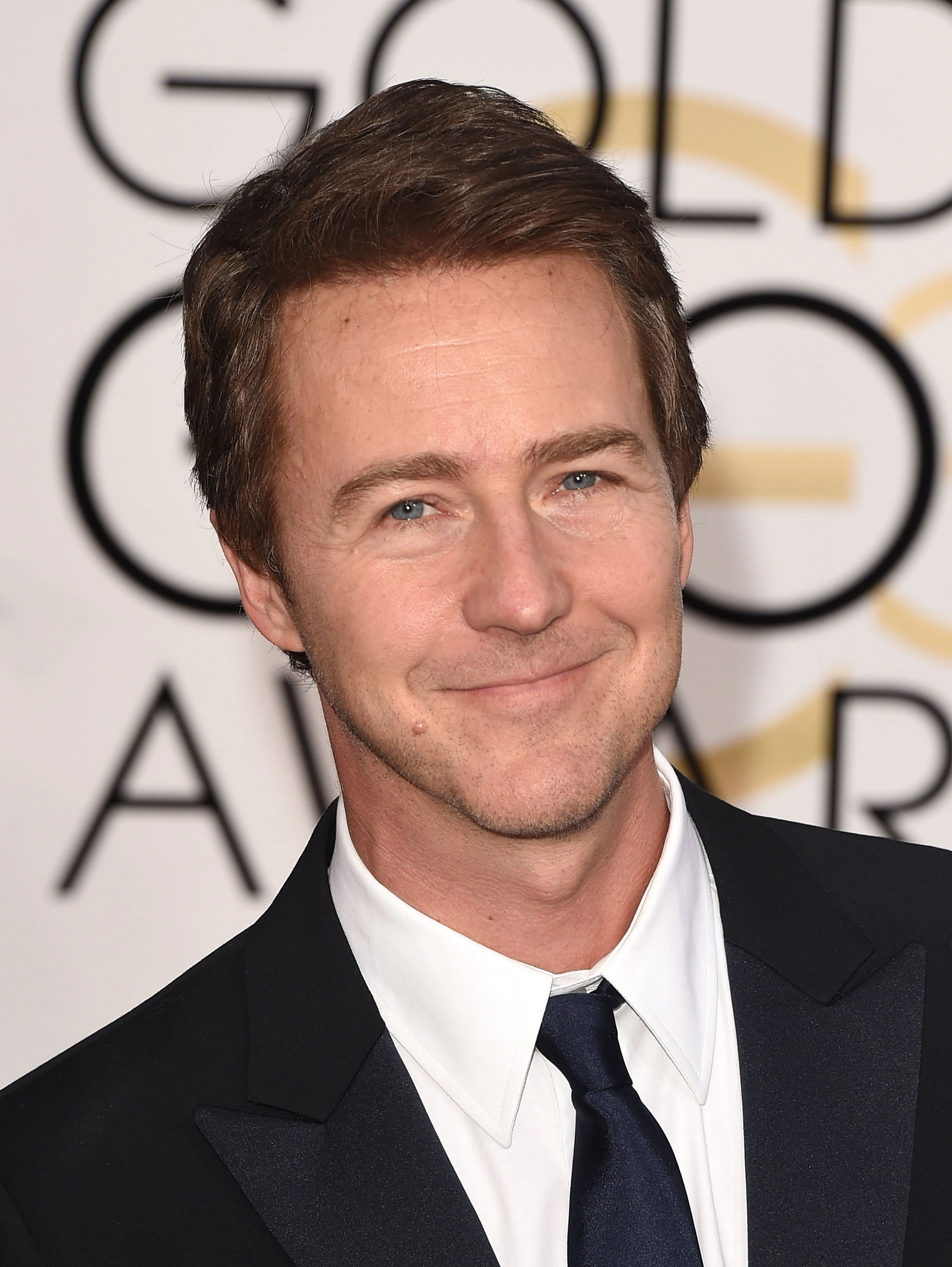
| 44 Quotes | |
| Born as | Edward Harrison Norton |
| Occup. | Actor |
| From | USA |
| Spouse | Shauna Robertson (2012-) |
| Born | August 18, 1969 Boston, Massachusetts, USA |
| Age | 56 years |
| Cite | |
Citation Formats
APA Style (7th ed.)
Edward norton biography, facts and quotes. (2026, February 11). FixQuotes. https://fixquotes.com/actors/edward-norton/
Chicago Style
"Edward Norton biography, facts and quotes." FixQuotes. February 11, 2026. https://fixquotes.com/actors/edward-norton/.
MLA Style (9th ed.)
"Edward Norton biography, facts and quotes." FixQuotes, 11 Feb. 2026, https://fixquotes.com/actors/edward-norton/. Accessed 24 Mar. 2026.
Early Life and Background
Edward Harrison Norton was born on August 18, 1969, in Boston, Massachusetts, and raised primarily in Columbia, Maryland, a planned community whose civic idealism and professional-managerial calm sat close to the political machinery of Washington. That proximity to power, and to the language of institutions, would later sharpen his on-screen interest in systems that grind people down - prisons, corporations, cults of masculinity, the media - and in the private rebellions staged within them.He grew up in a family shaped by public service and law: his father, Edward Mower Norton Jr., worked as an environmental lawyer and later led the Enterprise Foundation (now Enterprise Community Partners), while his mother, Lydia Robinson Rouse, taught English; she died when Norton was a teenager, a loss he has described as foundational. In a childhood marked by theater and debate as outlets for intensity, Norton learned early that performance could be both refuge and instrument - a way to impose form on grief, and to translate observation into craft.
Education and Formative Influences
Norton attended Wilde Lake High School and went on to Yale University, graduating in 1991. At Yale he studied history, acted with campus companies, and absorbed a tradition of rigorous textual analysis that would later show in his reputation for detailed script work. After college he spent time in Japan working for his grandfather's company, an experience that widened his sense of cultural codes and self-presentation, before committing to acting full-time in New York theater - a proving ground that rewarded discipline over celebrity.Career, Major Works, and Turning Points
His film breakthrough arrived abruptly: Primal Fear (1996) made him an instant critical force, earning an Academy Award nomination for a performance built on controlled volatility and a final-act reveal. Norton followed with a run that defined late-1990s American unease: the corporate-nihilist parable Fight Club (1999), the spiritual and moral crisis of American History X (1998), and the con artist elegance of The Score (2001). He balanced prestige with play in Rounders (1998) and later drew praise for The Illusionist (2006) and for embodying Bruce Banner in The Incredible Hulk (2008), though creative-control tensions hinted at his perfectionism. A second career peak came with Birdman (2014), where his self-mythologizing actor character read as both satire and self-interrogation, and with the meticulous Wes Anderson collaborations (Moonrise Kingdom, The Grand Budapest Hotel, Isle of Dogs, Asteroid City). As director he made Keeping the Faith (2000) and Motherless Brooklyn (2019), the latter a long-gestating passion project that retooled noir into a mid-century civic tragedy.Philosophy, Style, and Themes
Norton's acting is less about surface charisma than about the moral physics of a person under pressure. He has described the craft as “more of an exercise in empathy... You're trying to get inside a certain emotional reality or motivational reality and try to figure out what that's about so you can represent it”. That emphasis helps explain his recurring interest in men who misname their pain as ideology - the altar boy turned monster in American History X, the split self of Fight Club, the priest and rabbi negotiating desire and duty in Keeping the Faith, the actor in Birdman addicted to truth-telling as domination. He does not simply play intelligence; he plays the cost of it, the self-justifications that accumulate when a person cannot bear ordinary vulnerability.His technique favors contradiction: stillness that suddenly turns predatory, humor that lands as a defense mechanism, rhetoric that sounds principled until it reveals appetite. “I'm fascinated by the ways in which people express themselves, because their responses are often counter to what they're actually feeling”. In interviews he has also treated stardom as a contaminant to be managed rather than consumed - “Fame is very corrosive and you have to guard very strictly against it”. - a view that aligns with his selective filmography, his periodic retreats into ensemble work, and his habit of channeling attention toward craft, activism, and long-form development rather than perpetual visibility.
Legacy and Influence
Norton belongs to the generation that reintroduced theatrical exactitude and psychological abrasiveness to mainstream American film in the 1990s, helping make room for antiheroes who were articulate, self-lacerating, and morally compromised. His early performances became templates for a certain kind of prestige intensity, while his later work proved how that intensity could be redirected into comedy, ensemble rhythm, and formal experimentation. Beyond acting, he has been a visible advocate for social and environmental causes and has used his platform to argue for industry responsibility, reinforcing an image that is consistent across decades: a performer drawn to the ethics of systems, suspicious of easy adoration, and committed to the hard labor of making inner conflict legible on screen.Our collection contains 44 quotes written by Edward, under the main topics: Witty One-Liners - Motivational - Art - Justice - Deep.
Other people related to Edward: Meat Loaf (Musician), Tim Roth (Actor), Michael Keaton (Actor), Martin Landau (Actor), Frank Oz (Actor)
Frequently Asked Questions
- Edward Norton best movies: Some of Edward Norton’s best-known films include "Fight Club" (1999), "American History X" (1998), "Primal Fear" (1996), and "Birdman" (2014).
- Edward Norton Hulk: Edward Norton played Bruce Banner in the 2008 Marvel film "The Incredible Hulk".
- Edward Norton young: Edward Norton was born August 18, 1969, in Boston, Massachusetts, and grew up in Columbia, Maryland.
- Edward Norton Fight Club: Edward Norton starred as the unnamed narrator in the 1999 film "Fight Club", directed by David Fincher.
- Edward Norton height: Edward Norton is about 6 feet (1.83 m) tall.
- How old is Edward Norton? He is 56 years old
Source / external links