
Elle Fanning Biography Quotes 10 Report mistakes
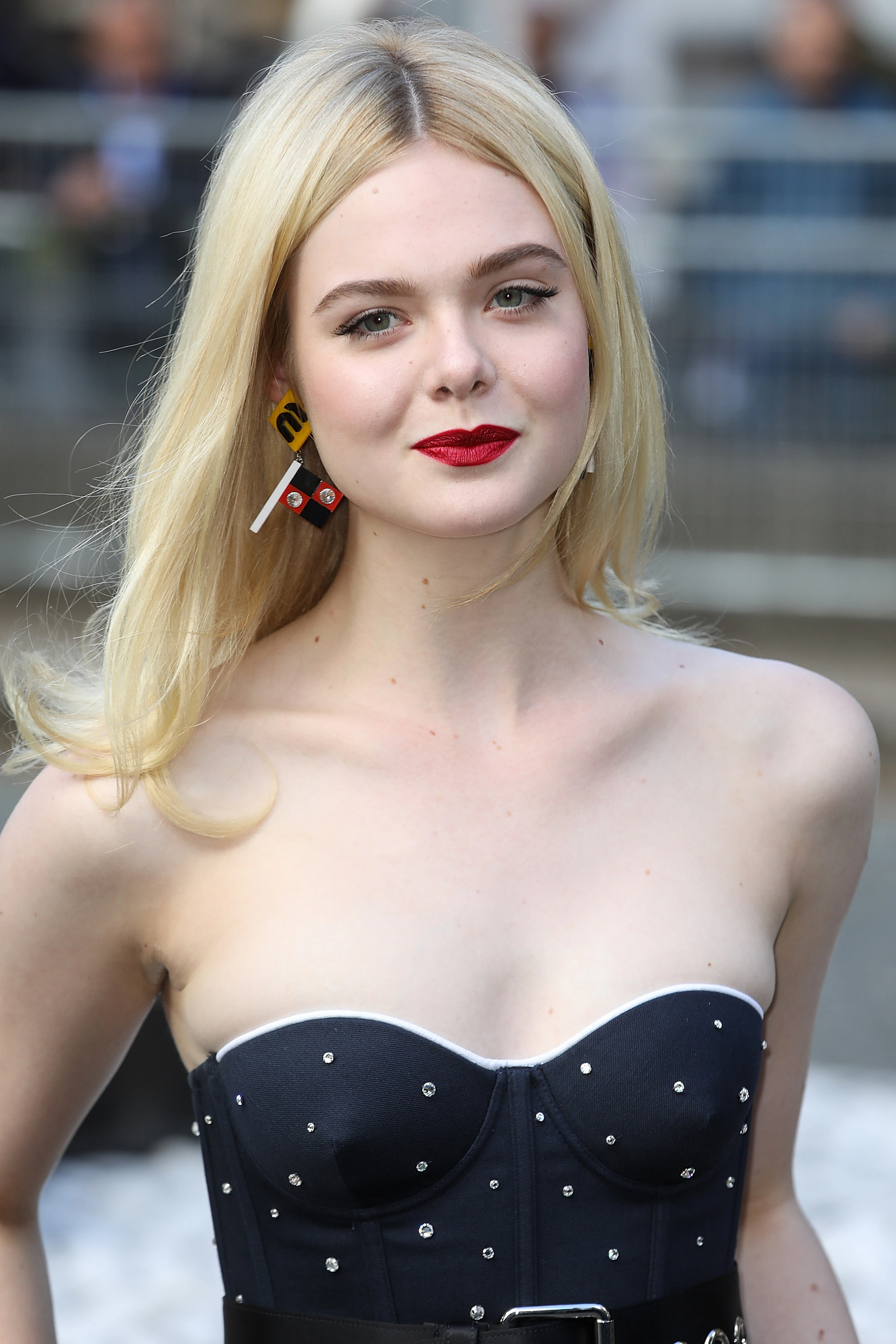
| 10 Quotes | |
| Born as | Mary Elle Fanning |
| Occup. | Actress |
| From | USA |
| Born | April 9, 1998 Conyers, Georgia, USA |
| Age | 27 years |
| Cite | |
Citation Formats
APA Style (7th ed.)
Elle fanning biography, facts and quotes. (2026, March 10). FixQuotes. https://fixquotes.com/actors/elle-fanning/
Chicago Style
"Elle Fanning biography, facts and quotes." FixQuotes. March 10, 2026. https://fixquotes.com/actors/elle-fanning/.
MLA Style (9th ed.)
"Elle Fanning biography, facts and quotes." FixQuotes, 10 Mar. 2026, https://fixquotes.com/actors/elle-fanning/. Accessed 3 Apr. 2026.
Early Life and Background
Mary Elle Fanning was born on April 9, 1998, in Conyers, Georgia, into a family where athletic discipline and performance ambition met. Her father, Steven Fanning, played minor league baseball; her mother, Heather Joy Arrington, had been a tennis player; and her older sister, Dakota Fanning, became a child actor before Elle did. The household was Southern, competitive, and mobile, shaped by sport, auditions, and the practical demands of two unusually gifted daughters. Elle's earliest public identity was complicated by proximity: she first appeared on screen as younger versions of Dakota's characters, a biographical fact that could have fixed her as an echo. Instead, it gave her an apprenticeship in sets, camera rhythms, and the strange split between ordinary childhood and professional scrutiny.
That doubleness defined her early years. She grew up partly in Georgia and later in the Los Angeles orbit that child acting required, but interviews and colleagues have long noted the almost startling intactness of her girlishness - not as affect, but as temperament. Her face and bearing lent themselves to innocence, yet even as a child she projected curiosity rather than mere sweetness. In an era when Hollywood increasingly industrialized youth stardom, Fanning's emergence suggested something older: the studio-era idea of the born screen presence, someone whose emotional transparency could register on camera before technique had fully matured. The tension between vulnerability and poise would become central to her art.
Education and Formative Influences
Fanning's education unfolded in tandem with work, split between conventional schooling, on-set tutoring, and the informal but serious schooling of collaboration. She attended Campbell Hall in Los Angeles, balancing adolescence with an accelerating career, and developed interests beyond acting, including fashion, drawing, and science - signs of a mind drawn both to surfaces and to structure. Her earliest influences were immediate: her sister's example, the professionalism of veteran actors she met as a child, and directors who understood female interiority. Sofia Coppola became especially important after Somewhere and later The Beguiled, offering Fanning a model of how atmosphere, restraint, and feminine consciousness could carry drama. Growing up in the 2000s and 2010s, she also belonged to a generation of young actors navigating celebrity culture, internet circulation, and fashion branding, yet she absorbed these without seeming consumed by them; she learned to treat image as part of performance, not a substitute for it.
Career, Major Works, and Turning Points
After very early appearances in I Am Sam, Daddy Day Care, and Babel, Fanning's first major breakthrough came with J.J. Abrams's Super 8 in 2011, where her grave, intuitive performance announced that she was no longer simply a former child actor but a serious young lead. She moved quickly between art-house and mainstream work: Coppola's Somewhere, Cameron Crowe's We Bought a Zoo, Sally Potter's Ginger & Rosa, the dark fantasy Maleficent and its sequel, Nicolas Winding Refn's The Neon Demon, and Coppola's The Beguiled. On television she expanded again with The Great, playing Catherine with comic intelligence, erotic wit, and political awakening, a role that earned major award recognition and proved her command of sustained long-form characterization. Alongside acting, she developed as a producer, signaling a shift from interpreter to shaper of material. The turning point in her career was not one hit but a pattern: she repeatedly chose directors and roles that stretched the idea of what her ethereal image could contain - danger, satire, ambition, vanity, longing, and steel.
Philosophy, Style, and Themes
Fanning's artistic psychology begins in play. “What's the best part of a movie? I love to know what my name is. It's just so fun. That's the first thing I ask. It's just fun because you have a different name in every movie”. That remark is charming, but it also reveals a core principle: for her, acting starts in the imaginative freedom of identity itself. She has preserved the child's delight in transformation without trivializing the labor behind it. “I'm a normal kid, really. I just love to act”. The plainness of that claim matters. Fanning's screen work often rests on this paradox - an actress drawn to heightened worlds who grounds them through unaffected sincerity. Even when playing royalty, waifs, or symbols of beauty, she searches for the ordinary pulse inside the artifice.
Her style, on screen and in public life, joins romantic delicacy to self-possession. She has often spoken with unusual enthusiasm about clothes, names, objects, and textures, not as accessories to fame but as gateways into character and mood. “But it's cool working with female directors because I'm a girl, so you do relate to them more. You can talk to them about other stuff like clothes and all that”. That sentence points to a wider pattern in her career: an attraction to collaborative environments where femininity is not reduced to image but explored as language, taste, embodiment, and power. This helps explain why her performances often feel both stylized and intimate. She is less an actor of brute transformation than of tonal precision - changing the temperature of a scene through listening, openness, and a finely calibrated awareness of how innocence can harden into knowledge.
Legacy and Influence
Elle Fanning's legacy is still unfolding, but she already occupies a distinctive place in American screen culture. Few actors who begin so young make the transition to adult work without either self-parody or strategic reinvention; Fanning did it by deepening what was already there - sensitivity, luminosity, and intelligence - while taking risks with satire, darkness, and ambiguity. She helped redefine the path available to child performers in the streaming and franchise age, showing that fashion visibility, prestige cinema, studio fantasy, and television comedy need not cancel one another. For younger actors, especially girls, she offers a model of how to grow in public without surrendering inner texture. Her best performances suggest that fragility can be a source of force, and that modern stardom, at its most durable, still depends on the old mystery of presence.
Our collection contains 10 quotes written by Elle, under the main topics: Science - Movie - Work - Aesthetic - Pet Love.
Other people related to Elle: Stephen Dorff (Actor), Chloe Sevigny (Actress)
Source / external links