
Emma Thompson Biography Quotes 29 Report mistakes
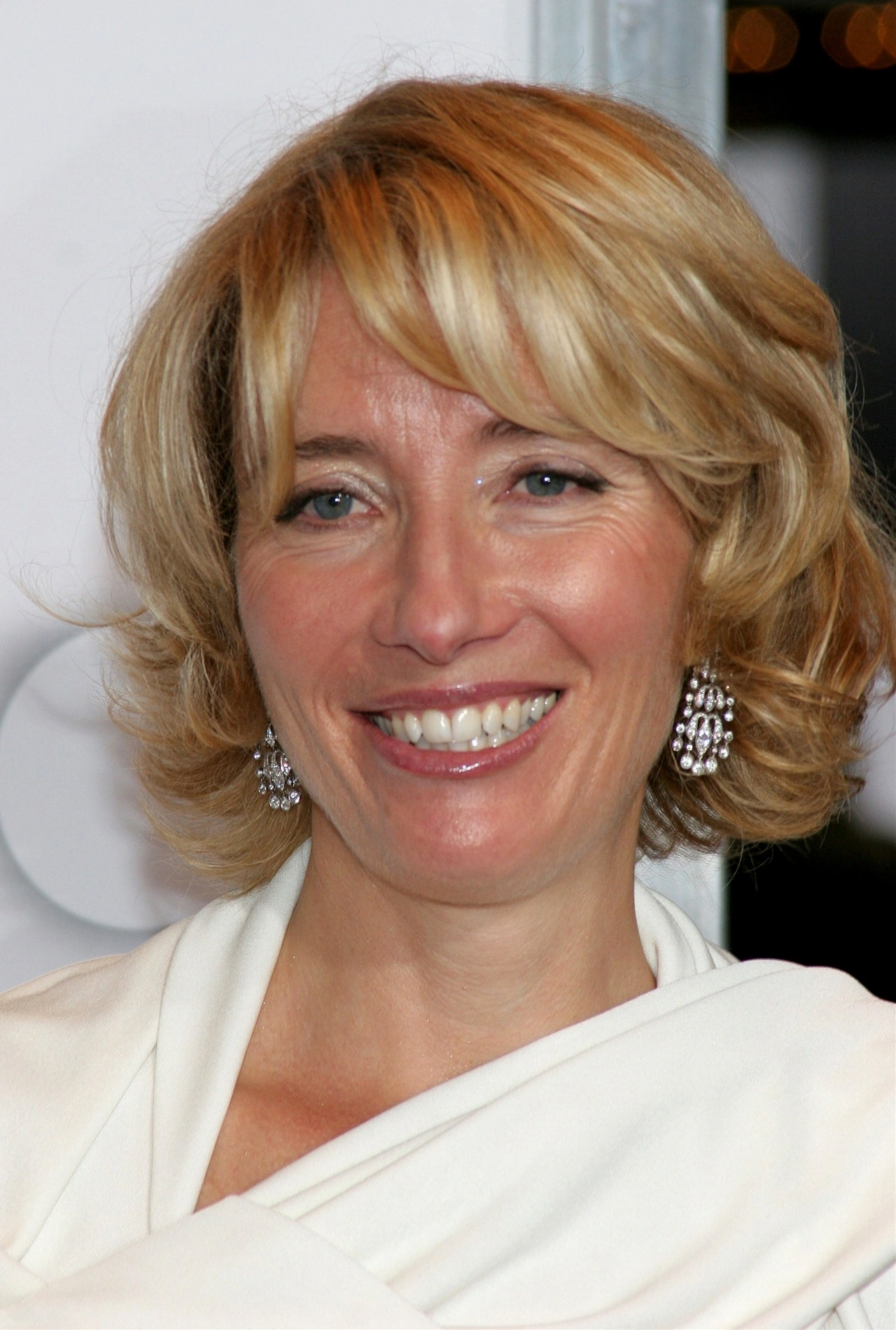
| 29 Quotes | |
| Occup. | Actress |
| From | England |
| Born | April 15, 1959 Paddington, London, England, United Kingdom |
| Age | 66 years |
| Cite | |
Citation Formats
APA Style (7th ed.)
Emma thompson biography, facts and quotes. (2026, February 11). FixQuotes. https://fixquotes.com/actors/emma-thompson/
Chicago Style
"Emma Thompson biography, facts and quotes." FixQuotes. February 11, 2026. https://fixquotes.com/actors/emma-thompson/.
MLA Style (9th ed.)
"Emma Thompson biography, facts and quotes." FixQuotes, 11 Feb. 2026, https://fixquotes.com/actors/emma-thompson/. Accessed 26 Mar. 2026.
Early Life and Background
Emma Thompson was born on April 15, 1959, in London, England, into a household where performance and craft were everyday labor rather than glamour. Her father, Eric Thompson, was a writer-performer best known to British audiences for "The Magic Roundabout", and her mother, Phyllida Law, was an actress with a sharp comic intelligence. Growing up amid rehearsals, scripts, and the practical rhythms of the British entertainment world, Thompson learned early that comedy is built, tragedy is earned, and a public persona must be managed like a tool.That closeness to show business did not insulate her from the private turbulence that later sharpened her work. She has spoken in various contexts about heartbreak, disappointment, and the complicated aftershocks of adult relationships - experiences that, for her, became usable emotional knowledge rather than mere biography. The result was a temperament that paired brisk humor with a willingness to look directly at pain, a duality that would define her as both an actor and a writer.
Education and Formative Influences
Thompson studied at Cambridge University (Newnham College), reading English, and entered the famed Footlights revue, a proving ground for a generation of British comic talent. The Cambridge environment gave her more than contacts - it honed her ear for structure, verbal rhythm, and the social comedy of manners, while also exposing her to the literary canon that would later feed her adaptations and period work. The Footlights years placed her alongside peers such as Stephen Fry and Hugh Laurie, and embedded her in a late-1970s to early-1980s British satire culture that treated wit as both entertainment and critique.Career, Major Works, and Turning Points
After early television success, including the BBC sketch series "Alfresco", Thompson broke through in film with "Howards End" (1992), winning the Academy Award for Best Actress, and then achieved the rare feat of winning a second Oscar for writing, for "Sense and Sensibility" (1995). She became a defining presence in 1990s prestige cinema, moving between intimate emotional realism ("The Remains of the Day", 1993) and mainstream reach, including "Harry Potter" as Professor Trelawney and later "Love Actually" (2003), whose quiet scenes of marital betrayal showcased her ability to underplay devastation. Turning points were often personal as well as professional: her high-profile marriage to Kenneth Branagh and its collapse became tabloid material, yet the work that followed repeatedly converted private fracture into empathetic clarity, rather than confession.Philosophy, Style, and Themes
Thompson's acting style is founded on intelligibility - the sense that every line is thought through in real time - yet it is never merely cerebral. Her best performances reveal people negotiating the gap between what they can articulate and what they cannot survive saying aloud. She treats tears as a consequence, not a trick, and she has described grief as a resource an older actor can reach without strain: “If you've got to my age, you've probably had your heart broken many times. So it's not that difficult to unpack a bit of grief from some little corner of your heart and cry over it”. That sentence contains her method: emotional access as craft, and craft as a form of emotional honesty.As a writer and public figure, she returns to families as systems where love is real but often poorly translated. Her moral attention is drawn to the everyday failures that create lasting harm, a theme visible in domestic scenes across her work, from drawing-room dramas to contemporary ensembles. “Any problem, big or small, within a family, always seems to start with bad communication. Someone isn't listening”. The emphasis on listening rather than winning arguments aligns with her screenwriting: characters are not redeemed by speeches but by the painful work of finally hearing each other. Beneath the comedy, there is a consistent critique of modern distraction and appetite - “We belabour, I think, under a very heavy crust of consumerism really”. - a worldview that helps explain why her humor so often targets self-deception, status anxiety, and the stories people buy to avoid feeling.
Legacy and Influence
Thompson endures as a rare hybrid - a star who is also a first-rate writer, and a comic performer whose authority in tragedy is unquestioned. Her Oscars for acting and screenwriting made her an emblem of what literary intelligence can do inside popular culture, while her long arc across stage, television, prestige film, and global franchises helped normalize the idea that women can age into richer, not smaller, roles. For audiences and younger performers, her influence lies in permission: to be clever without chilliness, funny without evasion, and openly humane without sentimentality - a model of craft that treats empathy as a discipline.Our collection contains 29 quotes written by Emma, under the main topics: Witty One-Liners - Ethics & Morality - Justice - Mortality - Learning.
Other people related to Emma: Stephen Fry (Comedian), Kate Winslet (Actress), Ian Mcewan (Author), Robbie Coltrane (Actor), Richard Curtis (Writer), Helen Fielding (Author), Joe Klein (Journalist), Dana Fox (Writer), Kenneth Branagh (Actor), Mike Nichols (Director)
Source / external links