
Frances McDormand Biography Quotes 16 Report mistakes
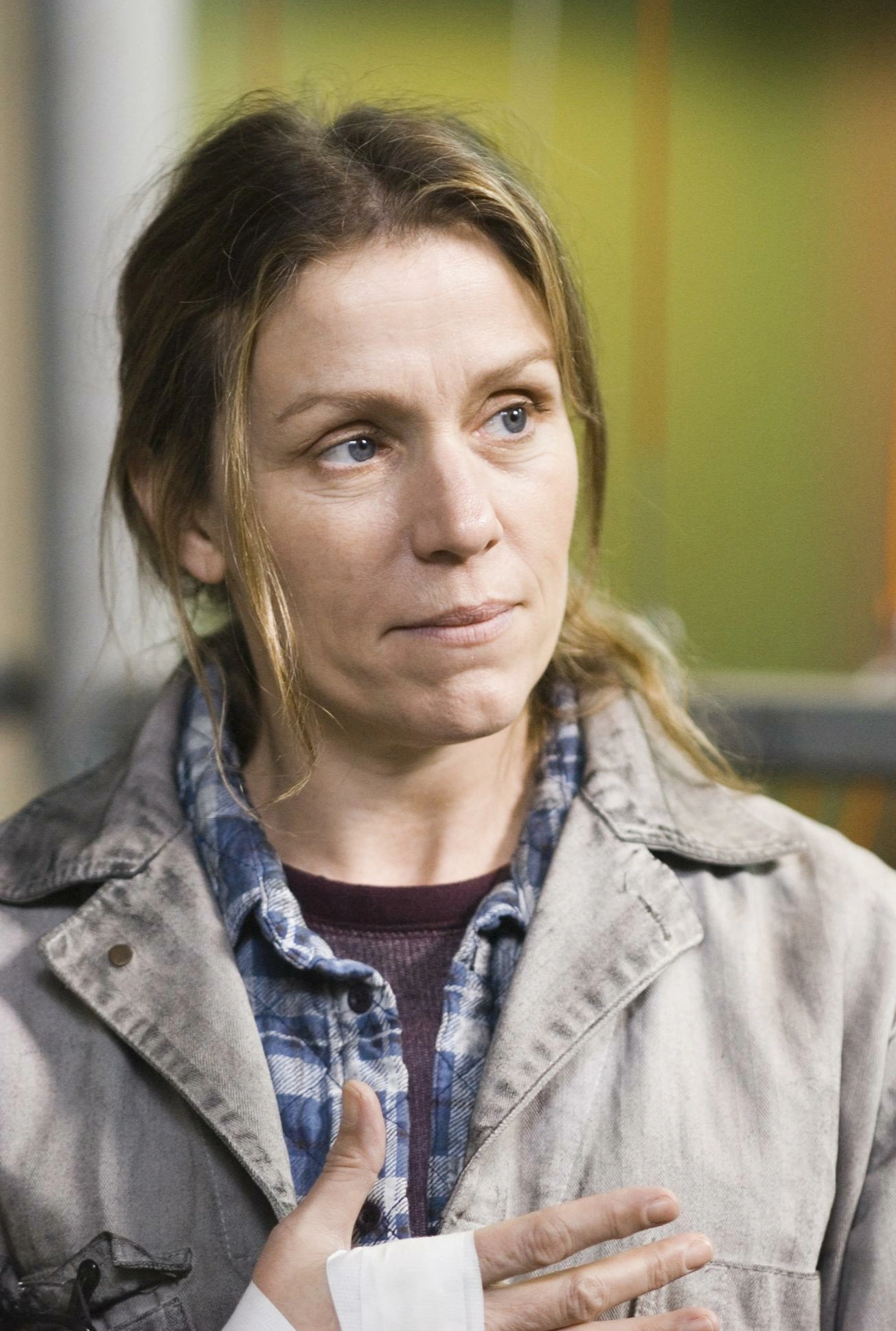
| 16 Quotes | |
| Occup. | Actress |
| From | USA |
| Born | June 23, 1957 |
| Age | 68 years |
| Cite | |
Citation Formats
APA Style (7th ed.)
Frances mcdormand biography, facts and quotes. (2026, February 11). FixQuotes. https://fixquotes.com/actors/frances-mcdormand/
Chicago Style
"Frances McDormand biography, facts and quotes." FixQuotes. February 11, 2026. https://fixquotes.com/actors/frances-mcdormand/.
MLA Style (9th ed.)
"Frances McDormand biography, facts and quotes." FixQuotes, 11 Feb. 2026, https://fixquotes.com/actors/frances-mcdormand/. Accessed 20 Mar. 2026.
Early Life and Background
Frances Louise McDormand was born Cynthia Ann Smith on 1957-06-23 in Chicago, Illinois, and placed for adoption. Raised from infancy by Noreen and Vernon McDormand, a Canadian couple tied to the Disciples of Christ, she grew up in a household where faith, duty, and plain talk mattered more than display. Her early identity was formed in the tension between rooted family intimacy and the knowledge that her beginnings were elsewhere - a private fact that helped make her public persona so resolutely unsentimental.Because her father served as a pastor, the family moved repeatedly, including stints in small-town Illinois, Georgia, Tennessee, and Kentucky. That itinerant upbringing trained her eye for local texture - accents, manners, the quiet hierarchies of work and class - and it also cultivated a survival skill that later became artistic method: read a room fast, listen closely, and never perform for approval. The steadiness she projects on screen, even when characters are unraveling, comes from that early practice of adapting without pleading.
Education and Formative Influences
McDormand studied theater at Bethany College in West Virginia, graduating in 1979, then earned an MFA in drama from Yale School of Drama in 1982, part of a cohort shaped by rigorous stage craft and the idea of acting as labor rather than celebrity. Yale strengthened her allegiance to text, ensemble discipline, and rehearsal as discovery; it also embedded her in a network that included future collaborators and a professional ethic closer to repertory theater than Hollywood. The stage remained her calibrating instrument, resurfacing in later work from A Streetcar Named Desire to her lauded turn in Nomadland-adjacent theater circles and ongoing interest in literary and classical material.Career, Major Works, and Turning Points
She moved to New York after Yale and, almost immediately, entered the Coen brothers' orbit: Blood Simple (1984) introduced her screen presence - cool, precise, and morally alert - and she married Joel Coen the same year, building a life that resisted industry churn. Breakthrough recognition came with Fargo (1996), where her pregnant police chief Marge Gunderson won the Academy Award for Best Actress and reset what an American screen heroine could look like: competent, funny, and entirely unglamorous. She deepened her range in supporting turns (including Almost Famous, Wonder Boys, North Country) and later won two more Oscars for Best Actress - Three Billboards Outside Ebbing, Missouri (2017) and Nomadland (2020) - while also winning Best Supporting Actress for her hard-edged, tender portrayal of the mother in Almost Famous (2000). Across decades, she alternated between Coen films (Raising Arizona, Burn After Reading, Hail, Caesar!) and work with directors such as Wes Anderson, Cameron Crowe, and Chloe Zhao, choosing parts that foreground temperament over makeover.Philosophy, Style, and Themes
McDormand has built a career out of refusing the usual bargain: trade privacy and polish for status. Her public philosophy is blunt about the actor's structural weakness - “There's only two givens with choosing acting as a profession: one is you will always be unemployed, always, and it doesn't matter how much money you make, you're still always going to be unemployed; and that you have no power”. That clear-eyed pessimism is not self-pity; it is a strategy for staying free. If the system offers little security, then dignity comes from controlling what can be controlled: preparation, taste, and the ability to walk away.On screen, her style is a kind of moral realism: she rarely signals emotion early, letting it rise through action, timing, and the pressure of circumstances. She resists the fetish of transformation and insists on believable presence - "I don't think you can ever completely transform yourself on film, but if you do your job well, you can make people believe that you're the character you're trying to be
Our collection contains 16 quotes written by Frances, under the main topics: Witty One-Liners - Music - Movie - Mother - Humility.
Other people related to Frances: John Hawkes (Actor), Sam Raimi (Director), Curtis Hanson (Director), Sarah Polley (Actress), Brendan Gleeson (Actor)
Source / external links