
Franka Potente Biography Quotes 8 Report mistakes
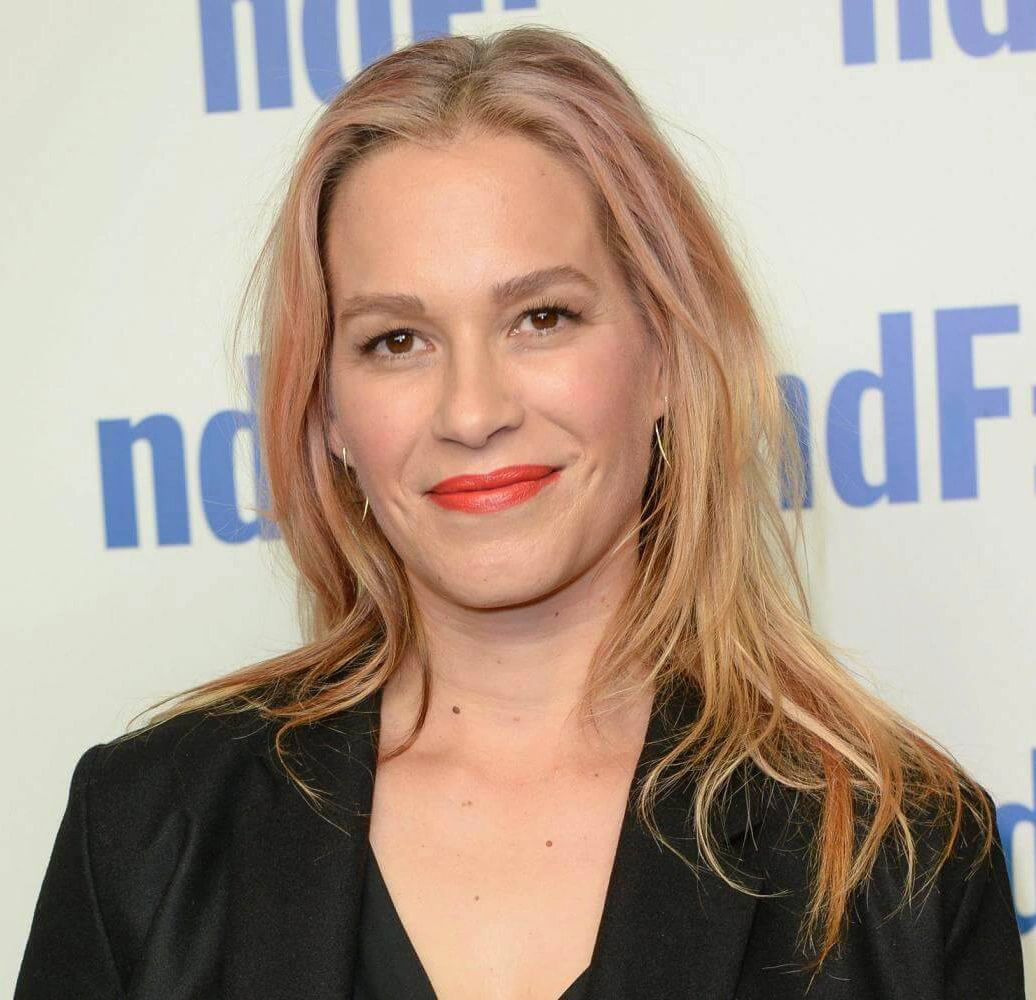
| 8 Quotes | |
| Occup. | Actress |
| From | Germany |
| Spouse | Derek Richardson (2012-) |
| Born | July 22, 1974 Münster, North Rhine-Westphalia, Germany |
| Age | 51 years |
| Cite | |
Citation Formats
APA Style (7th ed.)
Franka potente biography, facts and quotes. (2026, February 11). FixQuotes. https://fixquotes.com/actors/franka-potente/
Chicago Style
"Franka Potente biography, facts and quotes." FixQuotes. February 11, 2026. https://fixquotes.com/actors/franka-potente/.
MLA Style (9th ed.)
"Franka Potente biography, facts and quotes." FixQuotes, 11 Feb. 2026, https://fixquotes.com/actors/franka-potente/. Accessed 28 Mar. 2026.
Early Life and Background
Franka Potente was born on July 22, 1974, in Munster, North Rhine-Westphalia, West Germany, into a society still marked by postwar restraint and, soon, the psychic aftershocks of reunification. Her father, Dieter Potente, worked as a schoolteacher; her mother, Hildegard, was a medical laboratory assistant. The Potentes were not part of a film-world elite, and her later screen directness would retain the stamp of ordinary German civic life - rules, queues, and the quiet pressure to behave.Childhood, by her own account, was already performance-driven, less a plan than a compulsion. “I always performed when I was a child. My parents got very annoyed, because my brother and I had our little bedrooms upstairs, and I would plaster the house with posters with arrows pointing upstairs”. That image - self-made publicity, a domestic stage, an instinct to pull attention upward - hints at the mixture of play and willpower that later made her so watchable: not glamour first, but nerve, speed, and an appetite for the moment.
Education and Formative Influences
After finishing school in Germany, Potente sought formal training at the Otto Falckenberg School of the Performing Arts in Munich, a conservatory tradition that prizes precision, vocal and physical discipline, and the actor as craftsperson rather than celebrity. She also spent time in New York studying at the Lee Strasberg Theatre and Film Institute, absorbing a different vocabulary - emotional truth, personal memory, the unease of "indicating" feelings. The combination helped form her signature: an intelligent naturalism that could read as spontaneity, but was anchored in technique and an insistence on honesty.Career, Major Works, and Turning Points
Potente broke through in German cinema with After Five in the Forest Primeval (1995) and achieved international recognition as Lola in Tom Tykwer's Run Lola Run (1998), whose kinetic style turned her into an emblem of the late-1990s European art-pop moment. She pivoted quickly into English-language work with Blow (2001) and The Bourne Identity (2002), where her performance as Marie Kreutz balanced the franchise's paranoia with human warmth. Her career became defined by selective, character-led choices across film and television, including The Bourne Supremacy (2004), Romulus (2020-2022), and a gradual expansion into writing and directing, culminating in her feature directorial debut, Home (2020), which underlined her interest in interior life over spectacle.Philosophy, Style, and Themes
Potente's best work carries the tension between motion and constraint: bodies moving fast through systems that demand compliance. Her own longing for unregulated space reads like a private key to why she plays fugitives, runaways, and women negotiating boundaries. “I just want to be able to sit on grass as long as I want to, without anybody telling me to leave. Everything is so restricted, here, in that you actually have to stand behind a line, you can't go up the Canyon and enjoy the view”. The statement is not just about geography; it is about temperament - an aversion to invisible fences, and a desire for permissionless presence. In Run Lola Run, that becomes propulsion; in later work, it becomes a quieter rebellion, a refusal to let institutions define the self.Her acting philosophy is similarly anti-inflationary: she resists the actor's hunger to dominate the frame and instead prioritizes the ecology of a scene. “I don't like actors who try to talk directors into making their part bigger and that's really lame”. That ethic helps explain her screen effect - she plays for the story's engine, not for applause, which paradoxically makes her more compelling. At the same time, she is acutely sensitive to false language, the kind of line that feels like a betrayal of lived experience. “I'm so uncomfortable, especially in emotional situations, having to say sentences that don't feel right. As an actor - or really, as any kind of person sensitive to it”. In psychological terms, the discomfort becomes a method: she pushes toward dialogue and behavior that can be inhabited, so that emotion is discovered rather than performed.
Legacy and Influence
Potente's enduring influence rests on how she helped reframe the international image of German acting at the turn of the millennium: less theatrical grandeur, more contemporary immediacy, capable of carrying both European formal experiment and Hollywood genre narrative. As Lola, she became an icon of speed, chance, and agency; as Marie in Bourne, she modeled a different kind of action-movie presence - grounded, morally awake, and emotionally legible without sentimentality. Her later move into authorship and directing confirms a career built on autonomy: choosing projects that protect sincerity, refusing the vanity economy, and leaving behind a template for actors who want global reach without surrendering craft or inner truth.Our collection contains 8 quotes written by Franka, under the main topics: Art - Love - Sarcastic - Freedom - Movie.
Other people related to Franka: Marton Csokas (Actor)
Source / external links