
Gene Tierney Biography Quotes 55 Report mistakes
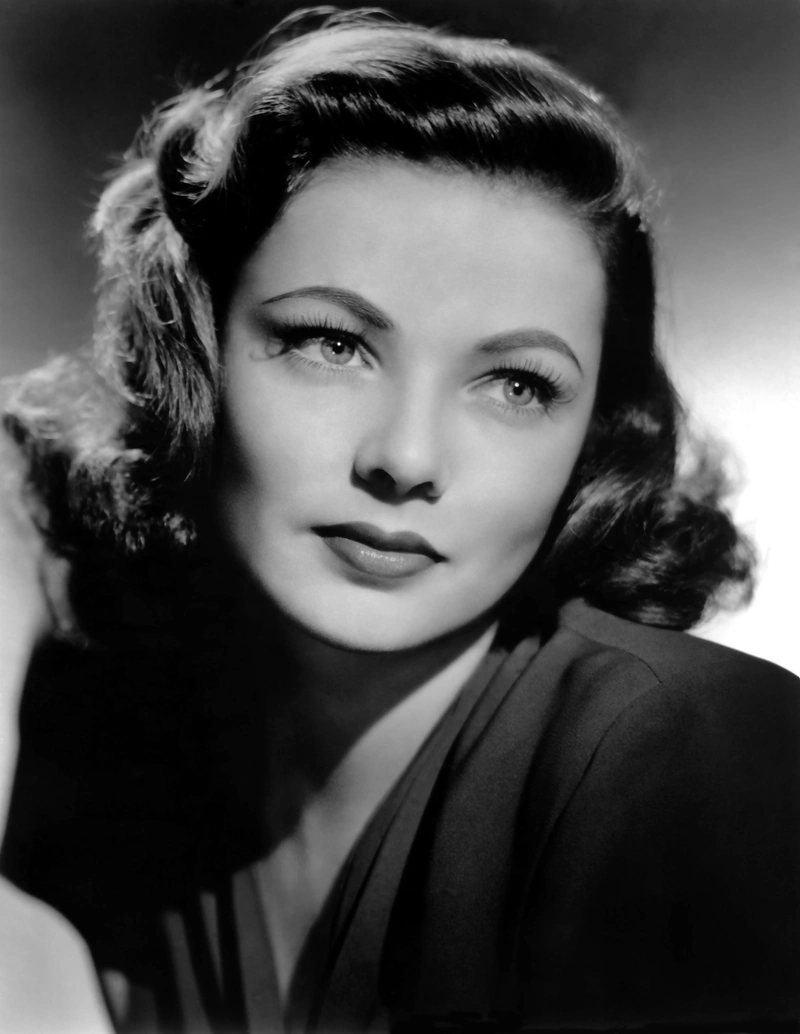
Attr: Public domain
| 55 Quotes | |
| Occup. | Actress |
| From | USA |
| Born | November 19, 1920 |
| Died | November 6, 1991 |
| Aged | 70 years |
| Cite | |
Citation Formats
APA Style (7th ed.)
Gene tierney biography, facts and quotes. (2026, February 11). FixQuotes. https://fixquotes.com/actors/gene-tierney/
Chicago Style
"Gene Tierney biography, facts and quotes." FixQuotes. February 11, 2026. https://fixquotes.com/actors/gene-tierney/.
MLA Style (9th ed.)
"Gene Tierney biography, facts and quotes." FixQuotes, 11 Feb. 2026, https://fixquotes.com/actors/gene-tierney/. Accessed 5 Mar. 2026.
Early Life and Background
Gene Tierney was born Gene Eliza Tierney on November 19, 1920, in Brooklyn, New York, into a prosperous Irish American family whose wealth and expectations insulated her while also narrowing the range of lives she was allowed to imagine. Her father, an insurance executive, prized polish and social standing; her mother encouraged refinement and performance. In the Manhattan-and-Greenwich-Connecticut orbit between the wars, beauty could be treated as a kind of destiny, and Tierney grew up learning that composure and appearance were currencies as real as money.That early security later read, in her own memories, as a prelude to disorientation: she entered adulthood during the Depression and the approach of World War II, when public life demanded sacrifice and clarity, while Hollywood offered fantasy and control. The tension between private fragility and public idealization would become the signature pressure of her life. She was celebrated as a screen goddess before she had the experience to defend an inner self from the uses others made of it, and she would spend decades negotiating what fame had rewritten.
Education and Formative Influences
Tierney attended elite schools, including St. Margaret's School in Waterbury, Connecticut, and later Brillantmont in Lausanne, Switzerland, where language, travel, and strict routine sharpened her poise and accent. A formative encounter came when she performed in amateur theater and the director Benno Schneider and, later, Broadway figures recognized her stage presence; what looked effortless was often coached into place. The era prized "finish" in women, and Tierney absorbed it as both armor and performance, the seed of a lifelong question: where did the role end and the person begin?Career, Major Works, and Turning Points
Tierney moved from modeling and Broadway to Hollywood in the early 1940s, signing with 20th Century-Fox and quickly becoming one of its most striking stars. She anchored Ernst Lubitsch's Heaven Can Wait (1943), carried Otto Preminger's noir Laura (1944) as the absent presence everyone projects onto, and earned an Academy Award nomination for Leave Her to Heaven (1945), where her serene beauty concealed ruthless will. She worked with major directors and co-stars - including Joseph L. Mankiewicz, Preminger, and later Hitchcock (The Mating Season, 1951; The Ghost and Mrs. Muir, 1947; Night and the City, 1950) - but the most decisive turning points were personal: her marriage to designer Oleg Cassini, motherhood, and the onset of severe mental illness that would bring hospitalizations and shock treatments, intermittently disrupting her career and reshaping her sense of self.Philosophy, Style, and Themes
Tierney's screen style was a study in contained emotion: the stillness, the immaculate line of face and voice, the sense that feeling was happening just behind a locked door. That quality made her perfect for mid-century stories about projection and desire - men in Laura fall in love with an image and call it a woman, while she returns as someone forced to live inside other people's fantasies. Tierney understood, with unusual candor, how acting could tilt into a mental habit, writing later that “When you have spent an important part of your life playing Let's Pretend, it's often easy to see symbolism where none exists”. In that admission is both craft wisdom and a psychological map: the actor's trained imagination can become a trap when life demands blunt reality.Her inner life, however, was not only shaped by role-playing but by intensity and volatility. She described her temperament plainly: “I approached everything, my job, my family, my romances, with intensity”. That intensity powered the discipline audiences mistook for effortless glamour, yet it also made her vulnerable to cycles of exaltation and collapse; she captured the frightening seduction of mania in a single image: “When my mood was high, I seemed normal, even buoyant. I felt smarter. I had secrets. I could see God in a light bulb”. Read against her filmography, her themes become tragically coherent - identity as performance, beauty as burden, love as projection, and the thin border between heightened perception and breakdown.
Legacy and Influence
Tierney died on November 6, 1991, in Houston, Texas, leaving a legacy that is both cinematic and human: an emblem of classic Hollywood radiance, and a public case study in the costs of that system's demands. Laura and Leave Her to Heaven remain central texts for noir and melodrama, influencing how filmmakers cast beauty as narrative mystery or menace, while her later openness about illness helped chip away at the era's secrecy around psychiatric suffering. Her life endures as a cautionary biography of how fame can reward the perfect surface while imperiling the person underneath - and as a reminder that the most memorable stars are often those whose composure hints, deliberately or not, at depths they are struggling to survive.Our collection contains 55 quotes written by Gene, under the main topics: Witty One-Liners - Wisdom - Friendship - Love - Deep.
Other people related to Gene: Tyrone Power (Actor), Jay Dratler (Novelist), Rex Harrison (Actor), Vanessa Brown (Actress), George Montgomery (Artist)