
George M. Cohan Biography Quotes 4 Report mistakes
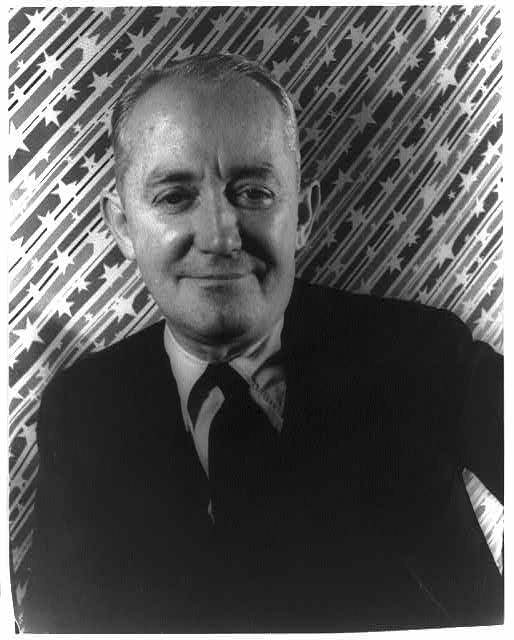
| 4 Quotes | |
| Occup. | Actor |
| From | USA |
| Born | July 3, 1878 |
| Died | November 5, 1942 |
| Aged | 64 years |
| Cite | |
Citation Formats
APA Style (7th ed.)
George m. cohan biography, facts and quotes. (2026, March 18). FixQuotes. https://fixquotes.com/actors/george-m-cohan/
Chicago Style
"George M. Cohan biography, facts and quotes." FixQuotes. March 18, 2026. https://fixquotes.com/actors/george-m-cohan/.
MLA Style (9th ed.)
"George M. Cohan biography, facts and quotes." FixQuotes, 18 Mar. 2026, https://fixquotes.com/actors/george-m-cohan/. Accessed 27 Mar. 2026.
Early Life and Background
George Michael Cohan was born on July 3, 1878, in Providence, Rhode Island, into a family that lived not at the edges of the theater but inside its machinery. His parents, Jeremiah J. Cohan and Helen "Nellie" Costigan Cohan, were vaudevillians of Irish American stock, and his sister Josephine performed with them. Before most children had stable schoolrooms, Cohan had train stations, backstage corridors, cheap hotels, and the fierce discipline of variety houses. He later liked the legend that he had been born on the Fourth of July, a useful patriotic embroidery that fit the public image he would create, but the documentary date is July 3. The discrepancy itself says much about him: he understood early that American show business rewarded myth almost as much as talent.
He grew up in the age when vaudeville was becoming a national circuit and the United States was urbanizing at speed. The family act, eventually billed as The Four Cohans, trained him in timing, mimicry, song, dance, and the brutal arithmetic of audience attention. He learned to read crowds by region and class, to cut dead material quickly, and to convert sentiment into applause without losing pace. Childhood for Cohan meant labor, but also apprenticeship in a uniquely American entertainment economy - mobile, competitive, immigrant-made, and hungry for energy. From that environment he absorbed the two drives that would define him: restless self-invention and a near military professionalism.
Education and Formative Influences
Cohan's formal schooling was irregular and secondary to his theatrical education, yet his practical training was unusually complete. In vaudeville he encountered Irish comic traditions, minstrel residues, sentimental balladry, military marches, urban slang, and the brisk, modular structure of sketches and songs that had to seize attention instantly. He admired speed, clarity, and effect; he also absorbed the example of producer-managers who understood theater as both art and enterprise. By his teens he was writing material for the family act, and by early adulthood he had developed the compact dramatic method that would become his signature: direct stakes, catchy vernacular songs, flag-bright emotion, and a relentless forward drive. The national mood of the Spanish-American War years and the confidence of a rising industrial America deepened his instinct that Broadway could package patriotism, ambition, and hustle into a single theatrical language.
Career, Major Works, and Turning Points
After years on the road, Cohan broke decisively into Broadway as a playwright, composer, lyricist, actor, and producer - one of the rare total theater men of his era. His early successes included Little Johnny Jones (1904), which introduced "Give My Regards to Broadway" and "The Yankee Doodle Boy", songs that fused personal swagger with national self-display. He followed with George Washington, Jr. (1906), Forty-Five Minutes from Broadway (1906), and a stream of hits that made him the emblem of fast, modern musical comedy. Unlike operetta imports, his shows sounded American: clipped, comic, assertive, urban. During World War I he became the unofficial bard of home-front patriotism with "Over There", later honored by Congress with a Gold Medal. Yet his career also traced Broadway's transformation. As revue forms changed and newer styles emerged, he shifted increasingly toward producing, directing, and acting in straight plays, proving his stage authority in Eugene O'Neill's Ah, Wilderness! and achieving one of his greatest late triumphs as President Franklin D. Roosevelt in Rodgers and Hart's I'd Rather Be Right (1937). By the time he died in New York City on November 5, 1942, he had become both a historical figure and a living symbol of Broadway's formative decades.
Philosophy, Style, and Themes
Cohan's art was built on compression, bravado, and emotional legibility. He wrote songs that marched, winked, and saluted all at once; his dialogue moved with the impatience of cities and the confidence of salesmanship. Beneath the jaunty surface was a hard-earned understanding that theater is not a shrine but a contest for attention. “I don't care what you say about me, as long as you say something about me, and as long as you spell my name right”. That line was not merely comic vanity. It reveals a mind trained by vaudeville to value visibility as survival and publicity as proof of existence. He understood reputation as performance, and he made himself into a brand before the term existed.
His patriotism, often dismissed as pure showmanship, was more complicated. “Many a bum show has been saved by the flag”. The joke is double-edged: it admits theatrical calculation while acknowledging that patriotic feeling, in his hands, was a genuine communal language. Cohan knew audiences wanted to feel larger than themselves, especially in an era of war, immigration, and mass anonymity. Yet he also understood life's instability with unusual candor: “Hurried and worried until we're buried, and there's no curtain call, life's a very funny proposition after all”. That lyric exposes the melancholy under his velocity. His work repeatedly stages success as a sprint against disappearance - applause against mortality, national pageantry against private anxiety. The famous polish, the crisp salutes, and the relentless tempo were ways of mastering uncertainty through rhythm.
Legacy and Influence
Cohan helped invent the sound and gait of the American musical before the form reached full maturity under later writers. Irving Berlin, Rodgers and Hart, and generations of Broadway craftsmen inherited his trust in colloquial speech, topicality, and songs that could live beyond their shows. As a performer, he established a specifically American theatrical masculinity - cocky, nimble, sentimental without softness, patriotic without aristocratic distance. As a writer-producer, he demonstrated that Broadway could generate its own vernacular modernity rather than borrow prestige from Europe. His image endured through revivals, recordings, James Cagney's performance in Yankee Doodle Dandy, and the continuing afterlife of songs that remain shorthand for Broadway itself. Cohan's deepest legacy lies in the fusion he made seem natural: entertainment as national self-portrait, where hustle becomes style, style becomes myth, and myth becomes memory.
Our collection contains 4 quotes written by George, under the main topics: Witty One-Liners - Life - Thank You.
Other people related to George: L. Wolfe Gilbert (Musician), Earl Derr Biggers (Novelist)
Source / external links