
Harvey Keitel Biography Quotes 25 Report mistakes
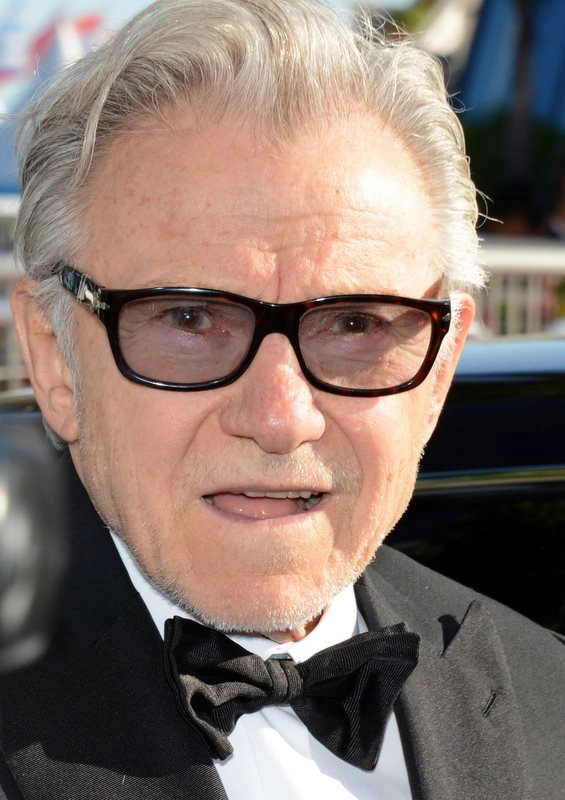
Attr: Georges Biard, CC BY-SA 3.0
| 25 Quotes | |
| Occup. | Actor |
| From | USA |
| Born | May 13, 1939 |
| Age | 86 years |
| Cite | |
Citation Formats
APA Style (7th ed.)
Harvey keitel biography, facts and quotes. (2026, February 11). FixQuotes. https://fixquotes.com/actors/harvey-keitel/
Chicago Style
"Harvey Keitel biography, facts and quotes." FixQuotes. February 11, 2026. https://fixquotes.com/actors/harvey-keitel/.
MLA Style (9th ed.)
"Harvey Keitel biography, facts and quotes." FixQuotes, 11 Feb. 2026, https://fixquotes.com/actors/harvey-keitel/. Accessed 4 Mar. 2026.
Early Life and Background
Harvey Keitel was born on May 13, 1939, in Brooklyn, New York, the son of Jewish parents whose lives were shaped by immigrant striving and the hard practicalities of mid-century city work. He grew up in an outer-borough world where status was earned through endurance, wit, and the ability to read a room fast - traits that later surfaced in his screen presence: watchful, coiled, and emotionally intelligent even when the character was not.New York in the 1940s and 1950s offered both grit and possibility: union jobs, street-corner codes, neighborhood loyalties, and a thriving cultural undercurrent that seeped in from radios, movie palaces, and storefront theaters. Keitel carried an early sense of restlessness and appetite for experience, the kind that can tilt either toward trouble or toward art; his career would repeatedly turn that rawness into a disciplined craft, making him a natural interpreter of men negotiating shame, duty, and desire.
Education and Formative Influences
Before acting became his vocation, Keitel served in the United States Marine Corps, an experience that reinforced habits of control, hierarchy, and endurance, while also sharpening his interest in what pressure reveals about a person. Returning to civilian life, he moved toward the theater and the literature that often accompanies it, absorbing the idea that a self can be remade through study, rehearsal, and attention to other minds. In New York, he found collaborators and mentors and eventually trained within the citys intense acting culture, including the lineage of American realism that prized behavioral truth over polish.Career, Major Works, and Turning Points
Keitels career broke open through his formative collaboration with Martin Scorsese, beginning with Whos That Knocking at My Door (1967) and deepening in Mean Streets (1973), where his mix of volatility and tenderness helped define a new American screen masculinity. He alternated between prominent roles and unexpected detours - including a period when he was replaced on Apocalypse Now - yet his trajectory ultimately benefited from his refusal to calcify into a single type. In the 1980s and 1990s he became a key supporting force in auteur cinema: as a morally shredded detective in Bad Lieutenant (1992), a protective fixer in Pulp Fiction (1994), and a haunted enforcer in Reservoir Dogs (1992), while also appearing in films such as The Piano (1993) and later Scorsese works. Across decades, he accrued influence less as a conventional leading man than as an essential actor of consequence - the figure directors trusted to hold the moral temperature of a scene.Philosophy, Style, and Themes
Keitels best performances operate like confessions under pressure: men trying to manage an inner weather system that keeps breaking through. He has described his worldview in terms of strenuous realism - “The way I see things, the way I see life, I see it as a struggle”. That sentence is not merely biographical; it reads like a key to his character choices, from desperate cops to compromised criminals, where dignity is measured by the attempt to do right while failing in recognizable human ways.His craft sits in the American tradition of psychological naturalism, but with a streetwise tactician underneath - a performer who understands that behavior is both mask and revelation. He emphasizes process and invention: “To create characters, one must build background. And one of the tools we use is improvisation”. That commitment to constructed interior life helps explain why his characters so often feel lived-in rather than written. At the same time, he resisted the anxiety of repetition that can trap character actors, arguing against the notion of overexposure: “So there's no such thing as one too many this, one too many that”. Psychologically, it suggests a man who chose work as a form of continual practice - a way to stay porous, learning, and in motion, rather than protecting a reputation by narrowing his range.
Legacy and Influence
Keitel endures as one of the defining American actors of post-1960s cinema, a bridge between Method-era intensity and modern independent film looseness, equally credible in grime and lyricism. His collaborations with Scorsese helped launch a new realism in American movies, while his later work with filmmakers such as Quentin Tarantino made him a template for the ethically complicated supporting role that can quietly command a film. More than a catalog of titles, his influence is a vocabulary of truthfulness: the willingness to let a character be contradictory, frightened, tender, and dangerous in the same breath - and to make those contradictions feel like the cost of being alive.Our collection contains 25 quotes written by Harvey, under the main topics: Witty One-Liners - Art - Music - Learning - Meaning of Life.
Other people related to Harvey: Stella Adler (Actress), Jane Campion (Director), Will Estes (Actor), Michael Madsen (Actor), James Lipton (Educator), Lorraine Bracco (Actress), Lawrence Tierney (Actor), Anna Paquin (Actress), Abel Ferrara (Director), Annabella Sciorra (Actress)
Source / external links