
Hedy Lamarr Biography Quotes 51 Report mistakes
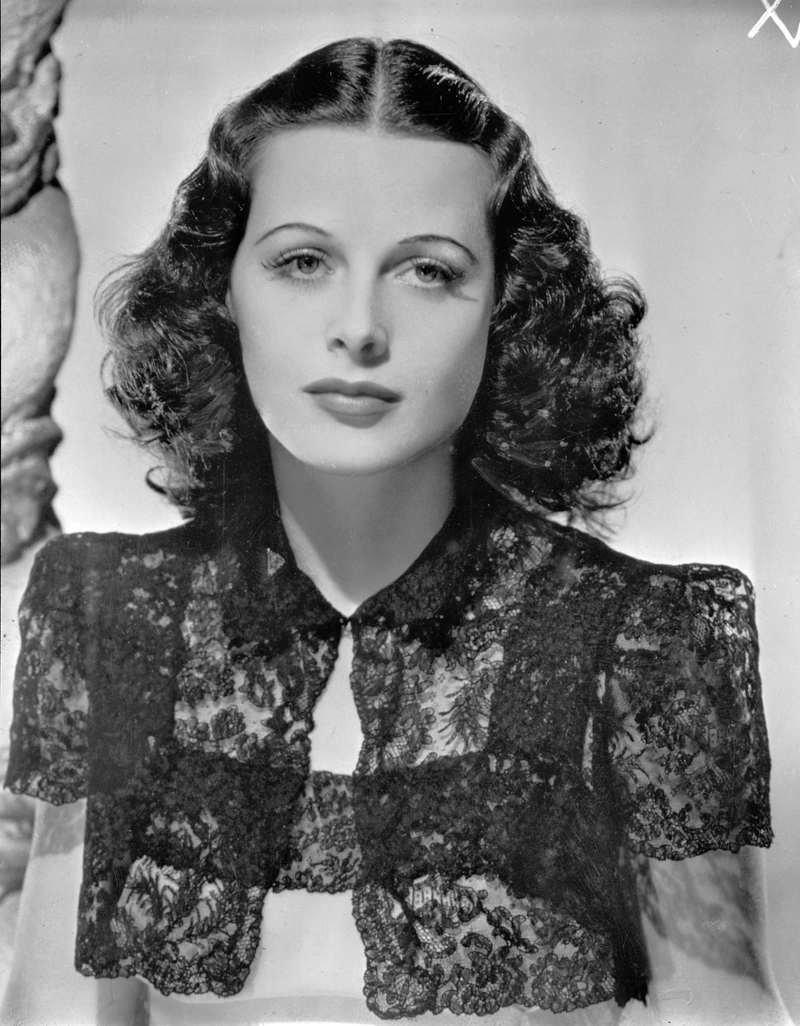
| 51 Quotes | |
| Occup. | Actress |
| From | Austria |
| Born | November 9, 1914 |
| Died | January 19, 2000 |
| Aged | 85 years |
| Cite | |
Citation Formats
APA Style (7th ed.)
Hedy lamarr biography, facts and quotes. (2026, February 11). FixQuotes. https://fixquotes.com/actors/hedy-lamarr/
Chicago Style
"Hedy Lamarr biography, facts and quotes." FixQuotes. February 11, 2026. https://fixquotes.com/actors/hedy-lamarr/.
MLA Style (9th ed.)
"Hedy Lamarr biography, facts and quotes." FixQuotes, 11 Feb. 2026, https://fixquotes.com/actors/hedy-lamarr/. Accessed 26 Mar. 2026.
Early Life and Background
Hedy Lamarr was born Hedwig Eva Maria Kiesler on 1914-11-09 in Vienna, then the capital of the Austro-Hungarian Empire. She grew up in a secular Jewish family in an era when Vienna still carried the afterglow of imperial culture and the anxieties of modernity - psychoanalysis, mass politics, and a surging film industry. Her father, Emil Kiesler, worked as a bank director and was known for methodically explaining how machines and city systems functioned; her mother, Gertrud (Lichtwitz) Kiesler, had a concert-going sensibility that tuned Lamarr to performance and social nuance.The First World War ended weeks after her birth, and her childhood unfolded amid the First Austrian Republic's economic volatility and rising antisemitism. That pressure cooker sharpened her instincts: how to read rooms, how to control an image, how to survive attention. Even before Hollywood, she learned that beauty could be both passport and trap - an asset that drew opportunity while inviting possession, rumor, and moral judgment.
Education and Formative Influences
Lamarr studied acting in Vienna and, crucially, absorbed the technical curiosity encouraged by her father, an influence she later described in mechanical, observational terms rather than poetic ones. She entered the German-language film world as sound cinema arrived, when studios in Vienna and Berlin were redefining celebrity and female sexuality onscreen. Her early apprenticeship taught her how directors constructed desire, and how a performer could bargain with that construction - sometimes by yielding, sometimes by outsmarting it.Career, Major Works, and Turning Points
She gained international notoriety with the Czech film "Ecstasy" (1933), whose nude scenes made her a symbol of modern erotic candor and a target of scandal; years later she recalled, “I remember all too well the premiere of Ecstasy when I watched my bare bottom bounce across the screen and my mother and father sat there in shock”. Soon after, she married Austrian munitions magnate Fritz Mandl, a controlling union that brought her into proximity with weapons engineering and high-level dinners where fascist-aligned power brokers circulated. She escaped the marriage and Europe as Nazism advanced, reaching London and then Hollywood, where MGM promoted her as "the most beautiful woman in the world". In the 1940s she became a major star in films such as "Algiers" (1938), "Lady of the Tropics" (1939), "Boom Town" (1940), "Comrade X" (1940), "White Cargo" (1942), and "Samson and Delilah" (1949), while also co-inventing, with composer George Antheil, a frequency-hopping communication system patented in 1942 to help secure Allied torpedoes - work that would be recognized much later as foundational to spread-spectrum technology. Her later career dimmed amid typecasting, studio politics, and personal turmoil; by the late 1950s she largely withdrew from film, living privately in the United States until her death on 2000-01-19.Philosophy, Style, and Themes
Lamarr's inner life was shaped by a double education: the camera's appetite and the engineer's patience. She understood that celebrity demanded a version of herself that could be consumed, then replaced, yet she refused to be only that version. Her most telling credo is less glamorous than restless: “All creative people want to do the unexpected”. For her, the "unexpected" was not merely a daring role or a witty line; it was the insistence that a woman marketed as spectacle could also be a problem-solver, someone who sketched ideas, read technical material, and treated invention as a private refuge from publicity.Her themes, across public remarks and life choices, circle around power - who has it, who resents it, and what it costs to keep it. Her serial marriages were not romantic comedy but a repeated test of whether intimacy could coexist with her fame and competence, as she admitted with cutting self-knowledge: “I must quit marrying men who feel inferior to me. Somewhere there must be a man who could be my husband and not feel inferior”. Even her humor about matrimony carries a ledger-like realism, “All my six husbands married me for different reasons”. , a line that reads like an autopsy of desire in an age when men wanted the icon and feared the person. Onscreen, her style was controlled and luminous, often constrained by roles that framed her as exotic or dangerous; offscreen, her life argues that constraint is never the whole story.
Legacy and Influence
Lamarr endures as a corrective to simplistic fame: a Jewish Austrian refugee who became a Hollywood archetype while contributing, largely uncredited in her prime, to the logic of modern wireless communication. Her posthumous recognition - including renewed attention to the 1942 patent and honors such as the Electronic Frontier Foundation's Pioneer Award - repositioned her from "beautiful actress" to emblem of overlooked female ingenuity. She also remains a mirror for the 20th century itself: the passage from Viennese cosmopolitanism to fascist catastrophe, from studio-era mythmaking to a more forensic celebrity culture, and from private tinkering to technologies that now saturate daily life.Our collection contains 51 quotes written by Hedy, under the main topics: Witty One-Liners - Motivational - Wisdom - Art - Love.