
Henry Fonda Biography Quotes 11 Report mistakes
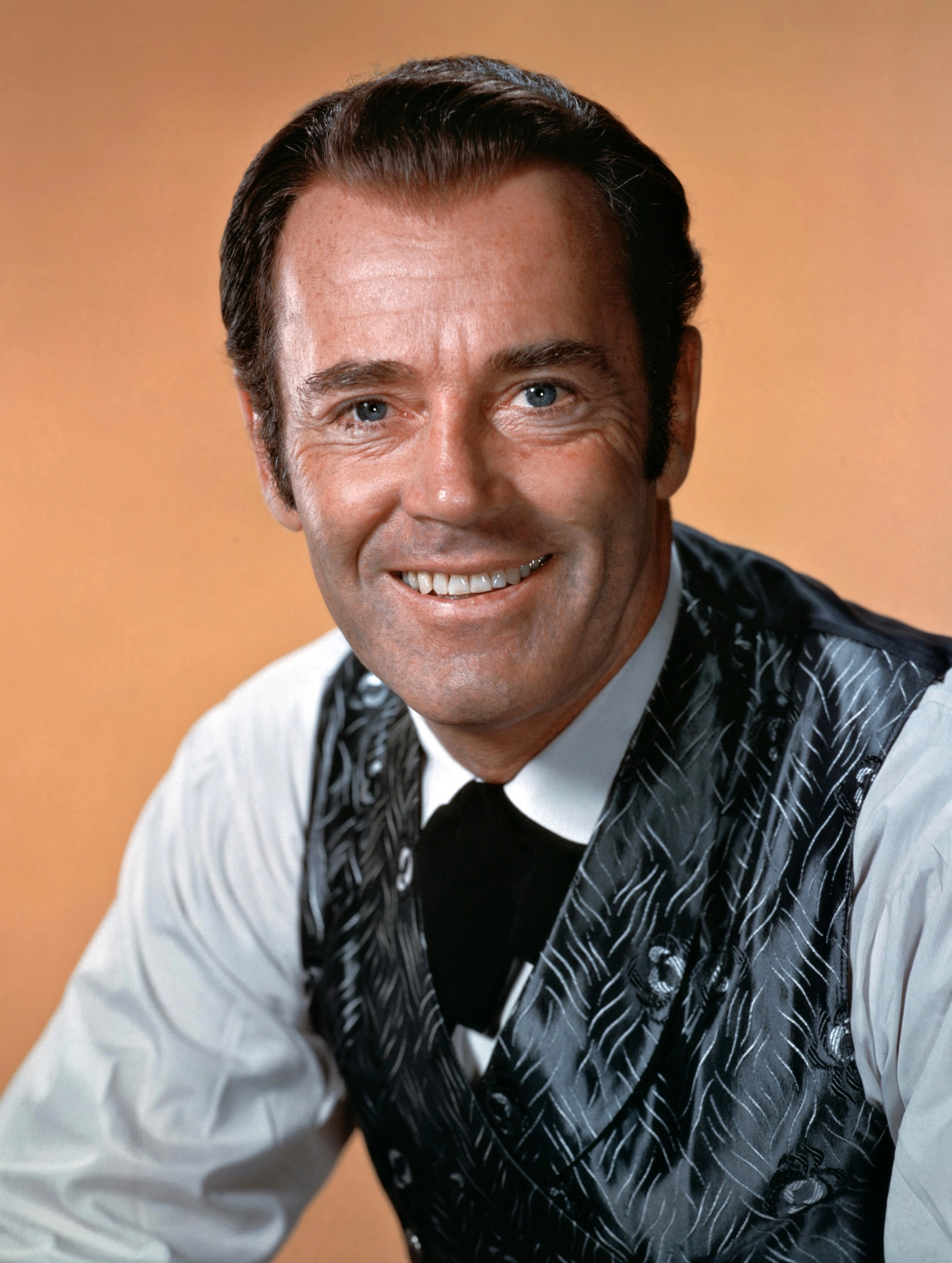
Attr: Studio publicity still
| 11 Quotes | |
| Occup. | Actor |
| From | USA |
| Born | May 16, 1905 |
| Died | August 12, 1982 |
| Aged | 77 years |
| Cite | |
Citation Formats
APA Style (7th ed.)
Henry fonda biography, facts and quotes. (2026, February 11). FixQuotes. https://fixquotes.com/actors/henry-fonda/
Chicago Style
"Henry Fonda biography, facts and quotes." FixQuotes. February 11, 2026. https://fixquotes.com/actors/henry-fonda/.
MLA Style (9th ed.)
"Henry Fonda biography, facts and quotes." FixQuotes, 11 Feb. 2026, https://fixquotes.com/actors/henry-fonda/. Accessed 22 Mar. 2026.
Early Life and Background
Henry Jaynes Fonda was born May 16, 1905, in Grand Island, Nebraska, and grew up mainly in Omaha in a respectable Midwestern household shaped by discipline, civic-mindedness, and the quiet pressure to be "steady". His father, William Brace Fonda, ran a print business; his mother, Herberta Jaynes, died when Henry was a teenager, a rupture that intensified his reserve and his instinct to keep emotion contained. The Midwest of his youth offered a moral grammar of propriety and duty, and Fonda absorbed it so completely that his later screen authority often felt less like performance than a public posture he had been trained to hold.That posture, however, was tested early by national tension and local trauma. As a boy in Omaha, he witnessed the aftermath of the 1919 lynching of Will Brown during the Omaha race riot, an event often cited as a formative shock - a lesson in how quickly ordinary crowds could turn feral. The memory sat behind his later gravitation toward roles in which law and conscience compete with fear, and it helped explain the peculiar intensity with which he played decency as something earned rather than inherited.
Education and Formative Influences
Fonda attended the University of Minnesota for a time, drifting toward journalism and business before the stage claimed him. His turn to acting was catalyzed in Omaha by amateur theater and by the recognition that performance could be a form of control over inner turbulence - a way to stand in public without surrendering privacy. The period was also colored by Christian Science, prominent in his family; he later insisted, “My whole damn family was nice. I don't think I've imagined it. It's true. Maybe it has to do with being brought up as Christian Scientists. Half of my relatives were Readers or Practitioners in the church”. The remark reads like both tribute and self-defense: niceness as inheritance, and also as armor.Career, Major Works, and Turning Points
After early stage work and the interwar theater circuit, Fonda arrived in New York in the late 1920s, joined the Broadway world, and moved to Hollywood in the 1930s, where his lean presence and unforced diction fit the era's appetite for "plain" authenticity. John Ford became crucial: Fonda anchored The Grapes of Wrath (1940) as Tom Joad, translating Depression rage into moral clarity, and later My Darling Clementine (1946) and Fort Apache (1948), helping define the postwar American myth even as Ford's methods bruised him; “I don't know what was in his mind, but I do know Ford was stricken by what he had done, by hitting me”. Between those milestones came wartime service in the U.S. Navy, a return to the screen in mature roles, and a late-career renaissance: 12 Angry Men (1957), which he also produced, gave his decency a sharper edge; Once Upon a Time in the West (1968) inverted his image with chilling effect; and On Golden Pond (1981) turned family fracture into final, devastating intimacy, earning him an Academy Award shortly before his death on August 12, 1982, in Los Angeles.Philosophy, Style, and Themes
Fonda's art was built on restraint - not coolness, but containment. He tended to play men who feel most when they speak least, projecting the sense that ethics are physical weight carried in the spine. That quality came from craft, but also from a lifelong negotiation with vulnerability. When his marriage to Frances Seymour ended and his life briefly felt unmanageable, he admitted, “My thinking was scrambled when Sullivan and I separated. Something happened to me that had never happend before. I couldn't cope. It was heartbreak time. I thought it was the end of the world”. The confession illuminates the paradox of his screen authority: the steadiness was real, but it was also something he rebuilt, sometimes from wreckage.His themes - conscience, duty, individual courage against group pressure - were less ideology than temperament. He trusted procedural truth: the jury room in 12 Angry Men, the courtroom aura of Young Mr. Lincoln (1939), the frontier codes of Ford's West. Yet he was wary of turning private conflict into public debate, especially when his family's fame made everything politicized. “I'd just as soon not get into a discussion about Jane and her politics. I'd just as soon stick to what we're here for, the picture”. Read psychologically, it is not evasiveness so much as boundary-setting: an insistence that work remain a sanctuary where he could translate feeling into form without being drafted into a referendum on his own household.
Legacy and Influence
Fonda left behind an American acting template: the moral realist whose decency is tested, not assumed. His influence runs through later screen minimalists who play thought as action - from courtroom dramas to modern anti-hero revisions - and his willingness to puncture his own image, especially in Once Upon a Time in the West, gave permission for "good-guy" stars to court darkness without abandoning craft. As the patriarch of a dynasty that includes Jane and Peter Fonda, he also embodied a larger 20th-century story: private pain and public myth coexisting in the same frame, with the camera catching, again and again, the moment a man chooses to do what is right when no choice feels easy.Our collection contains 11 quotes written by Henry, under the main topics: Witty One-Liners - Sarcastic - Faith - Movie - Forgiveness.
Other people related to Henry: Jane Fonda (Actress), Jimmy Stewart (Actor), Vera Miles (Actress), James Stewart (Actor), Dabney Coleman (Actor), Jeremy Brett (Actor), Dorothy Malone (Actress), Darryl F. Zanuck (Director), Anna Lee (Actress), Herbert Lom (Actor)
Frequently Asked Questions
- How old was Henry Fonda when he died: Henry Fonda was 77 years old when he died.
- Henry Fonda movies 1930s: 'The Farmer Takes a Wife', 'Trail of the Lonesome Pine', and 'Jezebel' are some examples.
- What is Henry Fonda net worth? At the time of his death, Henry Fonda's net worth was estimated to be several million dollars.
- Is James Fonda related to Henry Fonda: Henry Fonda does not have a known relative named James Fonda.
- Henry Fonda Young: Henry Fonda began his acting career on Broadway before transitioning to film in the 1930s.
- Henry Fonda Best movies: 'The Grapes of Wrath', '12 Angry Men', 'On Golden Pond', and 'The Ox-Bow Incident' are considered some of his best.
- Henry Fonda movies in order: A list can include 'The Farmer Takes a Wife' (1935), 'Jezebel' (1938), 'Young Mr. Lincoln' (1939), 'The Grapes of Wrath' (1940), and more.
- What did Henry Fonda die of: Henry Fonda died of heart disease and prostate cancer.
- How old was Henry Fonda? He became 77 years old
Source / external links