
Hugo Weaving Biography Quotes 7 Report mistakes
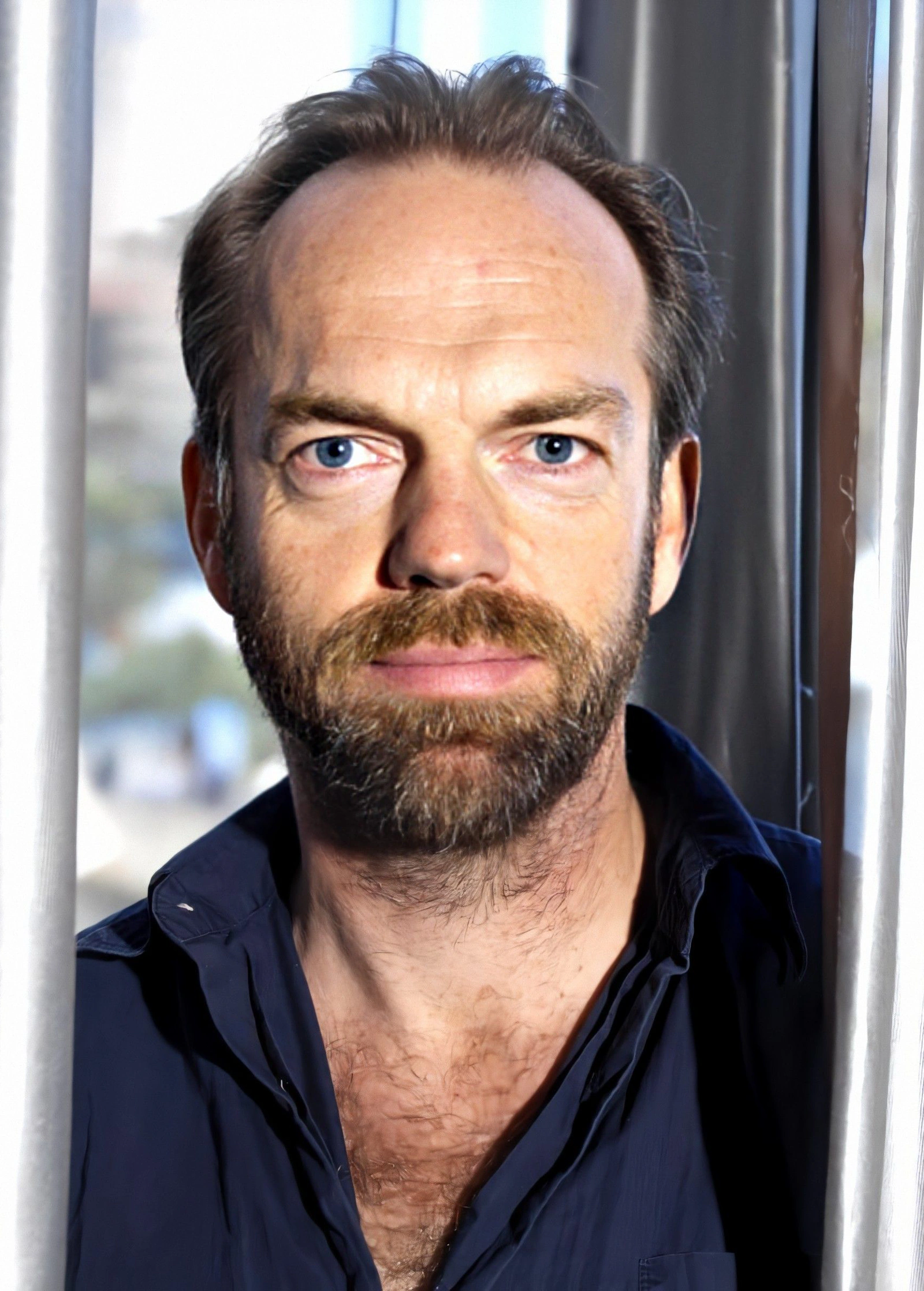
| 7 Quotes | |
| Born as | Hugo Wallace Weaving |
| Occup. | Actor |
| From | Australia |
| Born | April 4, 1960 Ibadan, Oyo State, Nigeria |
| Age | 65 years |
| Cite | |
Citation Formats
APA Style (7th ed.)
Hugo weaving biography, facts and quotes. (2026, February 11). FixQuotes. https://fixquotes.com/actors/hugo-weaving/
Chicago Style
"Hugo Weaving biography, facts and quotes." FixQuotes. February 11, 2026. https://fixquotes.com/actors/hugo-weaving/.
MLA Style (9th ed.)
"Hugo Weaving biography, facts and quotes." FixQuotes, 11 Feb. 2026, https://fixquotes.com/actors/hugo-weaving/. Accessed 6 Mar. 2026.
Early Life and Background
Hugo Wallace Weaving was born on April 4, 1960, in Ibadan, Nigeria, to English parents who moved frequently for work. His father, Wallace Weaving, was a seismologist; his mother, Anne Lennard, taught and worked in tourism. That itinerant childhood - Nigeria, the United Kingdom, and finally Australia - gave him a durable sense of being slightly unplaced, the kind of inner distance that later made his screen villains, masked revolutionaries, and haunted authority figures feel lived-in rather than theatrical.The family settled in Australia during his teens, and Weaving came of age as Australian film and theater were sharpening a confident national voice after the 1970s boom. He absorbed the era's mix of larrikin realism and formal stage craft, but his temperament tended toward the private and observational. Long before international stardom, colleagues noted his capacity to listen onstage - to let silence, posture, and timing do as much work as dialogue.
Education and Formative Influences
Weaving trained at the National Institute of Dramatic Art (NIDA) in Sydney, graduating in 1981, part of the pipeline that also shaped many of Australia's most exportable screen actors. NIDA's discipline suited him: text work, movement, and ensemble rigor, paired with a theater culture that prizes the actor as a craftsman rather than a celebrity. Early professional years with the Sydney Theatre Company and other stages reinforced a habit of returning to live performance as a recalibration point, even as screen opportunities expanded.Career, Major Works, and Turning Points
Weaving first became widely known in Australia through television, notably the 1984 miniseries Bodyline, before breaking into film with roles that showcased both warmth and menace, including Proof (1991) and The Adventures of Priscilla, Queen of the Desert (1994) as the brittle, aching drag performer Anthony "Tick" Belrose. The global pivot arrived with The Matrix (1999) as Agent Smith, a performance built on precision and controlled contempt that turned him into a franchise anchor; he followed with The Lord of the Rings trilogy (2001-2003) as Elrond, then returned to dystopian iconography in V for Vendetta (2005), acting through mask, voice, and rhythm. Across the 2000s and 2010s he alternated tentpoles with character-driven work - including Oranges and Sunshine (2010) and Cloud Atlas (2012) - while maintaining a long-running commitment to theater and later appearing in high-profile projects such as Hacksaw Ridge (2016) and the MCU as Red Skull, a role he ultimately did not continue beyond its initial outing.Philosophy, Style, and Themes
Weaving's screen identity is often described in terms of authority - agents, elves, judges, fathers, ideologues - yet his most compelling choices expose the human crack beneath the emblem. He approaches acting as a relationship, not a display, and his best roles carry the sense that he has argued privately with the character for weeks before filming. That method is visible in his own description of casting logic: “I generally find an affinity with a lot of the people I play and I suppose if I didn't feel an affinity for them then they wouldn't be particularly good performances”. The line is revealing: even his antagonists are not treated as monsters, but as intelligible minds with needs, wounds, and principles, which is why his villains often feel persuasive rather than merely threatening.His inner life - marked by mobility, anonymity, and bouts of doubt - surfaces as a recurring theme of exile. He has articulated the psychological undertow succinctly: “We're all outsiders in a way. We're all alone and can become very lonely”. That outsider consciousness helps explain his attraction to masked identities and estranged figures: Smith, the embodiment of systems; Elrond, the melancholic custodian of a fading world; V, the romantic absolutist performing politics as theater. Underneath is a working ethic that resists celebrity metrics in favor of craft satisfaction: “I guess I judge my films by how pleased I am with the work I do, so it's kind of on another level”. In practice, that means a career shaped less by brand management than by alternating scale with difficulty, returning repeatedly to stage work where the actor cannot hide behind editing or spectacle.
Legacy and Influence
Hugo Weaving's enduring influence lies in how he made larger-than-life cinema feel psychologically credible: he proved that a suit, a mask, or a mythic costume could still contain a bruised interior. For Australian actors, he stands as a model of international range without abandoning local roots, moving between Sydney stages and global franchises with the same seriousness. For audiences, his performances remain shorthand for elegant menace, moral ambiguity, and the ache of displacement - a body of work that continues to shape how modern genre films imagine authority, rebellion, and the loneliness inside power.Our collection contains 7 quotes written by Hugo, under the main topics: Art - Movie - Confidence - Loneliness - Self-Improvement.
Other people related to Hugo: Richard Roxburgh (Actor), Stephen Rea (Actor), John Hurt (Actor), Marton Csokas (Actor), Emily Watson (Actress)
Source / external links