
Humphrey Bogart Biography Quotes 13 Report mistakes
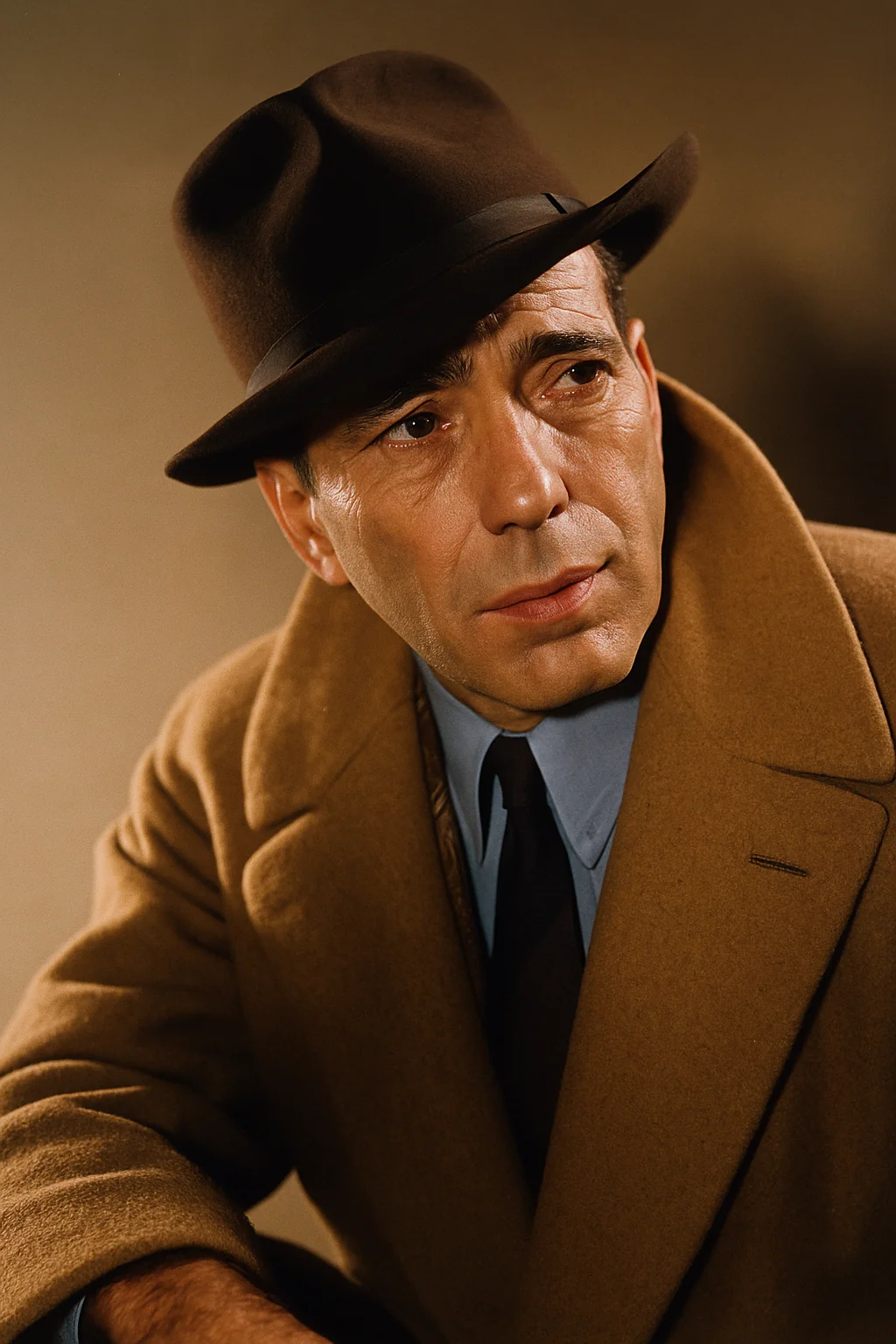
| 13 Quotes | |
| Born as | Humphrey DeForest Bogart |
| Occup. | Actor |
| From | USA |
| Spouses | Helen Menken (1926-1927) Mary Philips (1928-1937) Mayo Methot (1938-1945) Lauren Bacall (1945) |
| Born | December 25, 1899 New York City, USA |
| Died | January 14, 1957 Los Angeles, California, USA |
| Cause | sophageal cancer |
| Aged | 57 years |
| Cite | |
Citation Formats
APA Style (7th ed.)
Humphrey bogart biography, facts and quotes. (2026, February 11). FixQuotes. https://fixquotes.com/actors/humphrey-bogart/
Chicago Style
"Humphrey Bogart biography, facts and quotes." FixQuotes. February 11, 2026. https://fixquotes.com/actors/humphrey-bogart/.
MLA Style (9th ed.)
"Humphrey Bogart biography, facts and quotes." FixQuotes, 11 Feb. 2026, https://fixquotes.com/actors/humphrey-bogart/. Accessed 20 Mar. 2026.
Early Life and Background
Humphrey DeForest Bogart was born on December 25, 1899, in New York City, into a well-to-do, complicated household. His father, Belmont DeForest Bogart, was a respected surgeon; his mother, Maud Humphrey, was a celebrated commercial illustrator whose social circle and aesthetic polish shaped the family image. The contrast between public refinement and private distance became an early template for the Bogart persona: a man who could look immovable while registering wounds beneath the surface. He grew up amid Manhattan comfort, yet his later screen toughness carried the tang of a boy who learned early not to ask for too much tenderness.The United States he came of age in was shifting from Gilded Age assurance to modern disillusion. Bogart absorbed the rhythms of a city defined by newspapers, bars, boxing gyms, and the theater district - places where talk mattered and reputations were made quickly. During World War I he served in the U.S. Navy; the oft-repeated story that a shipboard injury helped produce his distinctive lisp has been debated, but the broader truth holds: the war and its aftermath accelerated his impatience with pretense. By the 1920s, as Prohibition intensified nightlife and cynicism, his temperament - wary, humorous, self-protective - fit the era.
Education and Formative Influences
Bogart attended Trinity School in Manhattan and later Phillips Academy in Andover, where he clashed with authority and drifted from the path his parents imagined. He left without completing a conventional college course, choosing instead the working world of the stage, first in backstage jobs and then in acting. Those years trained him in timing and discipline, but also in an ethic of professionalism: if life was unreliable, craft could be trusted. He learned to project control even when the interior was turbulent - a technique that later made his silences as expressive as his dialogue.Career, Major Works, and Turning Points
Bogart worked steadily in theater through the 1920s and entered Hollywood as sound cinema matured, but he spent much of the 1930s typecast as gangsters and hard men, notably in The Petrified Forest (1936) as the doomed Duke Mantee opposite Leslie Howard and Bette Davis. His true turning point came at Warner Bros. in the early 1940s: High Sierra (1941) and The Maltese Falcon (1941) defined his antihero charisma; Casablanca (1942) fused romance with moral awakening; and a run of defining noirs and thrillers followed, including To Have and Have Not (1944), The Big Sleep (1946), Key Largo (1948), In a Lonely Place (1950), The African Queen (1951, which earned him the Academy Award), and The Caine Mutiny (1954). Offscreen, his marriage to Lauren Bacall - begun after their meeting on To Have and Have Not - created a public partnership that mixed irony, loyalty, and genuine tenderness, tempering his lone-wolf image without dissolving it. In his final years he battled esophageal cancer, dying on January 14, 1957, in Los Angeles.Philosophy, Style, and Themes
Bogart built a style out of restraint: minimal gesture, clipped phrasing, and eyes that disclosed what the mouth refused. He played men who knew the world was bent but insisted on a private code - Rick Blaine rediscovering responsibility, Philip Marlowe refusing corruption, Charlie Allnut finding courage through stubborn decency. His characters often stood at the junction of public violence and private loneliness, and he made that loneliness credible by never begging the audience to notice it. The effect was modern masculinity under pressure: not invulnerable, but determined to behave as if principles still mattered.His psychology - and his humor - leaned toward stoic fatalism, sharpened by workmanlike pride. “The only thing you owe the public is a good performance”. That sentence is less modesty than armor: it narrows love to a contract, keeping applause from becoming intimacy that might disappoint. His famous barbed pessimism, “Things are never so bad they can't be made worse”. reads like a coping mechanism from someone who preferred expecting the worst to being surprised by it. Even his take on fame is practical rather than dreamy: “You're not a star until they can spell your name in Karachi”. - a reminder that celebrity, like morality in his films, only counts when it travels beyond the room where it was made.
Legacy and Influence
Bogart endures as a template for the principled cynic, shaping film noir, the romantic antihero, and the language of screen masculinity for generations. His performances influenced actors from Robert Mitchum to Harrison Ford, and his collaborations with directors like John Huston and Michael Curtiz helped codify Hollywood's wartime and postwar mood: hard-edged realism softened by the possibility of grace. More than a collection of iconic lines and trench-coat silhouettes, he left a model of integrity under duress - a way of standing still while the world closes in, and making that stillness feel like a choice.Our collection contains 13 quotes written by Humphrey, under the main topics: Witty One-Liners - Movie - Success - Contentment - Aging.
Other people related to Humphrey: Howard Hawks (Director), Rich Little (Comedian), Bruce Bennett (Actor), Robert E. Sherwood (Playwright), Joan Leslie (Actress), Gina Lollobrigida (Actress), C. S. Forester (Novelist), Raoul Walsh (American), Jack L. Warner (Businessman), Edward G. Robinson (Actor)
Frequently Asked Questions
- Humphrey Bogart children: Two: Stephen and Leslie
- Humphrey Bogart Casablanca: Played Rick Blaine in Casablanca (1942)
- Humphrey Bogart height: 5 ft 8 in (173 cm)
- Stephen Bogart: Son of Humphrey Bogart and Lauren Bacall; author/producer (b. 1949)
- Humphrey Bogart spouse: Lauren Bacall (m. 1945–1957); previously Helen Menken, Mary Philips, Mayo Methot
- Humphrey Bogart movies: Casablanca; The Maltese Falcon; The African Queen; The Big Sleep; Key Largo
- How old was Humphrey Bogart? He became 57 years old