
Ingrid Bergman Biography Quotes 19 Report mistakes
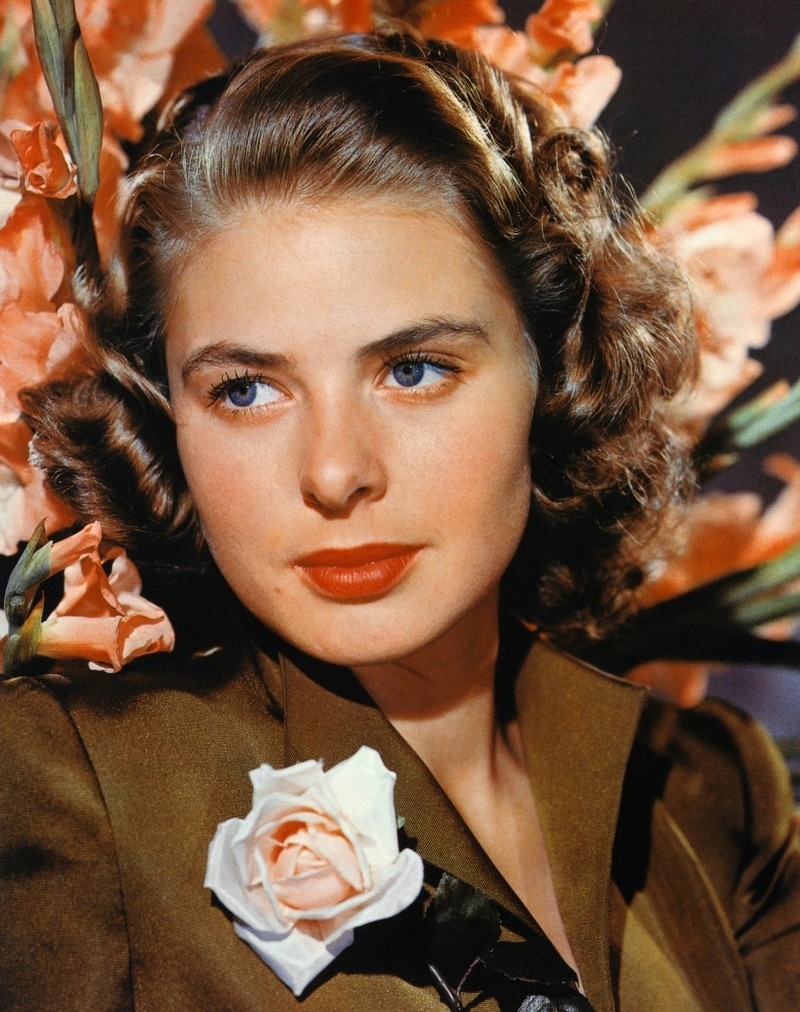
| 19 Quotes | |
| Occup. | Actress |
| From | Sweden |
| Born | August 29, 1915 Stockholm, Sweden |
| Died | August 29, 1982 London, England |
| Aged | 67 years |
| Cite | |
Citation Formats
APA Style (7th ed.)
Ingrid bergman biography, facts and quotes. (2026, February 11). FixQuotes. https://fixquotes.com/actors/ingrid-bergman/
Chicago Style
"Ingrid Bergman biography, facts and quotes." FixQuotes. February 11, 2026. https://fixquotes.com/actors/ingrid-bergman/.
MLA Style (9th ed.)
"Ingrid Bergman biography, facts and quotes." FixQuotes, 11 Feb. 2026, https://fixquotes.com/actors/ingrid-bergman/. Accessed 5 Mar. 2026.
Early Life and Background
Ingrid Bergman was born on August 29, 1915, in Stockholm, Sweden, into a small, image-saturated household that shaped her sense of self before she ever stepped on a stage. Her father, Justus Bergman, worked as a photographer and encouraged his daughter to pose, perform, and play for the camera - an early apprenticeship in stillness, light, and the persuasive power of a face. Her mother, Friedel Adler Bergman, a German-born nurse, died when Ingrid was very young, and the loss left an emotional undertow that contemporaries later sensed in her mixture of radiance and reserve.Orphaned in stages - her father died when she was a teenager, followed by the relatives who took her in - Bergman grew up with grief as a quiet companion and independence as a necessity. Stockholm in the 1920s and early 1930s offered modernity without Hollywood gloss: Lutheran restraint, strong public institutions, and an arts scene that prized seriousness. That environment helped form the Bergman paradox that audiences would later read as "natural": a woman who looked unforced on screen because she had learned, early, to manage feeling without theatrical display.
Education and Formative Influences
Bergman entered the Royal Dramatic Theatre School (Dramaten) in Stockholm in 1933, absorbing classical technique while resisting anything that felt like mannerism; she wanted truth, not polish. The Swedish film industry, smaller and more intimate than American studios, quickly pulled her from the academy into professional work, and she learned by doing - calibrating voice, gesture, and stillness for the camera rather than the back row. By the mid-1930s she was already a local star, and her early collaborations taught her the discipline of repeated takes and the psychological economy that close-ups demand.Career, Major Works, and Turning Points
Her breakthrough came in Sweden with Intermezzo (1936), and the American remake, Intermezzo: A Love Story (1939), brought her to Hollywood under producer David O. Selznick, who marketed her as an antidote to artifice. During the 1940s she became one of the era's defining faces: Casablanca (1942) fixed her in popular memory, while For Whom the Bell Tolls (1943) showed her romantic amplitude and Gaslight (1944) won her a first Academy Award. She then risked her established image by working with Alfred Hitchcock in Spellbound (1945), Notorious (1946), and Under Capricorn (1949), exploring desire and moral ambiguity with a cool, modern intensity. The most consequential turning point was personal and public: her affair with and marriage to Italian director Roberto Rossellini, after leaving her first husband Petter Lindstrom, detonated scandal in the United States in 1950, with congressional denunciations and moral outrage. Yet the artistic yield was real - Stromboli (1950), Europe '51 (1952), and Viaggio in Italia (1954) placed her at the birth of a new, psychologically spare cinema. She later returned to American favor with Anastasia (1956), earning a second Oscar, and in her final years delivered late-career peaks in Autumn Sonata (1978) for Ingmar Bergman and in her Oscar-winning supporting turn in Murder on the Orient Express (1974). She died on her birthday, August 29, 1982, in London, from breast cancer.Philosophy, Style, and Themes
Bergman's screen presence is often described as "natural", but it was a disciplined naturalness - a controlled transparency that let audiences believe they were witnessing private thought. She worked from inside out, using stillness as an active force, and she trusted the camera to catch what theater might overstate. Her roles repeatedly turned on moral testing: the faithful woman facing temptation, the lover negotiating duty, the modern woman refusing to be reduced to a symbol. That tension, between inner necessity and outer judgment, became biographical as well as artistic, making her life a case study in the mid-century collision between celebrity and sexual morality.Her own self-descriptions reveal a psychology that balanced shyness with insistence, vulnerability with will. “I was the shyest human ever invented, but I had a lion inside me that wouldn't shut up!” That lion surfaces in the way she played women who choose - Ilsa's haunted composure, Alicia Huberman's reckless courage, or the severe compassion of Europe '51 - characters who move through condemnation without sentimental pleading. She also understood how reputation can swing violently, especially for women, noting, “I've gone from saint to whore and back to saint again, all in one lifetime”. Rather than apologize her way back into acceptability, she treated experience as the only honest curriculum: “I have no regrets. I wouldn't have lived my life the way I did if I was going to worry about what people were going to say”. In that refusal to perform contrition, her greatest theme emerges - authenticity as labor, and freedom as the price of being fully alive.
Legacy and Influence
Bergman endures as a bridge figure: a Swedish star who conquered Hollywood without surrendering her seriousness, then helped legitimize postwar European realism for international audiences. Her three Academy Awards and iconic films only partly explain the lasting impact; more important is the template she offered for modern screen acting - intimate, psychologically legible, and unafraid of contradiction. Later actresses drew from her example of beauty without coquettishness, emotion without exhibitionism, and artistic curiosity that crossed languages and industries. In an era eager to moralize women into categories, her life and work insisted on complexity, and that insistence remains her most contemporary legacy.Our collection contains 19 quotes written by Ingrid, under the main topics: Witty One-Liners - Art - Mortality - Work Ethic - Movie.
Other people related to Ingrid: Gary Cooper (Actor), Albert Finney (Actor), Isabella Rossellini (Actress), Anna Magnani (Actress), Conrad Veidt (Actor), Michael Wilding (Actor), Sam Wood (Director), Vincente Minnelli (Director)
Source / external links