
Isabelle Adjani Biography Quotes 30 Report mistakes
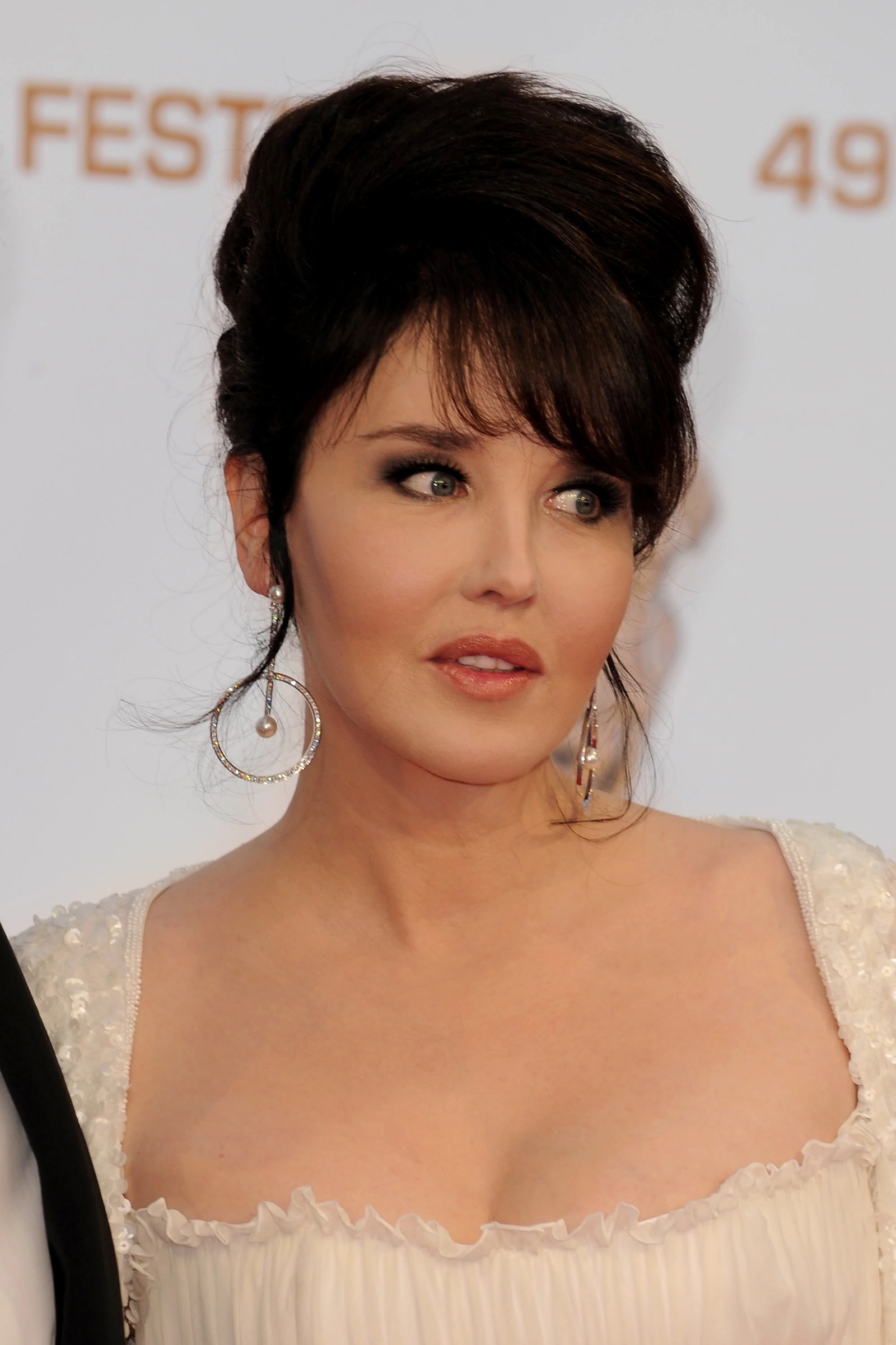
| 30 Quotes | |
| Born as | Isabelle Yasmine Adjani |
| Occup. | Actress |
| From | France |
| Born | June 27, 1955 Gennevilliers, Hauts-de-Seine, France |
| Age | 70 years |
| Cite | |
Citation Formats
APA Style (7th ed.)
Isabelle adjani biography, facts and quotes. (2026, February 11). FixQuotes. https://fixquotes.com/actors/isabelle-adjani/
Chicago Style
"Isabelle Adjani biography, facts and quotes." FixQuotes. February 11, 2026. https://fixquotes.com/actors/isabelle-adjani/.
MLA Style (9th ed.)
"Isabelle Adjani biography, facts and quotes." FixQuotes, 11 Feb. 2026, https://fixquotes.com/actors/isabelle-adjani/. Accessed 30 Mar. 2026.
Early Life and Background
Isabelle Yasmine Adjani was born on June 27, 1955, in Paris, and grew up in the banlieues at a moment when postwar France was renegotiating identity through immigration, consumer modernity, and a newly combative youth culture. Her family life carried the tension - and fertility - of cultural crossings: a French mother and an Algerian father (a background that would later sharpen public projection onto her face and name), and a childhood marked by both the ordinary discipline of school and the unnerving sense of being watched, evaluated, categorized.Adjani entered adolescence as the 1960s tipped into the unrest of May 1968 and its long aftershocks, when the authority of institutions - from the classroom to the family - came under scrutiny. That atmosphere mattered. She became known early for an intensity that read as maturity but functioned as vigilance: an actorly habit of registering every micro-shift in mood, power, and desire. Even before celebrity, her inner life seemed tuned to the costs of being seen and the risks of refusing to be simplified.
Education and Formative Influences
She trained in French classical theater and, still a teenager, entered the Comedie-Francaise, one of the most tradition-bound stages in Europe - an environment that sharpened her technique and also clarified what she would not accept. The institution offered discipline, voice, and repertoire, but its hierarchies and expectations collided with her instinct for transformation; she absorbed the craft while resisting the idea that a young woman should be "placed" into a stable type.Career, Major Works, and Turning Points
Adjani moved decisively into cinema in the 1970s, gaining major attention with Francois Truffaut's The Story of Adele H. (1975), where her portrayal of obsession and emotional self-erasure announced a rare fearlessness. The 1980s made her an international symbol of French screen acting at its most volcanic and precise: Andrzej Zulawski's Possession (1981) and Claude Miller's L'Effrontee (1985) pushed her into extreme registers; Jean Becker's One Deadly Summer (1983) and the period spectacle Queen Margot (1994) confirmed her as a star who used beauty not as decoration but as dramatic bait. She became famous for long gaps between films and for protecting her privacy - choices that read as capricious to an industry built on constant visibility, but that functioned as a strategy of survival and selectivity. In later decades she remained a cultural reference point through films such as La Journee de la jupe (2008) and through her public presence, which was intermittent yet magnetized.Philosophy, Style, and Themes
Adjani's work is built on a paradox: an image treated by the public as near-mythic, and an acting style that repeatedly dismantles myth from the inside. Her characters - Adele, the fractured wife in Possession, the wounded young woman in L'Effrontee, the politically trapped Margot de Valois - are often people for whom desire is both fuel and trap, and for whom social judgment becomes a second antagonist. She performs emotion as physiology: breath, recoil, stillness that suddenly detonates. The through-line is not melodrama but exposure, a refusal of cosmetic distance in moments where most stars would protect their aura.That refusal is explicit in how she speaks about herself. “I do not want to work to correspond to an image”. The sentence is less a slogan than a diagnosis of the celebrity machine that tried to freeze her into "beauty" while she insisted on metamorphosis, even ugliness, even breakdown. Beauty, for her, is not comfort but pressure: “I have no fear of being less beautiful, I've always been afraid of not being beautiful”. What sounds like vanity reads, psychologically, as a fear of erasure - the terror that if the surface is not perfect, the world withdraws its attention and therefore its mercy. And because she treats feeling as the only honest currency, the performances come with a moral vow: “I've suffered too much to hide my feelings”. In her best roles, suffering is not fetishized; it is interrogated, turned into a language that exposes how love, class, gender, and history injure people while demanding they look composed.
Legacy and Influence
Adjani endures as a template for the modern European actress who uses stardom as a laboratory rather than a pedestal - someone willing to let the camera record risk, contradiction, and psychic cost. Her record-breaking run of Cesar wins, her collaborations with auteurs across styles, and the continuing cult around Possession and Adele H. have made her a touchstone for performers who want intensity without sentimentality. In a French cinema that oscillates between realism and romantic myth, she remains proof that the most lasting glamour is not polish, but courage under the light.Our collection contains 30 quotes written by Isabelle, under the main topics: Love - Deep - Meaning of Life - Honesty & Integrity - Overcoming Obstacles.
Other people related to Isabelle: Emmanuelle Beart (Actress), Walter Hill (Director), Sam Neill (Actor), Luc Besson (Director)
Source / external links