
Isabelle Huppert Biography Quotes 25 Report mistakes
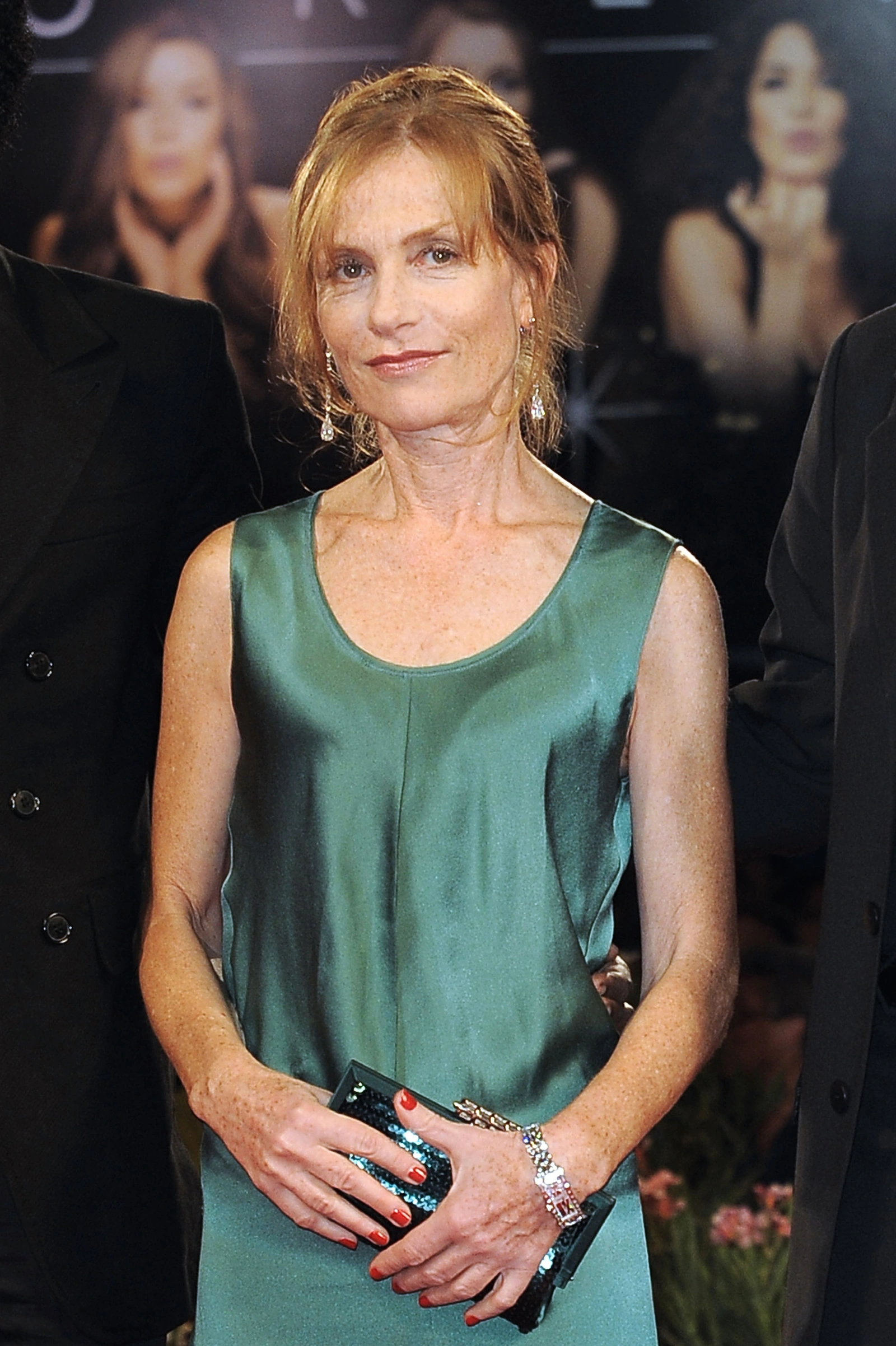
| 25 Quotes | |
| Born as | Isabelle Anne Madeleine Huppert |
| Occup. | Actress |
| From | France |
| Born | March 16, 1955 Paris, France |
| Age | 70 years |
| Cite | |
Citation Formats
APA Style (7th ed.)
Isabelle huppert biography, facts and quotes. (2026, February 11). FixQuotes. https://fixquotes.com/actors/isabelle-huppert/
Chicago Style
"Isabelle Huppert biography, facts and quotes." FixQuotes. February 11, 2026. https://fixquotes.com/actors/isabelle-huppert/.
MLA Style (9th ed.)
"Isabelle Huppert biography, facts and quotes." FixQuotes, 11 Feb. 2026, https://fixquotes.com/actors/isabelle-huppert/. Accessed 5 Mar. 2026.
Early Life and Background
Isabelle Anne Madeleine Huppert was born on March 16, 1955, in Paris, France, and grew up largely in a bourgeois milieu marked by postwar French prosperity and lingering cultural anxiety about authority, class, and sexuality. Her mother, Annick, was an English teacher who encouraged artistic discipline; her father, Raymond Huppert, worked in the safe-manufacturing business. The family atmosphere was materially secure yet emotionally restrained, a climate that later made her screen intensity feel less like display than like a controlled burn.Her identity formed at the crossroads of private belief and public reticence. “My mom's a Catholic, and my dad's a Jew, and they didn't want anything to do with anything”. That combination - inherited difference paired with an anti-dogmatic household - helps explain her lifelong attraction to characters who live without a moral safety net, inventing themselves moment by moment inside social systems that claim to define them.
Education and Formative Influences
Huppert studied at the Conservatoire a rayonnement regional de Versailles and then at the Conservatoire national superieur d'art dramatique (CNSAD) in Paris, training in voice, movement, and classical text at a time when French acting was split between theatrical tradition and the new, cooler realism of post-New Wave cinema. The 1970s offered her a map of possibilities: Chabrol's acid bourgeois anatomies, Fassbinder's brutal intimacy, and the emerging auteur culture that treated actors as co-authors of meaning.Career, Major Works, and Turning Points
After early roles in French television and film, she broke through with Bertrand Blier's Going Places (1974) and gained international attention with Claude Goretta's The Lacemaker (1977), in which her quiet vulnerability became a kind of radical presence. Cannes prizes for Violette Noziere (1978, dir. Claude Chabrol) and The Piano Teacher (2001, dir. Michael Haneke) defined two bookends of her career: the young actress turning transgression into psychology, and the mature performer turning psychology into terror. Between them, she built one of Europe's densest filmographies - including Chabrol's bourgeois thrillers (La Ceremonie, 1995), Fassbinder's The Bitter Tears of Petra von Kant (1983), Godard's Sauve qui peut (la vie) (1980), the historical intensity of La Reine Margot (1994), and later, her bold pivot into contemporary satire and ambiguity in Elle (2016, dir. Paul Verhoeven), which earned her a Golden Globe and an Academy Award nomination.Philosophy, Style, and Themes
Huppert has repeatedly described acting not as a childhood destiny but as an existential technique, a way to inhabit the world without being pinned down by it. “I don't know if you ever say to yourself that you want to be an actress. It eventually becomes a social function - you are an actress and you make a living out of it, but at the beginning it's more a matter of how to survive, or how to exist in a certain way”. That sense of performance as survival clarifies her famous coolness: she does not beg for empathy, she manufactures presence, making even silence feel like a decision.Her style is built on contradiction: surface control with subterranean volatility, an ethical blankness that forces the viewer to supply judgment. She gravitates to the "unusual character" not as eccentricity but as revelation - “The Greeks already understood that there was more interest in portraying an unusual character than a usual character - that is the purpose of films and theatre”. In Chabrol, she became the ideal instrument for social pathology - “But someone like Claude Chabrol tries to make a connection between the society in which we live and the social reasons which make monsters out of some people”. Across directors, she repeats a single experiment: place a woman under the pressure of family, class, sex, or violence, then refuse catharsis, letting ambiguity stand as the real modern tragedy.
Legacy and Influence
Huppert's legacy is the elevation of ambiguity into a major acting language - a model of how to carry narrative with micro-choices rather than declarations. She normalized the idea that a female lead can be opaque, intellectually unsettling, even morally unreadable, without becoming symbolic or less human. For French cinema she remains a bridge between auteur modernism and contemporary global art film; for actors worldwide, she is proof that rigor, risk, and longevity can coexist, and that the most enduring screen presence may come from the refusal to explain oneself.Our collection contains 25 quotes written by Isabelle, under the main topics: Art - Justice - Music - Movie - Faith.
Other people related to Isabelle: Emmanuelle Beart (Actress), Neil Jordan (Director), Catherine Deneuve (Actress), Elfriede Jelinek (Playwright), Curtis Hanson (Director), Jean-Louis Trintignant (Actor)
Source / external links