
James Dean Biography Quotes 19 Report mistakes
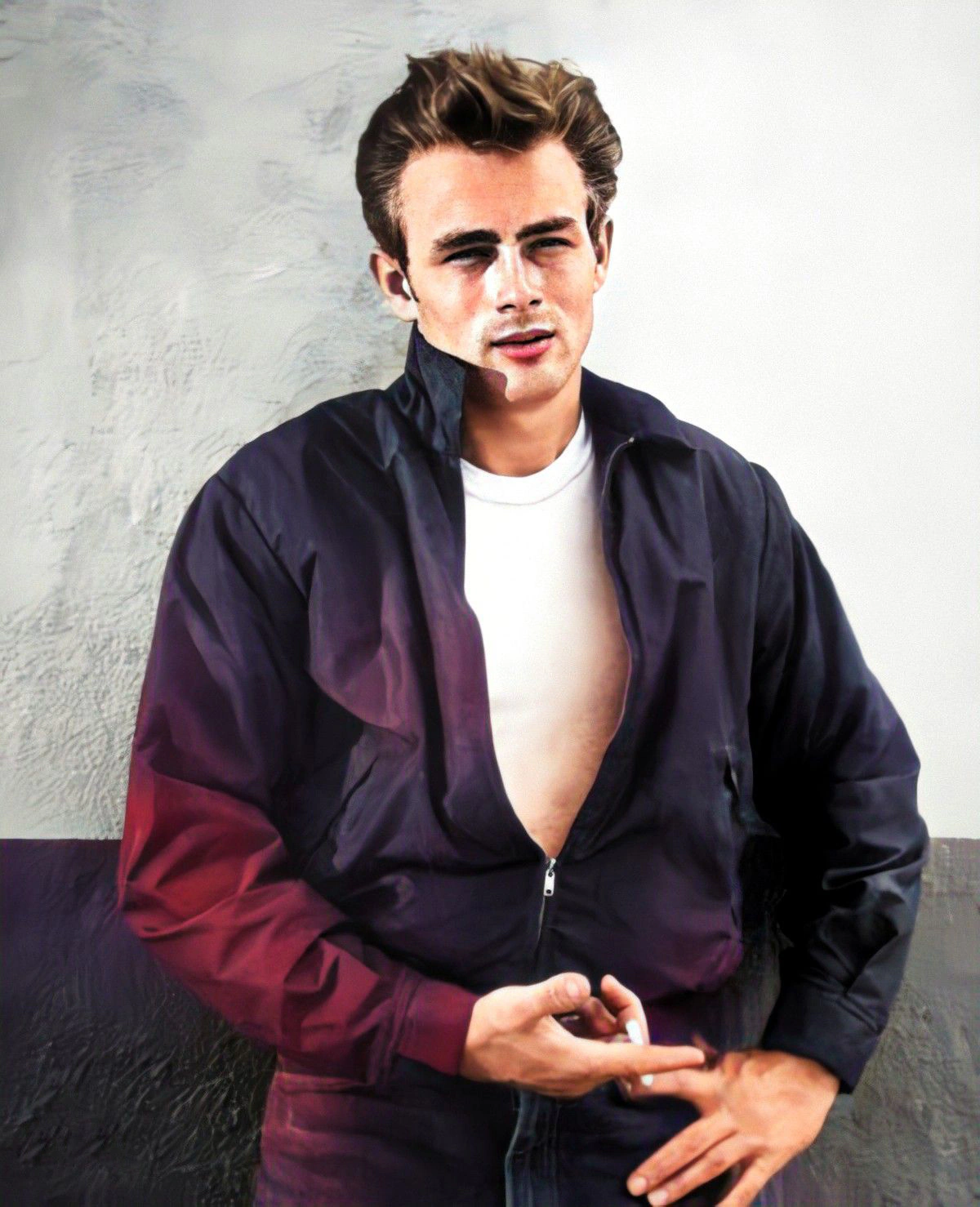
Attr: In-house publicity still
| 19 Quotes | |
| Born as | James Byron Dean |
| Occup. | Actor |
| From | USA |
| Born | February 8, 1931 Marion, Indiana |
| Died | September 30, 1955 Cholame, California, USA |
| Cause | Car accident |
| Aged | 24 years |
| Cite | |
Citation Formats
APA Style (7th ed.)
James dean biography, facts and quotes. (2026, February 11). FixQuotes. https://fixquotes.com/actors/james-dean/
Chicago Style
"James Dean biography, facts and quotes." FixQuotes. February 11, 2026. https://fixquotes.com/actors/james-dean/.
MLA Style (9th ed.)
"James Dean biography, facts and quotes." FixQuotes, 11 Feb. 2026, https://fixquotes.com/actors/james-dean/. Accessed 25 Mar. 2026.
Early Life and Background
James Byron Dean was born on February 8, 1931, in Marion, Indiana, during the lean aftershocks of the Great Depression. His father, Winton Dean, worked as a dental technician, and his mother, Mildred Wilson Dean, was widely recalled as the emotional center of the household - ambitious for her son, attentive to his sensitivity, and encouraging of performance and music. Dean was an only child, watchful and quick to absorb adult moods, a temperament that later read on screen as alertness mixed with guarded hunger.In 1935 the family moved to Santa Monica, California, where his father found steadier work. The relocation exposed Dean to movie culture, but it also preceded the defining loss of his early life: Mildred died of cancer in 1940. Winton, unable or unwilling to raise the boy alone, sent him back to Indiana to live with his aunt and uncle, Marcus and Ortense Winslow, on their farm near Fairmount. There, amid church life, 4-H fairs, and small-town scrutiny, Dean learned the discipline of hiding tenderness behind bravado - a pattern that became his signature.
Education and Formative Influences
At Fairmount High School, Dean studied drama and competed in speech, while also playing basketball and dabbling in mechanical pursuits that fed his later obsession with speed. After graduating in 1949, he briefly attended Franklin College in Indiana, then returned to California and enrolled at UCLA, where he acted in campus productions before leaving school to chase professional work. He gravitated toward the emerging "Method" orbit - less a doctrine than a permission slip to turn private feeling into public truth - and he sought teachers who insisted that emotion could be trained like a muscle.Career, Major Works, and Turning Points
Dean worked the margins first - commercials (notably Pepsi), bit parts, and stage - then moved to New York, where live television and theater offered faster apprenticeship than Hollywood. He studied under Lee Strasberg at the Actors Studio and gained attention in Broadway and TV roles before being cast by Elia Kazan in East of Eden (1955), a breakthrough that fused his nervous tenderness to the era's anxiety about fathers and sons. In rapid succession came Rebel Without a Cause (1955) and Giant (released 1956), each amplifying a different facet of his screen identity: wounded adolescent defiance, romantic volatility, and, in Giant, the slow corrosion of power over decades. On September 30, 1955, at 24, Dean died in a car crash near Cholame, California, driving a Porsche 550 Spyder while en route to a race in Salinas - a death that froze his career at the moment it turned into myth.Philosophy, Style, and Themes
Dean arrived as postwar America was redefining masculinity: prosperity on the surface, unease underneath, with youth culture beginning to articulate its own grievances. His acting style - fractured rhythms, sudden softness, hands that never quite settled - translated inner conflict into physical behavior. He drew from personal grief and outsider status, but also from craft: he listened hard, delayed reactions, and let silence do the work of accusation. This gave his characters a moral weather system rather than a simple pose, and it made his rebellion feel less ideological than existential.Underneath, his interviews and aphorisms point to a mind preoccupied with time, mortality, and the frightening gap between who one is and who one is told to be. “Being an actor is the loneliest thing in the world. You are all alone with your concentration and imagination, and that's all you have”. The loneliness is not theatrical; it is psychological - the sense that performance is both refuge and exposure. In the same key, he framed ambition as action rather than applause: “The gratification comes in the doing, not in the results”. And his fixation on life-after-life reads as a young man trying to outpace loss: “If a man can bridge the gap between life and death, if he can live on after he's dead, then maybe he was a great man”. These ideas mirror his best roles, where yearning is inseparable from fear and greatness is imagined as survival.
Legacy and Influence
Dean's filmography is brief, but its cultural footprint is vast: he became the template for modern screen vulnerability, the patron saint of restless youth, and a turning point in how American men could be depicted - sensitive without being softened, angry without being simple. His two posthumous Academy Award nominations cemented his artistic legitimacy, while the imagery of Rebel Without a Cause - the red jacket, the slumped posture, the pleading eyes - hardened into global iconography. Across generations, actors from Marlon Brando's heirs to later naturalists have borrowed his permission to look unfinished, to let contradiction show; his enduring influence lies in making inner turmoil not a flaw to conceal, but the story itself.Our collection contains 19 quotes written by James, under the main topics: Witty One-Liners - Art - Mortality - Nature - Meaning of Life.
Other people related to James: Nicolas Cage (Actor), Elia Kazan (Director), Terence Stamp (Actor), Lee Strasberg (Director), Rock Hudson (Actor), Mark Rydell (Director), George Stevens (Director)
Source / external links