
Jay Duplass Biography Quotes 8 Report mistakes
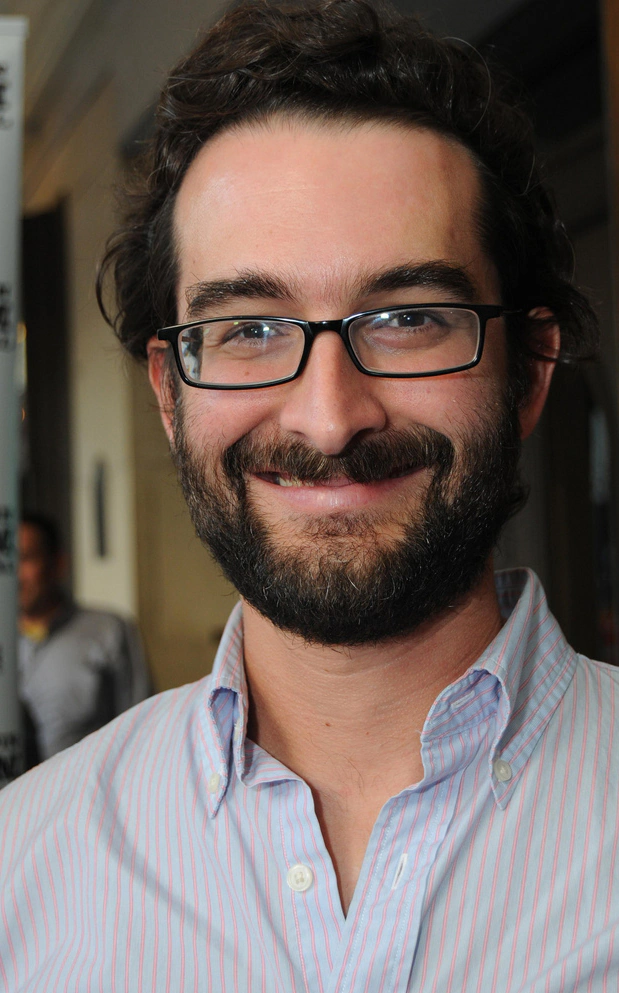
| 8 Quotes | |
| Born as | Lawrence Jay Duplass Jr. |
| Occup. | Actor |
| From | USA |
| Born | March 7, 1973 New Orleans, Louisiana, USA |
| Age | 53 years |
| Cite | |
Citation Formats
APA Style (7th ed.)
Jay duplass biography, facts and quotes. (2026, February 11). FixQuotes. https://fixquotes.com/actors/jay-duplass/
Chicago Style
"Jay Duplass biography, facts and quotes." FixQuotes. February 11, 2026. https://fixquotes.com/actors/jay-duplass/.
MLA Style (9th ed.)
"Jay Duplass biography, facts and quotes." FixQuotes, 11 Feb. 2026, https://fixquotes.com/actors/jay-duplass/. Accessed 24 Mar. 2026.
Early Life and Background
Mark Duplass (often miswritten as "Jay") was born December 7, 1976, in New Orleans, Louisiana, and came of age in a city where performance, music, and storytelling were not extracurricular but ambient culture. His upbringing in the American South - shaped by Catholic school discipline, humid street-level theater, and the improvisational energy of New Orleans itself - left him with a lifelong fascination for ordinary people under emotional pressure, the kind who talk too much when they are afraid and crack jokes when they are cornered.He grew up closely alongside his younger brother, Jay Duplass, and their partnership became both a creative engine and a private anchor. The brothers were children of the late-20th-century American media boom: raised on VHS-era movies, cable television, and a do-it-yourself ethos that made creativity feel accessible even when money was tight. That early sense of making things from what you had - rooms, friends, leftover time - would later become a signature of the Duplass approach, as much a psychology as a production method.
Education and Formative Influences
Duplass studied at the University of Texas at Austin and then at the City College of New York, a route that put him in two different American creative ecosystems: Austin's independent-film pragmatism and New York's intense, actor-forward culture. Formatively, he absorbed the stripped-down intimacy of 1970s character cinema and the nervous humor of modern indie comedy, but he also learned from lived experience: how people perform themselves in relationships, how shame and desire shape speech, and how a scene can turn on a single honest admission.Career, Major Works, and Turning Points
With Jay Duplass, he broke out through microbudget features that helped define American mumblecore - notably The Puffy Chair (2005), Baghead (2008), and Cyrus (2010) - films built on close quarters, impulsive decisions, and the drama of everyday talk. As an actor, Mark Duplass became a recognizable face of modern indie-adjacent TV and film, including The League (FX, 2009-2015), Safety Not Guaranteed (2012), The One I Love (2014), and Creep (2014) and Creep 2 (2017), where his ability to toggle between charm and menace became central to the films' unease. He and Jay expanded into mainstream producing and series work, creating Togetherness (HBO, 2015-2016) and producing projects under their banner while maintaining the core tactic that made them influential: keep budgets sane, keep performances human, and keep the camera close enough to catch embarrassment.Philosophy, Style, and Themes
Duplass's inner life, as suggested by his work, is organized around a fear of stasis and a distrust of grand plans. His characters often sprint toward connection and then sabotage it, as if intimacy were both the prize and the threat. That tension aligns with his public insistence on self-starting craft: “Don’t wait for permission. Don’t wait for somebody to tell you you’re good enough. Just go make your thing”. The statement is more than advice - it reads like a personal antidote to the shame and hesitancy his films dramatize, a way of outrunning the internal judge by producing before doubt can harden.The Duplass style is frequently mistaken for casualness, but its looseness is engineered: conversational overlap, minor social errors, and sudden tonal pivots that reveal how quickly comedy can become cruelty. In that world, limitation is not an obstacle but a forcing mechanism, which is why his credo “Your limitations can be your greatest asset”. fits the emotional architecture of his stories. The smallness - apartments, cars, vacation houses, a single awkward hang - creates a pressure cooker where people cannot escape themselves. Even his darker work leans on the idea that art should preserve human truth over spectacle: “It’s better to make something small that’s honest than something big that’s fake”. Psychologically, that preference signals a mistrust of performance-as-image and a belief that authenticity is not purity but risk - the willingness to look foolish on camera.
Legacy and Influence
Duplass helped normalize a 21st-century American model of filmmaking and acting where intimacy, speed, and emotional specificity could compete with scale, and where artists could move between indie films, prestige television, and studio projects without abandoning a personal voice. His influence is felt in the boom of microbudget features and creator-driven series that treat conversation as action and discomfort as story, as well as in the careers of younger filmmakers who took the Duplass lesson to heart: build a community, write for what you can shoot, and let honesty be the special effect.Our collection contains 8 quotes written by Jay, under the main topics: Motivational - Resilience - Honesty & Integrity - Work Ethic - Movie.
Source / external links