
Jerry Orbach Biography Quotes 10 Report mistakes
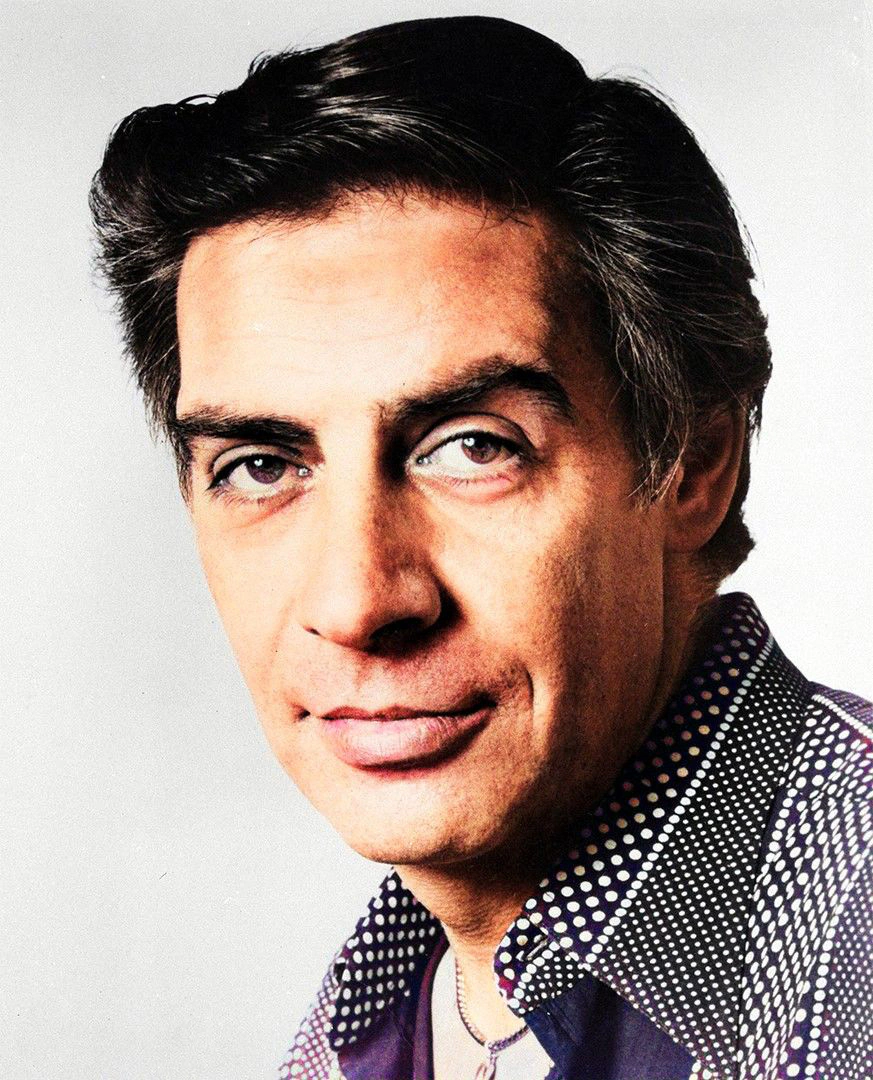
| 10 Quotes | |
| Born as | Jerome Bernard Orbach |
| Occup. | Actor |
| From | USA |
| Spouse | Elaine Cancilla (1967–2004) |
| Born | October 20, 1935 Manhattan, New York, USA |
| Died | December 28, 2004 Manhattan, New York, USA |
| Cause | Prostate cancer |
| Aged | 69 years |
| Cite | |
Citation Formats
APA Style (7th ed.)
Jerry orbach biography, facts and quotes. (2026, February 11). FixQuotes. https://fixquotes.com/actors/jerry-orbach/
Chicago Style
"Jerry Orbach biography, facts and quotes." FixQuotes. February 11, 2026. https://fixquotes.com/actors/jerry-orbach/.
MLA Style (9th ed.)
"Jerry Orbach biography, facts and quotes." FixQuotes, 11 Feb. 2026, https://fixquotes.com/actors/jerry-orbach/. Accessed 4 Mar. 2026.
Early Life and Background
Jerome Bernard "Jerry" Orbach was born on October 20, 1935, in the Bronx, New York City, to a Roman Catholic family shaped by immigrant currents and Depression-era realism. His father, Leon Orbach, worked in retail and management, and his mother, Emily (Ozer) Orbach, came from a Polish Jewish background that the family later navigated within a largely Catholic upbringing - an early lesson in identity as something lived, not simply inherited. He grew up amid the mid-century city where radio voices, street-corner patter, and borough pragmatism formed an ear for cadence that would later serve him as both singer and dramatic actor.Because his father's work moved the family, Orbach spent formative years not only in New York but also in Waukegan, Illinois, where he finished high school. The contrast between metropolitan performance culture and Midwestern steadiness gave him an unusual range: he could project urbane authority yet still seem like a man who knew the price of things. That duality became a signature - the tough, funny, decent adult who has seen enough to keep sentiment on a short leash.
Education and Formative Influences
Orbach studied at Northwestern University and later at the Actor's Studio in New York, the latter placing him in a postwar laboratory of psychological realism where technique was inseparable from self-scrutiny. Broadway in the late 1950s and early 1960s was both a proving ground and an education in survival, and Orbach absorbed its discipline: sing when the music demands it, listen when the scene turns, and never let the audience see you reaching for effect.Career, Major Works, and Turning Points
Orbach built his first major reputation in the theater, becoming a defining musical-leading man of his era: he originated Chuck Baxter in "Promises, Promises" (1968) and won the Tony Award for "42nd Street" (1980), with notable Broadway work also including "The Fantasticks" and "Chicago". Film and television expanded his reach - he played the charismatic gangster-mentor in "Dirty Dancing" (1987), lent a velvety menace to "Beauty and the Beast" (1991) as the voice of Lumiere, and became a familiar face through steady screen work. The pivotal late-career transformation came with "Law and Order" (NBC), where from 1992 to 2004 he portrayed NYPD Detective Lennie Briscoe, a role that fused his musical timing, streetwise wit, and moral fatigue into one of American television's most durable character portraits.Philosophy, Style, and Themes
Orbach's inner life, as it emerges through interviews and the arc of his roles, centers on work as both refuge and anxiety. He never romanticized acting as inspiration alone; he treated it as a craft pursued under economic weather. “All my life, since I was 16, I've been wondering where that next job was gonna come from”. That sentence is not just an actor's gripe - it is a psychological key: ambition paired with insecurity, and a refusal to mistake luck for entitlement. It helps explain his uncommon steadiness on long runs and his lack of self-mythologizing even after fame; he acted like a man who still remembered empty stretches.His style favored velocity, precision, and the accumulation of small truths rather than grand speeches. “There's a pace in TV I like”. He embraced television not as a lesser art but as a medium whose tempo kept him honest, protected him from indulgence, and rewarded a clean, playable choice. In the "Law and Order" years, that pace became a thematic tool: Briscoe's quips and weary glances conveyed a life of cases stacked like files in a cabinet, grief compressed into professionalism. Orbach also understood that environment shapes performance, insisting on the actor's ecosystem as part of the work: “I think the choice of actors that we have is a little more varied and rich here in New York than in L.A”. Underneath is a credo about community - the city as repertory, the street as training, and the ensemble as the real star.
Legacy and Influence
Orbach died on December 28, 2004, in New York City, after prostate cancer, leaving behind an unusually complete American acting life - Broadway virtuoso, film character actor, voice icon, and one of TV's definitive detectives. His influence persists in how modern performers imagine longevity: not as a single breakout, but as a portfolio built across forms, sustained by craft and an unglamorous appetite for repetition. Lennie Briscoe endures because Orbach made cynicism humane and authority fallible; Lumiere endures because he made charm sound like warmth rather than performance. In an era that increasingly rewards speed and spectacle, his work stands as proof that timing, listening, and professional nerve can be as memorable as any headline.Our collection contains 10 quotes written by Jerry, under the main topics: Witty One-Liners - Work Ethic - Movie - Financial Freedom - New Job.
Other people related to Jerry: Dennis Farina (Actor), George Dzundza (Actor), Chris Noth (Actor), Dianne Wiest (Actress), Steven Hill (Actor), Bob Fosse (Celebrity)
Source / external links