
Joaquin Phoenix Biography Quotes 8 Report mistakes
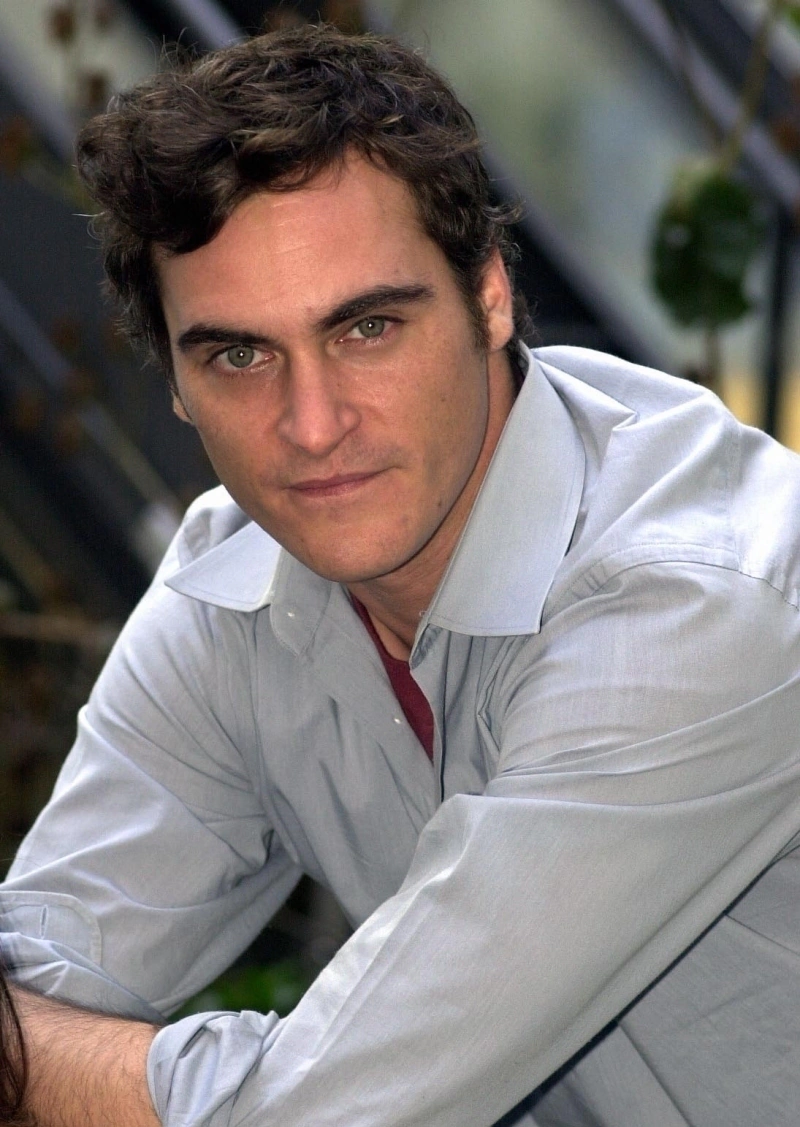
| 8 Quotes | |
| Born as | Joaquin Rafael Phoenix |
| Occup. | Actor |
| From | USA |
| Born | October 28, 1974 San Juan, Puerto Rico |
| Age | 51 years |
| Cite | |
Citation Formats
APA Style (7th ed.)
Joaquin phoenix biography, facts and quotes. (2026, February 11). FixQuotes. https://fixquotes.com/actors/joaquin-phoenix/
Chicago Style
"Joaquin Phoenix biography, facts and quotes." FixQuotes. February 11, 2026. https://fixquotes.com/actors/joaquin-phoenix/.
MLA Style (9th ed.)
"Joaquin Phoenix biography, facts and quotes." FixQuotes, 11 Feb. 2026, https://fixquotes.com/actors/joaquin-phoenix/. Accessed 26 Mar. 2026.
Early Life and Background
Joaquin Rafael Phoenix was born on October 28, 1974, in San Juan, Puerto Rico, to American parents John Lee Bottom and Arlyn (Dunetz) Bottom, part of a traveling, countercultural family whose early years were shaped by the Children of God religious movement and its eventual rejection. With siblings River, Rain, Liberty, and Summer, he grew up in constant motion before the family settled in the Los Angeles area, where survival meant improvisation - busking, odd jobs, and performance as both livelihood and identity. The instability of those years trained him early to read rooms, mimic voices, and disappear into roles, skills that later became his artistic signature.The family adopted the surname Phoenix as a statement of rebirth, but reinvention came at a cost: Joaquin learned to treat private life as a guarded space and public narrative as something negotiable. His bond with River Phoenix, already a rising star, made fame feel less like aspiration than like weather - unpredictable, sometimes violent. River's death in 1993 outside the Viper Room in West Hollywood was a defining trauma, magnified by the public circulation of Joaquin's panicked 911 call, an event that hardened his instinct to protect grief from spectacle and to distrust how celebrity converts pain into content.
Education and Formative Influences
Phoenix was largely homeschooled and educated through experience rather than institutions, absorbing movies, music, and the discipline of work on sets while still a child. The household valued self-expression and ethical intensity, and he came of age in the late-1970s and 1980s Los Angeles orbit where television, child stardom, and tabloid culture rewarded precocity but punished fragility. His formative influences were less academic than observational: the mechanics of performance, the economics of attention, and the moral questions that shadow entertainment, all of which later fed his activism, his guarded interviews, and his preference for director-driven, character-forward cinema.Career, Major Works, and Turning Points
After early TV appearances and the film Parenthood (1989), Phoenix stepped back in the 1990s before returning with a fierce run of adult roles: Gus Van Sant's To Die For (1995), Oliver Stone's U Turn (1997), and the breakthrough of Gladiator (2000) as Commodus, which earned an Academy Award nomination and established him as an actor drawn to damaged power. He pivoted toward risk and intimacy with Signs (2002), The Village (2004), Walk the Line (2005) - winning a Golden Globe as Johnny Cash - and later The Master (2012), Her (2013), Inherent Vice (2014), You Were Never Really Here (2017), and Joker (2019), which brought him the Academy Award for Best Actor. A notorious detour, the mock-documentary performance piece I'm Still Here (2010) with Casey Affleck, reframed his relationship to celebrity as something he could critique from inside the joke, then discard when it had made its point.Philosophy, Style, and Themes
Phoenix's inner life, as seen through both roles and public posture, is defined by tension: he is simultaneously expressive on screen and withholding off it, allergic to easy self-explanation yet compelled toward emotional extremity. He has admitted, “It's hard for me to put my feelings into words”. That difficulty becomes an artistic method - a reliance on physicality, silence, and micro-gesture - and it helps explain why his performances often feel like eruptions from beneath a tightly controlled surface, whether playing a grieving brother, a cult recruit, or a man dissolving into delusion.He also treats identity as performative and unstable, sometimes with humor as a shield. “I've made up so many stores about my name, I can't remember”. The line reads like a joke but points to a deeper habit of self-mythmaking - not to deceive, but to keep the core self unclaimed by the public. Yet for all the irony, his ethic about the craft is blunt and earnest: “Acting is real important to me. I love it, and it's something I care about”. Across his best work, themes recur: masculinity under pressure, guilt that curdles into violence, tenderness that arrives late, and the yearning to be seen without being consumed.
Legacy and Influence
Phoenix's enduring influence lies in legitimizing a modern kind of movie stardom: famous without being fully accessible, political without branding himself as a slogan, and fearless about ugliness when the role demands it. His collaborations with directors like Ridley Scott, James Gray, Paul Thomas Anderson, Spike Jonze, and Todd Phillips helped define an era in which character studies could still be mainstream events, and his Joker created a template for psychologically granular franchise-adjacent acting. For younger performers, he models a career built on selective scripts, lived-in realism, and the conviction that the most compelling screen presence is not charisma alone but a willingness to expose fracture - then refuse to explain it away.Our collection contains 8 quotes written by Joaquin, under the main topics: Witty One-Liners - Art - Music - Deep - Sister.
Other people related to Joaquin: Timothée Chalamet (Actor), Kate Winslet (Actress), Robert Patrick (Actor), John C. Reilly (Actor), Philip Kaufman (Director)
Source / external links