
John Barrymore Biography Quotes 20 Report mistakes
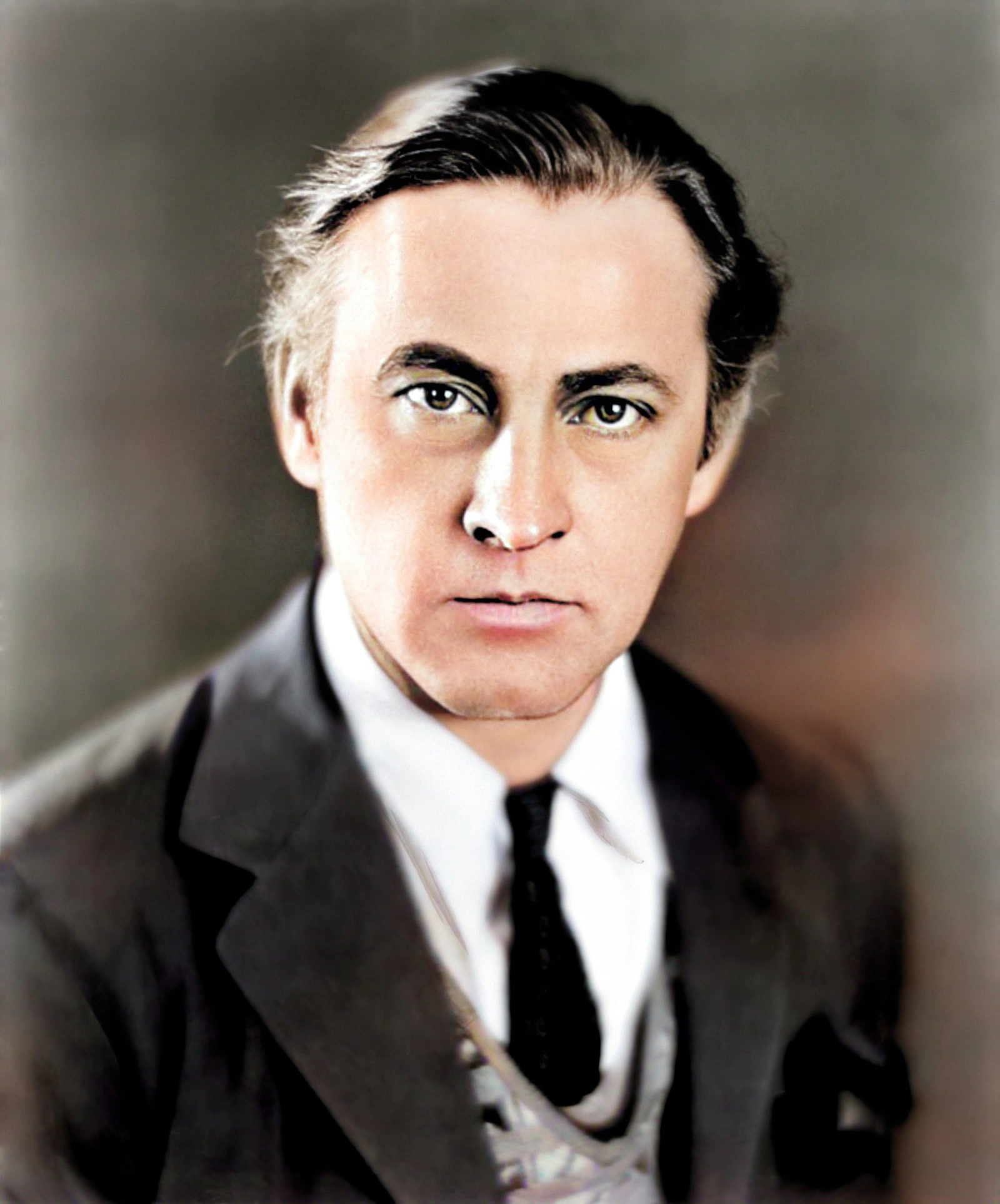
| 20 Quotes | |
| Born as | John Sidney Blyth |
| Occup. | Actor |
| From | USA |
| Born | February 15, 1882 Philadelphia, Pennsylvania, United States |
| Died | May 29, 1942 Los Angeles, California, United States |
| Cause | Kidney failure |
| Aged | 60 years |
| Cite | |
Citation Formats
APA Style (7th ed.)
John barrymore biography, facts and quotes. (2026, February 11). FixQuotes. https://fixquotes.com/actors/john-barrymore/
Chicago Style
"John Barrymore biography, facts and quotes." FixQuotes. February 11, 2026. https://fixquotes.com/actors/john-barrymore/.
MLA Style (9th ed.)
"John Barrymore biography, facts and quotes." FixQuotes, 11 Feb. 2026, https://fixquotes.com/actors/john-barrymore/. Accessed 5 Mar. 2026.
Early Life and Background
John Barrymore was born John Sidney Blyth on February 15, 1882, in Philadelphia, Pennsylvania, into an American theater dynasty already famous enough to feel like a destiny. His parents, Maurice Barrymore and Georgiana Drew, were celebrated stage actors; the Drew-Barrymore clan moved between Philadelphia and New York inside a world where applause was currency and family life was routinely subordinated to touring schedules. He grew up with the knowledge that talent could be inherited but also that it could be spent - visibly, publicly, and without refund.Behind the legend was a boy pulled between glamour and instability. His father suffered from the neurodegenerative illness then called general paresis, and the household lived with a slow, humiliating decline that no curtain call could fix. Early on, Barrymore learned performance as both craft and concealment: charm as social armor, wit as deflection, bravado as a kind of anesthesia. That mix - theatrical confidence atop private dread - would become the emotional engine of his career and the fault line of his adult life.
Education and Formative Influences
He attended private schools, including the Boys High School of Brooklyn, but his deepest education came from proximity to rehearsal rooms and the pressure of a famous surname. He first imagined himself a visual artist, studying drawing and painting in New York and in Paris, and the painterly eye never left him - it sharpened his sense of light, silhouette, and the expressive power of stillness. Yet the family trade pulled hardest: after early stage work in the first years of the 1900s, he discovered that the actor's body could do what the canvas could not - translate immediate feeling into communal electricity.Career, Major Works, and Turning Points
Barrymore became a matinee idol on Broadway, then a serious dramatic star whose reputation peaked in Shakespeare: his Hamlet (first staged in 1922) was hailed for its romantic intelligence and visceral modernity, earning him the nickname "the Great Profile". Hollywood widened the lens. He moved through silent films like Dr. Jekyll and Mr. Hyde (1920) and The Sea Beast (1926), then into early sound with a voice that carried both seduction and fatigue, reaching a commercial summit in Grand Hotel (1932) and a late, poignant triumph as the astringent lawyer in Twentieth Century (1934). The turning points were as much personal as professional - escalating alcoholism, financial disorder, and unstable marriages (including to actresses Elaine Barrie and Dolores Costello) eroded his reliability, pushing him from leading man to increasingly brittle character parts even as the public remained fascinated by the spectacle of genius at war with appetite.Philosophy, Style, and Themes
Barrymore's screen and stage style fused classical technique with modern nervousness. He treated text like music - phrases arced, then broke - and his face could switch from aristocratic poise to childlike panic in a breath. Again and again he returned to the theme of divided selves: the refined man haunted by impulse, the clever man trapped by his own cleverness, the romantic undone by the practical costs of romance. His finest work suggested that charisma is not a virtue but a temperature - it warms a room, then vanishes, leaving the chill more noticeable.His own aphorisms reveal a psychology that turned pain into comedy and fear into pose. “You can't drown yourself in drink. I've tried, you float”. The line is flippant, but it doubles as confession: he understood addiction as both self-destruction and failed escape, a loop that preserved the body while bankrupting the will. Money, too, became a running joke with an edge of panic - “Why is there so much month left at the end of the money?” - exposing how lavish living and alimony could turn fame into a treadmill. Yet beneath the cynicism was an insistence that desire should outlive defeat: “A man is not old until regrets take the place of dreams”. It reads like self-advice from a man who feared not death but diminishment - the moment when performance no longer felt like possibility.
Legacy and Influence
Barrymore died in Los Angeles on May 29, 1942, at sixty, leaving behind a body of work that maps the transition from 19th-century stage romanticism to 20th-century screen intimacy. Later actors studied his Hamlet as a bridge between declamatory tradition and psychological realism; film performers absorbed his lesson that elegance can coexist with danger. His name remains shorthand for a particular American archetype - the brilliant entertainer whose gifts are undeniable, whose self-sabotage is equally public, and whose best moments prove that technical mastery can still look like pure vulnerability.Our collection contains 20 quotes written by John, under the main topics: Witty One-Liners - Motivational - Aging - Happiness - Divorce.
Other people related to John: Carole Lombard (Actress), Marie Dressler (Actress), Irving Thalberg (Producer), William Wyler (Director), Lionel Barrymore (Actor), Don Ameche (Actor)
Source / external links