
John Goodman Biography Quotes 25 Report mistakes
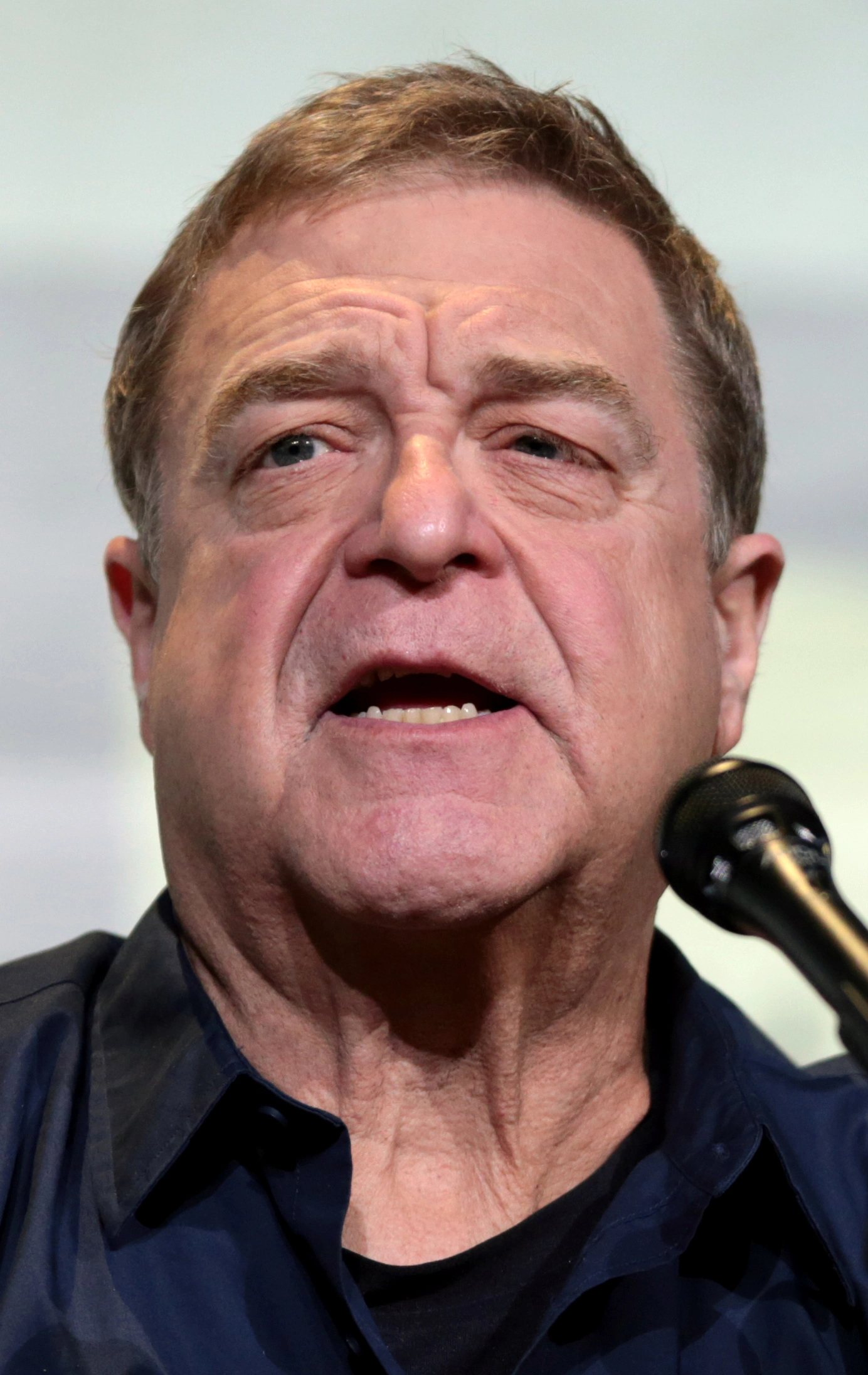
Attr: Gage Skidmore, CC BY-SA 3.0
| 25 Quotes | |
| Occup. | Actor |
| From | USA |
| Born | June 20, 1952 |
| Age | 73 years |
| Cite | |
Citation Formats
APA Style (7th ed.)
John goodman biography, facts and quotes. (2026, March 9). FixQuotes. https://fixquotes.com/actors/john-goodman/
Chicago Style
"John Goodman biography, facts and quotes." FixQuotes. March 9, 2026. https://fixquotes.com/actors/john-goodman/.
MLA Style (9th ed.)
"John Goodman biography, facts and quotes." FixQuotes, 9 Mar. 2026, https://fixquotes.com/actors/john-goodman/. Accessed 10 Mar. 2026.
Early Life and Background
John Stephen Goodman was born on June 20, 1952, in Affton, Missouri, a suburb of St. Louis shaped by postwar Catholic, working-class America. His father, Leslie Francis Goodman, a postal worker, died of a heart attack when John was two, leaving his mother, Virginia Roos Goodman, to raise John and his siblings while working at a drugstore and later as a waitress. That early loss mattered. It created in Goodman a durable mixture of appetite and insecurity - a need to belong, to perform, to fill space with energy and humor while carrying a private sense of absence. The boy who would later become one of America's most physically commanding actors grew up with economic limits, strong family discipline, and the ordinary rituals of Midwestern parish life.
Affton gave him the observational range that would define his acting. He knew salesmen, bartenders, school coaches, laborers, and housewives not as types but as neighbors, and that intimacy with American vernacular life became one of his great tools. Television also entered early as both escape and education, a portal into comic timing, regional accents, and the emotional shorthand of popular culture. Large, athletic, and socially conspicuous, Goodman found in performance a way to turn vulnerability into command. Long before fame, he had already absorbed the contradiction that would power many of his greatest roles: the imposing body joined to a wounded, often tender inner life.
Education and Formative Influences
He attended Affton High School, where he played football and acted, then enrolled at Southwest Missouri State University, now Missouri State, on a football scholarship. An injury ended serious hopes in sports and forced a redirection that proved decisive. At the university he studied theater and encountered a discipline far more rigorous than casual school performance: script analysis, ensemble work, voice, and the conversion of personal feeling into craft. He graduated in 1975 with a fine arts degree and soon moved to New York, joining the long line of ambitious regional Americans trying to break into an unforgiving city. There he worked odd jobs, did voiceovers and commercials, trained his instrument in rehearsal rooms and audition spaces, and learned the actor's deeper lesson - that persistence is not glamour but repetition under uncertainty. Stage work in New York sharpened his scale and timing; the city also exposed him to older comic traditions, blues, jazz, and the rough poetry of character actors who could make ordinary speech ring.
Career, Major Works, and Turning Points
Goodman's breakthrough came slowly, then all at once. After years of stage and screen bits in the late 1970s and 1980s, he became unmistakable in the Coen brothers' Raising Arizona (1987), then truly famous as Dan Conner on Roseanne (1988-1997), where he transformed the sitcom husband from a stock foil into a fully dimensional American patriarch - funny, exhausted, erotic, decent, and sometimes defeated. Film directors recognized his unusual range: comic menace in Barton Fink, damaged authority in The Babe, volcanic delusion in The Big Lebowski, and one of his richest performances in O Brother, Where Art Thou? He moved fluidly into voice work as Sulley in Monsters, Inc. and related projects, proving that his presence was not merely physical but tonal - warm, bearish, paternal, sly. Later performances in Treme, Flight, Inside Llewyn Davis, 10 Cloverfield Lane, and The Righteous Gemstones deepened his reputation as an actor who could make bluster tremble with pain. Offscreen, his struggles with alcohol and periods of depression gave an added gravity to his work; his sobriety, begun in the 2000s, was less a public reinvention than a private rescue that preserved a major career.
Philosophy, Style, and Themes
Goodman's art rests on abundance under pressure. He is a master of occupying space - physically, vocally, emotionally - yet his best characters are never only large. They are men trying to keep panic, shame, hunger, or loneliness from spilling into view. That is why his comedy lands so hard: it is rooted in recognition, not cleverness. Even his throwaway wit reveals self-knowledge. “Believe me, nobody likes to loaf more than me”. sounds like a joke about laziness, but it also hints at the actor's lifelong tug-of-war between appetite and discipline, comfort and vocation. Likewise, “TV is the best babysitter”. carries more than comic cynicism; it reflects a generation formed by television as surrogate parent, cultural classroom, and democratic stage, and Goodman has spent his career both embodying and gently critiquing that mass-mediated America.
His style is often described as big, but the better word is musical. He can play a scene like brass - broad, booming, extroverted - then abruptly turn inward and leave a hush behind. He has often seemed drawn to work where fellowship resists despair, and one of his remarks gives away the moral center beneath the gruffness: “This happens to be that the power of laughter and love would beat out the power of fear every time. You know, I hate to sound corny about it but it's true, and I think that's what this movie is about”. That sentiment is not sentimental in his hands. It is hard-earned. Across sitcoms, Coen films, dramas, and voice performances, Goodman returns to a recurring human theme - people perform toughness because they fear collapse, yet connection, however awkward, remains their best defense against it.
Legacy and Influence
John Goodman endures as one of the essential American character leads of the late 20th and early 21st centuries, a performer who dissolved the line between movie star charisma and repertory-actor depth. He helped redefine the blue-collar father on television, gave eccentric cinema some of its most indelible force, and demonstrated that size on screen could signify vulnerability as much as authority. Younger actors study his command of rhythm, his refusal to condescend to ordinary people, and his ability to make comedy and dread share the same breath. His legacy lies not only in famous roles but in the broader permission he gave American acting: to be expansive without vanity, rough without crudity, and emotionally exposed without self-pity.
Our collection contains 25 quotes written by John, under the main topics: Witty One-Liners - Love - Music - Writing - Parenting.
Other people related to John: David McNally (Director), Sheryl Lee (Actor), Victor Garber (Actor), Todd Solondz (Writer), Emile Hirsch (Actor), Garry Trudeau (Cartoonist), Richard Dreyfuss (Actor), Peter Berg (Actor), Rick Moranis (Actor), Estelle Parsons (Actress)
Source / external links