
John Ritter Biography Quotes 5 Report mistakes
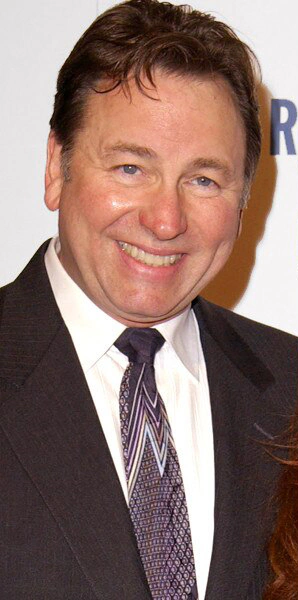
| 5 Quotes | |
| Born as | Johnathan Southworth Ritter |
|---|---|
| Occup. | Actor |
| From | USA |
| Spouses | Nancy Morgan (1977–1996) Amy Yasbeck (1999–2003) |
| Born | September 17, 1948 Burbank, California, USA |
| Died | September 11, 2003 Los Angeles, California, USA |
| Cause | Aortic dissection |
| Aged | 54 years |
| Cite | |
Citation Formats
APA Style (7th ed.)
John ritter biography, facts and quotes. (2026, August 13). FixQuotes. https://fixquotes.com/actors/john-ritter/
Chicago Style
"John Ritter biography, facts and quotes." FixQuotes. August 13, 2026. https://fixquotes.com/actors/john-ritter/.
MLA Style (9th ed.)
"John Ritter biography, facts and quotes." FixQuotes, 13 Aug. 2026, https://fixquotes.com/actors/john-ritter/. Accessed 11 Nov. 2026.
Early Life and Background
Johnathan Southworth Ritter was born on September 17, 1948, in Burbank, California, into a family already fluent in performance, publicity, and the strange bargains of American fame. His father, Tex Ritter, was a nationally known country singer and film cowboy; his mother, Dorothy Fay, had acted in Westerns. That parentage gave him access to show business but not immunity from its pressures. He grew up in Southern California during the postwar expansion of television, when Los Angeles turned mass entertainment into a civic atmosphere. The family name opened doors, yet it also created a problem that would define him: how to inherit ease before a camera without becoming merely an extension of a parent's legend.
Ritter's childhood was also marked by vulnerability and adaptation. He was born with a vision problem in his right eye, a condition that contributed to a self-consciousness he learned to disguise through movement, timing, and charm. He attended Hollywood High School and developed the traits that would later become his signature - elastic physicality, warmth that never felt slick, and a willingness to look foolish in public if it served a laugh. Beneath the buoyancy was a temperament more observant than casual viewers often assumed. He understood early that American comedy rewards embarrassment transformed into grace, and he became unusually skilled at turning personal awkwardness into a style of human connection.
Education and Formative Influences
At the University of Southern California, Ritter initially studied psychology before gravitating decisively toward theater arts, a shift that says much about his later acting: he remained fascinated by motive, masking, and emotional contradiction. He studied with the famed acting teacher Nina Foch, whose emphasis on craft, text, and discipline helped prevent him from becoming only a natural comedian. Ritter also trained at the USC School of Dramatic Arts and spent time at the Edinburgh Festival, absorbing stage traditions larger and older than American sitcom rhythm. Shakespeare mattered to him not as prestige decoration but as proof that broad comedy and emotional danger could coexist. That fusion - technical control beneath apparent spontaneity - became the architecture of his best performances.
Career, Major Works, and Turning Points
After television guest spots in the late 1960s and early 1970s, including work on The Waltons, Ritter found the role that made him a national figure: Jack Tripper on Three's Company, which premiered in 1977. The series, adapted from the British Man About the House, depended on farce - slammed doors, misunderstandings, sexual panic, class caricature - and Ritter became its engine. His falls, double takes, stammers, and panic-sweat entrances looked impulsive but were engineered with dancer-like precision. He won an Emmy and a Golden Globe, but success carried a trap: his brilliance in sitcom farce eclipsed his wider range. He pushed against that confinement in films such as Hero at Large and Sling Blade, in TV work including Hooperman, Hearts Afire, and later 8 Simple Rules, and in stage and voice performances that revealed a stronger dramatic core than his public image suggested. His personal life moved through marriages to Nancy Morgan and then Amy Yasbeck, and fatherhood connected him to a second generation of performers, including Jason Ritter. On September 11, 2003, while rehearsing 8 Simple Rules, he became ill from an undiagnosed aortic dissection and died that night at age fifty-four, a sudden loss that stunned colleagues because his screen presence had always seemed to promise continuation.
Philosophy, Style, and Themes
Ritter's art was built on a paradox: he specialized in characters who appeared transparent while constantly performing versions of themselves. His comic genius lay in making deception feel innocent. “I knew when I grew up I always wanted to be a liar, and if you're in television, you're lying because you're just pretending to be yourself, much like I'm doing now”. The joke is revealing. Ritter understood acting not as falsehood opposed to truth, but as a crafted untruth that exposes truth - vanity, desire, fear, loneliness, the wish to be liked. Jack Tripper was funny because he was always improvising identity under pressure, and Ritter's body became the visible record of that improvisation. He played panic with tenderness, never contempt, which is why audiences trusted him even when his characters were scheming or concealing.
He was also acutely aware of the hierarchy that places comedy beneath drama, and he answered it with self-mockery rather than grievance. “Most people don't know that I am an accomplished dramatic actor... But I've performed in several Shakespeare productions including Hamlet, except in this version, Hamlet lives in an apartment with two women, and has to pretend he's gay so that the landlord won't evict him”. That line captures both his wound and his wisdom: he knew Three's Company had typecast him, yet he also knew that farce requires technique many serious actors lack. His humility was genuine but never naive. “If I found a cure for a huge disease, while I was hobbling up onstage to accept the Nobel Prize, they'd be playing the theme song from 'Three's Company'”. Behind the laugh is his clearest psychological truth - he recognized that popular culture fixes identities with brutal efficiency, and he chose to meet that fate with gratitude, discipline, and wit rather than bitterness.
Legacy and Influence
Ritter remains one of American television's definitive physical comedians, a bridge between older traditions of vaudeville and film slapstick and the faster, more self-aware sitcom acting of the late twentieth century. He influenced performers who understood that broad comedy works best when rooted in embarrassment, decency, and precise rhythm rather than mugging. His dramatic turns, though fewer, helped correct the easy assumption that he was merely light entertainment, while his offscreen reputation for kindness deepened the affection attached to his work after his death. The John Ritter Foundation for Aortic Health, created in response to the medical catastrophe that killed him, gave his story a public-health afterlife beyond entertainment. Yet his central legacy remains artistic and emotional: he made foolishness look brave, made confusion look human, and turned the mechanics of sitcom into a vehicle for vulnerability.
Last updated August 2026 · Editorial standards
Our collection contains 5 quotes written by John, under the main topics: Witty One-Liners - Dark Humor - Excitement.
Other people related to John: Suzanne Somers (Actress), Kaley Cuoco (Actress), Will Friedle (Actor)
Source / external links