
John Travolta Biography Quotes 9 Report mistakes
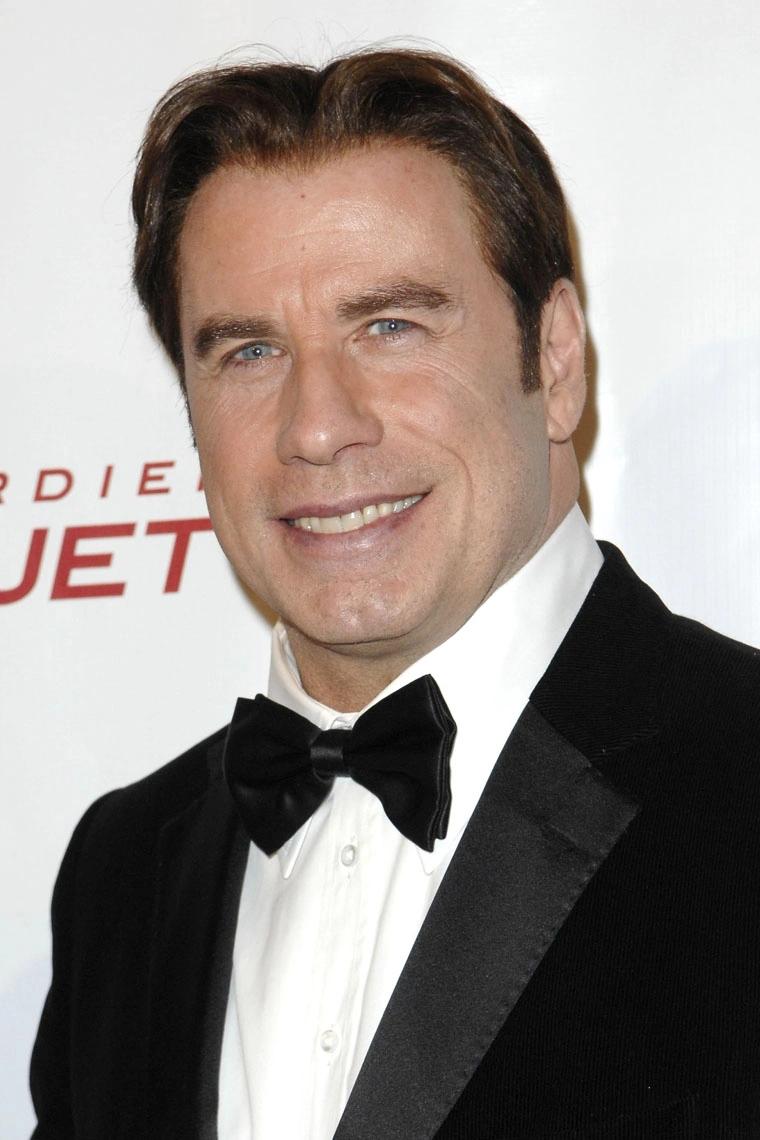
| 9 Quotes | |
| Born as | John Joseph Travolta |
| Occup. | Actor |
| From | USA |
| Spouse | Kelly Preston |
| Born | February 18, 1954 Englewood, New Jersey, USA |
| Age | 72 years |
| Cite | |
Citation Formats
APA Style (7th ed.)
John travolta biography, facts and quotes. (2026, February 23). FixQuotes. https://fixquotes.com/actors/john-travolta/
Chicago Style
"John Travolta biography, facts and quotes." FixQuotes. February 23, 2026. https://fixquotes.com/actors/john-travolta/.
MLA Style (9th ed.)
"John Travolta biography, facts and quotes." FixQuotes, 23 Feb. 2026, https://fixquotes.com/actors/john-travolta/. Accessed 25 Mar. 2026.
Early Life and Background
John Joseph Travolta was born February 18, 1954, in Englewood, New Jersey, the youngest of six children in an Italian-Irish American, working-to-middle-class household. His mother, Helen Cecilia Burke, had been an actress and singer who taught drama; his father, Salvatore "Sam" Travolta, worked as a tire salesman and ran a small business. The house ran on performance as a daily language - show tunes, TV variety, impressions - and Travolta absorbed the idea that charisma was not mysterious but practiced.He grew up in a postwar America reshaped by television and youth culture, where a teenager could learn timing and stance by watching the same faces as everyone else. Travolta was also a child of movement: the 1960s and early 1970s elevated dance as social currency, and his physical ease became an identity before he had a career. That embodied confidence later contrasted with periods of intense private strain, a tension that helped make his screen persona feel both effortless and precariously human.
Education and Formative Influences
Travolta attended Dwight Morrow High School in Englewood but left at 16 to pursue acting full time, a decision that placed him in the old apprenticeship system of auditions, small roles, and relentless self-reinvention rather than formal training. He studied dance and performance in New York, taking jobs in touring and stage work; a key early step was joining the road company of the musical Grease and later appearing on Broadway in Over Here! (1973). Those years formed his central instrument: a camera-ready mix of musicality, streetwise comedy, and an ability to "sell" emotion through posture and rhythm as much as dialogue.Career, Major Works, and Turning Points
Travolta broke through on television as Vinnie Barbarino in the sitcom Welcome Back, Kotter (1975-1979), turning a slouch, a shrug, and a grin into a national shorthand for a certain 1970s teen masculinity. Film stardom followed quickly: Saturday Night Fever (1977) made him a global emblem of disco-era ambition and loneliness, and Grease (1978) cemented him as a romantic lead with pop-star reach. After early-1980s overexposure and uneven projects, he regained footing with hits like Look Who's Talking (1989) and then executed one of Hollywood's defining comebacks when Quentin Tarantino cast him as Vincent Vega in Pulp Fiction (1994), restoring him as a daring, adult actor. The late 1990s brought both peaks (Get Shorty, 1995; Face/Off, 1997; Primary Colors, 1998) and risks that misfired (Battlefield Earth, 2000). In his personal life he married actor Kelly Preston in 1991; the family endured public tragedies, including the death of their son Jett in 2009 and Preston's death in 2020, events that deepened the undertow behind his public optimism.Philosophy, Style, and Themes
Travolta's acting style is built on kinetic intelligence - he communicates thought as motion. Even when playing charmers and con men, he often lets the audience see the calculation flicker, then watches it get complicated by feeling. A useful key is his recurring fascination with identity as a performance: his best roles suggest a man trying on selves the way a dancer tries on steps, hoping one will fit. That preoccupation becomes explicit in the doppelganger logic of Face/Off, where the fantasy of self-erasure and possession is spoken aloud: “And now after all this time I finally figured out how to trap him... I will become him”. For Travolta, transformation is both power and peril - a career strategy and a psychological necessity.His screen legacy also carries a quiet metaphysics: beneath the glossy star persona sits a man who wants meaning to outlast fashion. He has voiced an expansive wonder about existence - “I have to believe there's some other life force out there. I don't know in what form. But we can't have all these galaxies and universes without something going on”. That attitude helps explain his resilience after professional slumps and private loss; he tends to frame suffering as survivable transition, a difficult passage rather than a dead end. In that light, his ambition is not merely to be famous but to endure as a symbol, articulated with striking self-awareness: “I was just thinking of James Dean and Marilyn Monroe and how young they were when they died. I would like to be a pop icon who survives. I would like to be a living icon”. The need to remain "living" - present, working, reinventing - becomes the throughline tying his dance-floor breakout to his later character-actor boldness.
Legacy and Influence
Travolta's influence is unusually tactile: he helped define how late-20th-century American masculinity could be both pretty and tough, both vulnerable and swaggering, and he made dance a serious dramatic language for mainstream film. Saturday Night Fever altered pop culture's relationship to nightlife, music, and class aspiration; Grease became a cross-generational ritual; Pulp Fiction reshaped how older stars could be reimagined through independent cinema. His career, with its spectacular rises, cautionary dips, and improbable returns, has become a template for longevity in a volatile industry - a case study in how charisma can be trained, broken, and rebuilt, and how a performer can keep moving even when the music changes.Our collection contains 9 quotes written by John, under the main topics: Art - Dark Humor - Parenting - Honesty & Integrity - Faith.
Other people related to John: Quentin Tarantino (Director), John Badham (Director), Nick Cassavetes (Actor), Drea De Matteo (Actress), Frank Stallone (Actor), Andie MacDowell (Actress), Eric Stoltz (Actor), Jean Stapleton (Actress), Frederick Forsyth (Author), Barry Sonnenfeld (Producer)
Source / external links