
Jon Voight Biography Quotes 21 Report mistakes
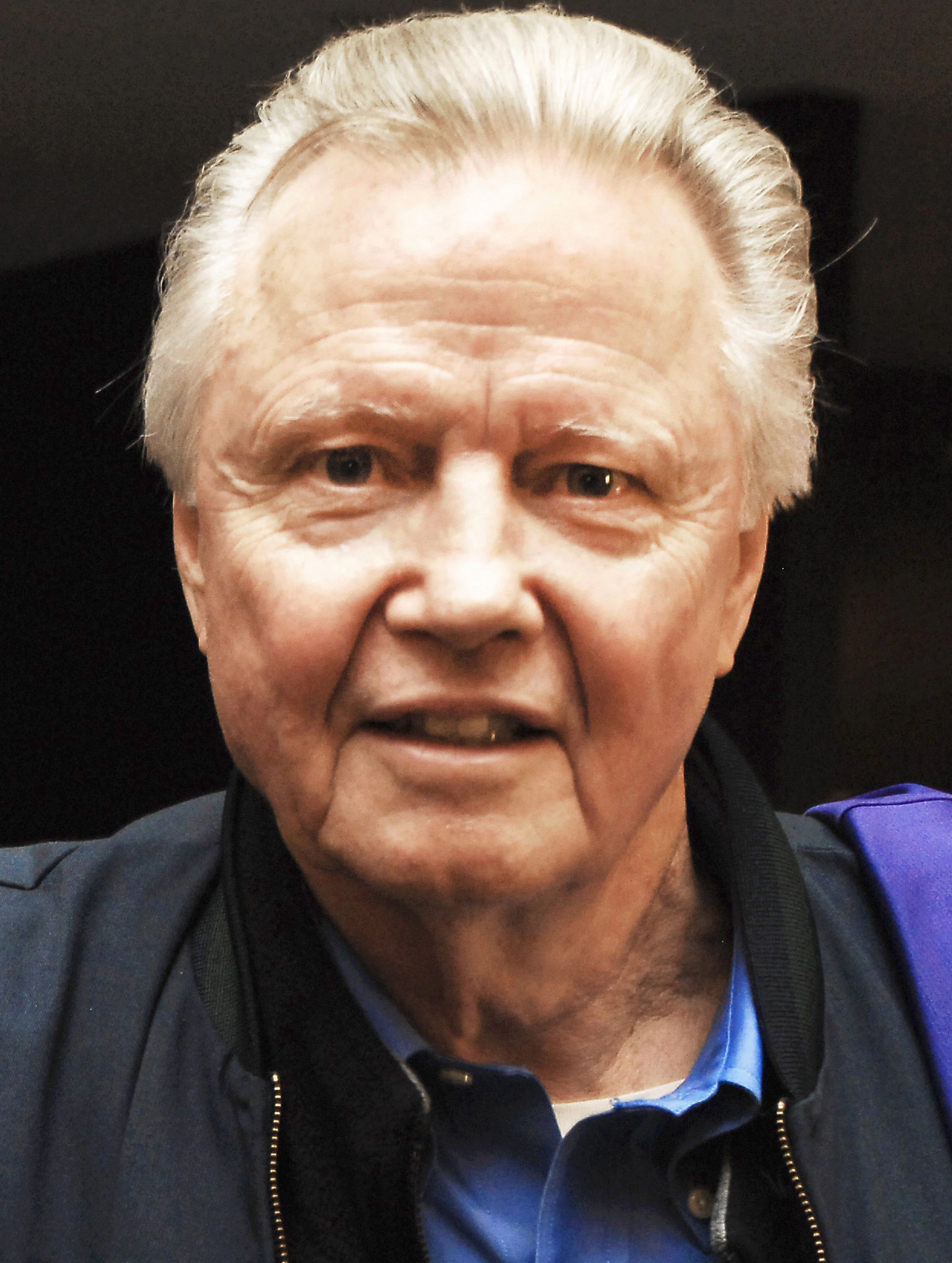
| 21 Quotes | |
| Born as | Jonathan Vincent Voight |
| Occup. | Actor |
| From | USA |
| Born | December 29, 1938 Yonkers, New York, USA |
| Age | 87 years |
| Cite | |
Citation Formats
APA Style (7th ed.)
Jon voight biography, facts and quotes. (2026, March 18). FixQuotes. https://fixquotes.com/actors/jon-voight/
Chicago Style
"Jon Voight biography, facts and quotes." FixQuotes. March 18, 2026. https://fixquotes.com/actors/jon-voight/.
MLA Style (9th ed.)
"Jon Voight biography, facts and quotes." FixQuotes, 18 Mar. 2026, https://fixquotes.com/actors/jon-voight/. Accessed 26 Mar. 2026.
Early Life and Background
Jon Voight was born Jonathan Vincent Voight on December 29, 1938, in Yonkers, New York, into a Catholic, upward-striving family shaped by immigrant ambition and postwar American mobility. His father, Elmer Voight, was a professional golfer of Slovak background; his mother, Barbara Kamp, came from a family with German roots. He grew up with two brothers, Barry Voight, later a volcanologist, and James Wesley Voight, known as Chip Taylor, the songwriter who wrote "Wild Thing" and "Angel of the Morning". That combination - sport, science, music, and performance under one roof - mattered. Voight's later intensity as an actor seems rooted in a household where talent was real but had to justify itself through discipline, work, and visible results.
He came of age in the 1940s and 1950s, when American masculinity was defined by poise, stoicism, and public success, yet he was drawn to emotional exposure. At Archbishop Stepinac High School in White Plains he acted in school productions and showed the first signs of the restless seriousness that would define him. The boy from suburban Catholic New York inherited both confidence and insecurity: confidence in performance, insecurity about whether instinct alone was enough. That tension - between gift and rigor, self-belief and self-scrutiny - became a central engine in his life, both on screen and off.
Education and Formative Influences
Voight attended The Catholic University of America in Washington, D.C., graduating in 1960 with a degree in art. College gave structure to an ambition that had not yet fully settled into craft. Afterward he moved to New York and entered the demanding world of actor training, studying with Sanford Meisner at the Neighborhood Playhouse. That training was decisive. Meisner's emphasis on truthful behavior under imaginary circumstances sharpened Voight's natural intensity into technique, and New York theater in the early 1960s - serious, competitive, actor-centered - gave him a proving ground. He worked in television and on stage, including appearances connected to the off-Broadway and Broadway scene, learning how to fuse emotional nakedness with control. The period established him not as a matinee idol but as an actor of appetite and danger, capable of suggesting hurt, hunger, vanity, and moral confusion at once.
Career, Major Works, and Turning Points
After early screen work, including a role in Fearless Frank, Voight broke through with Midnight Cowboy in 1969, his portrayal of Joe Buck turning a Texas hustler into one of New Hollywood's defining lonely men and earning him his first Academy Award nomination. He followed it with a remarkable 1970s run: Catch-22, Deliverance, Conrack, Coming Home - for which he won the Academy Award for Best Actor - and The Champ. These performances revealed unusual range: erotic bravado, spiritual confusion, liberal idealism, paternal tenderness, and shattered pride. In the 1980s and 1990s he moved between prestige work and mainstream films, with standout turns in Runaway Train, for which he received another Oscar nomination, and Heat, Mission: Impossible, The Rainmaker, and Enemy of the State. His television work later brought renewed acclaim in projects such as Ray Donovan. Just as consequential were the turns in his personal life: his marriages to Lauri Peters and then Marcheline Bertrand, his estrangement from daughter Angelina Jolie and later reconciliation, and his increasingly visible political identity. Voight's career has never been a smooth ascent; it has been a series of recoveries, each deepening the weathered authority of his screen presence.
Philosophy, Style, and Themes
Voight has often described himself less as a born star than as a man made by hunger, correction, and ordeal. “I was a guy who needed to go to class, because I had some raw talent that I thought was identifiable, when I finally made a decision to be an actor. And yet I wanted to learn how to really do the stuff. You know, 'How do I get to be a serious actor?'”. That confession is revealing: his artistry begins in dissatisfaction. Even at his most charismatic, he has rarely acted from ease. He presses into roles as if testing whether identity can survive humiliation, desire, guilt, or public collapse. His best characters are not polished heroes but men exposed - Joe Buck's delusion, Luke Martin's wounded conscience in Coming Home, Oscar Manheim's criminal grandeur in Runaway Train. When Voight says, “I've gone through a lot of stuff in my life”. , the plainness matters. He tends to narrate suffering not poetically but as fact, something endured and then worked through the body.
That plainspoken self-concept also explains both his resilience and his controversies. “I've been very fortunate - You only can do what you're offered, you know?” sounds modest, but beneath it is a veteran actor's realism about dependency, chance, and survival in an industry ruled by taste and timing. His style is grounded in availability to emotion - tears, tremor, tenderness, fury - yet disciplined enough to avoid mere display. Over time, his public political statements became more confrontational, especially his criticisms of Hollywood liberalism and Democratic leaders. Whether admired or criticized, those interventions fit a personality that distrusts pretense and prefers declaration to ambiguity. On screen, however, ambiguity remains his great gift: he can make righteousness look damaged and damage look dignified.
Legacy and Influence
Jon Voight endures as one of the essential American actors to emerge from the New Hollywood generation. He helped redefine leading-man masculinity by bringing vulnerability, volatility, and moral exposure into the center of film performance. Midnight Cowboy, Deliverance, Coming Home, and Runaway Train remain touchstones because his acting in them feels lived rather than arranged; he makes psychology visible without reducing it to explanation. Later audiences know him as a formidable character actor, younger actors study his fearlessness, and the culture at large knows him as a figure whose life has fused art, family drama, faith, patriotism, and controversy. His legacy is therefore double: a body of work of rare emotional force, and a public career that shows how an actor's offscreen convictions can complicate, but not erase, the power of the performances.
Our collection contains 21 quotes written by Jon, under the main topics: Witty One-Liners - Motivational - Justice - Love - Freedom.
Other people related to Jon: Angelina Jolie (Actress), Emmanuelle Beart (Actress), Michael Michele (Actor), James Haven (Director), John Singleton (Director), Ronny Cox (Actor), Katherine Moennig (Actress), Eddie Marsan (Actor), Bruce Greenwood (Actor), Philip Kaufman (Director)
Source / external links