
Josh Ryan Evans Biography Quotes 2 Report mistakes
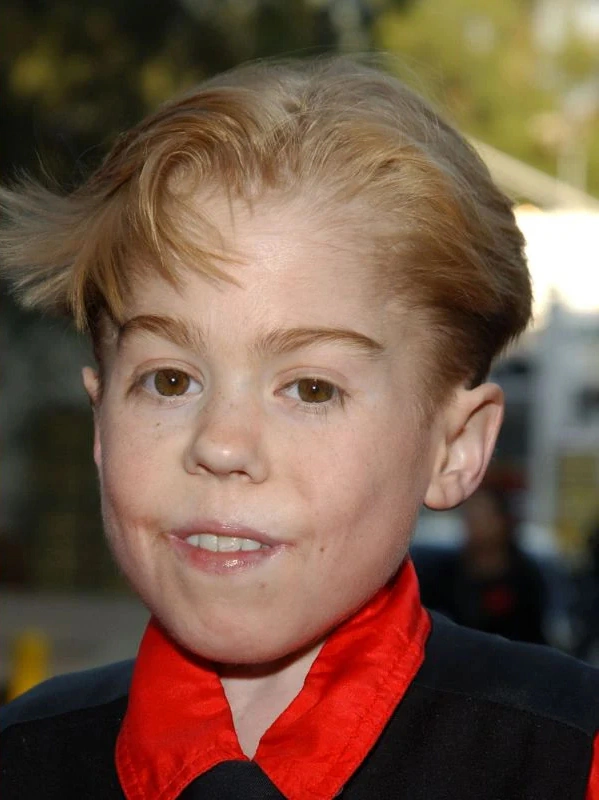
| 2 Quotes | |
| Occup. | Actor |
| From | USA |
| Born | January 20, 1982 Hayward, California, U.S. |
| Died | August 5, 2002 San Diego, California, U.S. |
| Cause | Heart Defect |
| Aged | 20 years |
| Cite | |
Citation Formats
APA Style (7th ed.)
Josh ryan evans biography, facts and quotes. (2026, February 11). FixQuotes. https://fixquotes.com/actors/josh-ryan-evans/
Chicago Style
"Josh Ryan Evans biography, facts and quotes." FixQuotes. February 11, 2026. https://fixquotes.com/actors/josh-ryan-evans/.
MLA Style (9th ed.)
"Josh Ryan Evans biography, facts and quotes." FixQuotes, 11 Feb. 2026, https://fixquotes.com/actors/josh-ryan-evans/. Accessed 12 Feb. 2026.
Early Life and Background
Josh Ryan Evans was born on January 20, 1982, in the United States and grew up in the orbit of a working-class, late-20th-century America where cable television, VHS tapes, and the Disney renaissance shaped childhood imagination. He was a small, slight figure even by child-actor standards, living with a growth condition that kept him physically diminutive but did not reduce his appetite for performance. That contrast - a body that drew attention and a personality that refused pity - became central to how casting agents, directors, and audiences perceived him.His early years were also marked by repeated medical interventions and long recovery periods, an experience that can narrow a life or intensify it. For Evans, illness and hospital time did not isolate him from storytelling; it inducted him into it. He learned early how quickly adults translate difference into narrative, and he developed a performer's skill for redirecting that narrative - turning the gaze that might have been clinical or cruel into curiosity, laughter, or empathy.
Education and Formative Influences
Evans' education was necessarily irregular, split between school, treatment, and the structured pace of auditions and sets, but it was also unusually rich in the practical curriculum of acting: marks, timing, continuity, and the emotional stamina required to repeat a moment until it landed. Movies and television functioned as both refuge and apprenticeship, and he gravitated toward character work - the kinds of roles that demanded specificity rather than glamour. In an era when Hollywood was slowly broadening its depiction of bodies and disability but still leaned hard on shorthand, Evans practiced a subtler craft: he made "small" characters feel fully lived.Career, Major Works, and Turning Points
Evans began working as a child actor in the 1990s, building recognition through a run of television appearances and film work that showcased his comic precision and his ability to pivot into pathos. He became widely known as Timmy Lenox on the daytime soap opera Passions, a role that turned him into a pop-culture fixture for viewers who followed the show's melodramatic logic and heightened emotional register. He also appeared in family and genre projects of the period, including a memorable turn in How the Grinch Stole Christmas (2000), where his physical distinctiveness was used not as a punchline but as part of a broader storybook world. His career's turning point was the shift from child guest roles to recurring, identity-defining parts - work that gave him sustained character arcs and made his face familiar beyond the novelty of his stature. Evans died on August 5, 2002, at only 20, a sudden end that froze his public image at the threshold of adulthood.Philosophy, Style, and Themes
Evans' inner life, as suggested by his own reflections, was shaped by the tension between vulnerability and agency. "I always knew I wanted to be a character in the movies. When I was growing up, I had to have a lot of surgery, and I spent a lot of time recovering at home and in the hospital. Watching movies took me away from my own problems and gave me a total escape". That sentence is less a sentimental origin story than a psychological map: fantasy was not denial but a tool for survival, and performance was a way to convert pain into movement, waiting into plot. The characters he played often carried a similar charge - outsized emotion in compact form, a body that invited assumptions and a spirit that refused to stay inside them.His style leaned on crisp timing, an alert, expressive face, and a willingness to be odd without pleading for acceptance. Behind that was an ethic of scale: he understood how audiences can be trained to see height before humanity, so he made humanity unavoidable. "It's not the size of the dreamer, it's the size of the dream". In Evans' work, the line reads like a quiet manifesto - not about inspirational uplift, but about professional seriousness. He performed as if the frame belonged to him, even when scripts treated him as an accent, and that insistence - to be taken as a whole character - became his recurring theme.
Legacy and Influence
Evans' legacy rests on the clarity with which he demonstrated that character acting is not a consolation prize but a central engine of screen storytelling. In a period that often packaged difference as quirk, he modeled something sturdier: the right to complexity, romance, humor, and anger without apology. Fans of Passions remember him as more than an archetype; younger performers with visible differences have cited the importance of seeing someone work steadily, be loved by an audience, and carry narrative weight. His life was brief, but his impact endures in the small but significant ways he widened the idea of who gets to be on screen - not as spectacle, but as a person with a part in the story.Our collection contains 2 quotes written by Josh, under the main topics: Motivational - Movie.
Other people related to Josh: Juliet Mills (Actor)
Source / external links