
Juliette Binoche Biography Quotes 33 Report mistakes
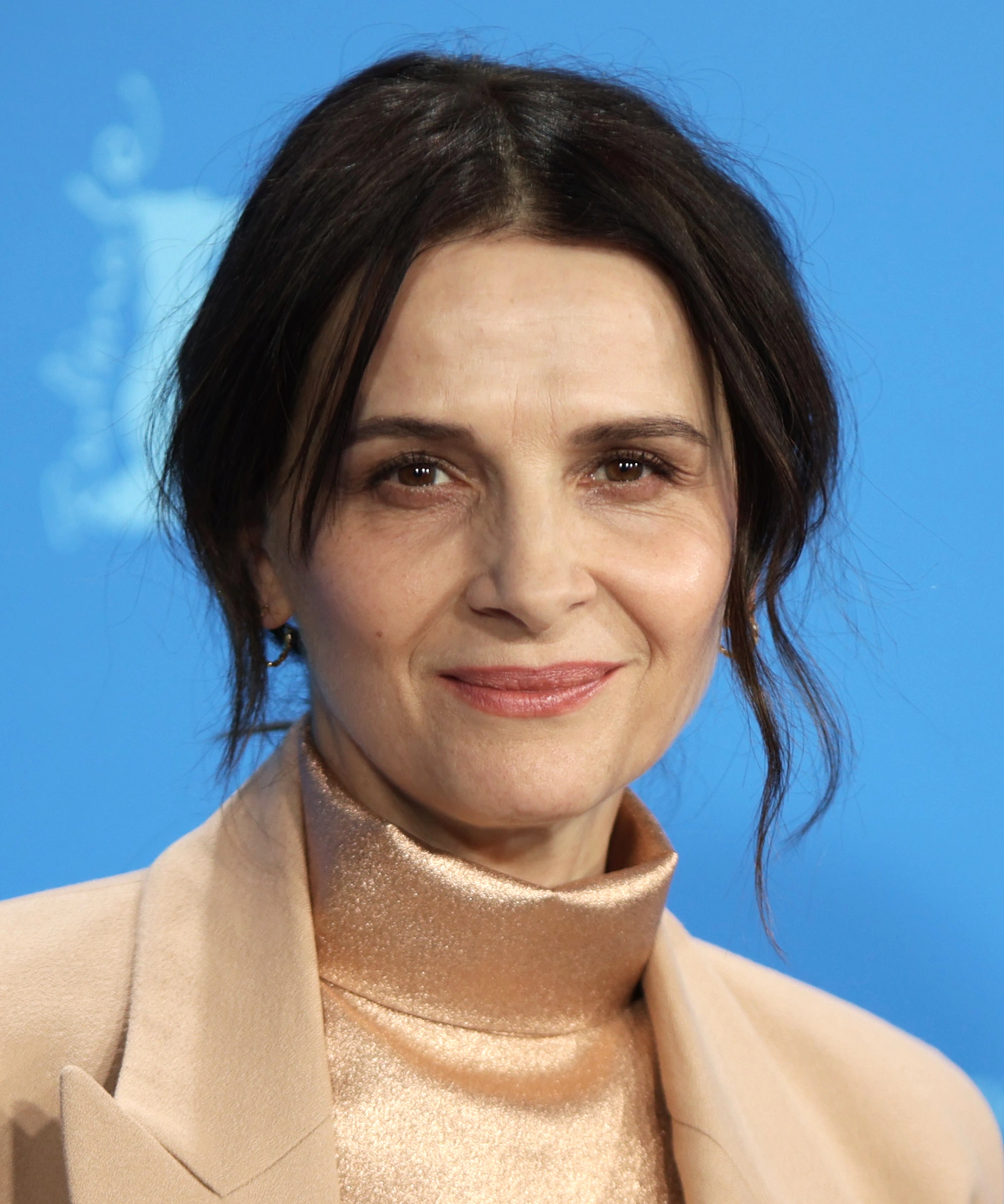
Attr: Elena Ternovaja, CC BY-SA 3.0
| 33 Quotes | |
| Occup. | Actress |
| From | France |
| Born | March 9, 1964 Paris, France |
| Age | 62 years |
| Cite | |
Citation Formats
APA Style (7th ed.)
Juliette binoche biography, facts and quotes. (2026, February 11). FixQuotes. https://fixquotes.com/actors/juliette-binoche/
Chicago Style
"Juliette Binoche biography, facts and quotes." FixQuotes. February 11, 2026. https://fixquotes.com/actors/juliette-binoche/.
MLA Style (9th ed.)
"Juliette Binoche biography, facts and quotes." FixQuotes, 11 Feb. 2026, https://fixquotes.com/actors/juliette-binoche/. Accessed 26 Mar. 2026.
Early Life and Background
Juliette Binoche was born on March 9, 1964, in Paris, France, into a household where art was not decoration but daily weather. Her father, Jean-Marie Binoche, worked in theater and film, while her mother, Monique Stalens, was an actress and teacher. The French cultural ecosystem of the late Gaullist and post-1968 years - subsidized theater, cine-clubs, and a prestige cinema that treated performance as literature - formed the ambient air she breathed.Her parents divorced when she was young, a fracture that later surfaced in her guarded attitudes toward permanence and belonging. She and her sister spent significant time in boarding school, a rhythm of separations that sharpened observation: the skill an actor turns into craft. The child who learned to manage absence also learned to inhabit roles, to read adults, and to work from emotion without letting it consume her.
Education and Formative Influences
Binoche trained for the stage before the camera claimed her, studying acting at the Conservatoire National Superieur d'Art Dramatique in Paris (though she did not complete the program) and working in theater productions that demanded precision and stamina. She came of age artistically under the long shadow of French screen acting - the sensual intelligence of Jeanne Moreau, the severity of Bresson-trained bodies, the New Wave belief in presence over polish - and she absorbed a parallel education from directors who treated performance as a moral inquiry, not a service.Career, Major Works, and Turning Points
After early screen appearances, her breakthrough arrived with Andre Techine's "Rendez-vous" (1985), which placed her at the center of a Parisian theater world where ambition and vulnerability collide. International recognition followed: Leos Carax cast her in "Mauvais Sang" (1986) and "Les Amants du Pont-Neuf" (1991), films that fused physical risk with romantic extremity and made her a face of modern French intensity. Krzysztof Kieslowski then reframed her as an emblem of ethical interiority in "Trois couleurs: Bleu" (1993), a performance of grief that won her the Volpi Cup at Venice and anchored her global reputation. She crossed languages and industries without surrendering to them, winning the Academy Award for Best Supporting Actress for "The English Patient" (1996), and later deepening her profile through auteur collaborations such as "Chocolat" (2000), Michael Haneke's "Cach e" (2005), Hou Hsiao-hsien's "Flight of the Red Balloon" (2007), Abbas Kiarostami's "Certified Copy" (2010) - which won her Best Actress at Cannes - and Claire Denis's "Let the Sunshine In" (2017), which used comedy to expose longing's negotiations.Philosophy, Style, and Themes
Binoche's screen persona is often described as luminous, but the light comes from discipline rather than softness. She plays women who are thinking while feeling, whose faces register the split-second ethics of choice: whether to forgive, whether to lie, whether to touch, whether to leave. Her best performances are built from controlled permeability - she lets the world in, then shows what it costs. That approach aligns with her refusal of autopilot; “For me, habit is just a synonym for death”. The line is not a slogan so much as a working method: she repeatedly chooses directors who unsettle her, stories that deny easy closure, and roles that ask her to relearn her instrument.Her relationship to fame is similarly unsentimental, as if celebrity were another costume that can harden into a cage. “I'm not obsessed by looks. I think you can become a prisoner of your own image”. This suspicion of surface helps explain her willingness to appear unglamorous, to age on-screen without disguise, and to locate eroticism in intelligence and fatigue as much as in youth. Even her viewing habits suggest a protective boundary between the lived experience of acting and the finished artifact: “I try to see my films just once. it's like a dream you've been through when it's been intense, and you just have to go through it once more just to make sure you've had it”. The psychology beneath that dream metaphor is revealing - she treats a film as an ordeal to be survived truthfully, not a mirror to be revisited for reassurance.
Legacy and Influence
Binoche stands as one of the defining European actors of her generation, a rare figure who collected major prizes across the festival triangle (Cannes, Venice, Berlin) while remaining legible to mainstream audiences. Her influence is less about a signature tic than an ethic: the conviction that performance is a form of inquiry, and that international mobility need not mean cultural erasure. For younger actors, especially in Europe, her career models a third path between national repertory and Hollywood assimilation - an artist's itinerary built on risk, language, and the steady refusal to become merely an image.Our collection contains 33 quotes written by Juliette, under the main topics: Motivational - Art - Love - Live in the Moment - Honesty & Integrity.
Other people related to Juliette: Robert Pattinson (Actor), Clive Owen (Actor), Alfred Molina (Actor), Abel Ferrara (Director), Philip Kaufman (Director), Anthony Minghella (Director), Kristin Scott Thomas (Actress), Louis Malle (Director)
Source / external links