
Juliette Lewis Biography Quotes 16 Report mistakes
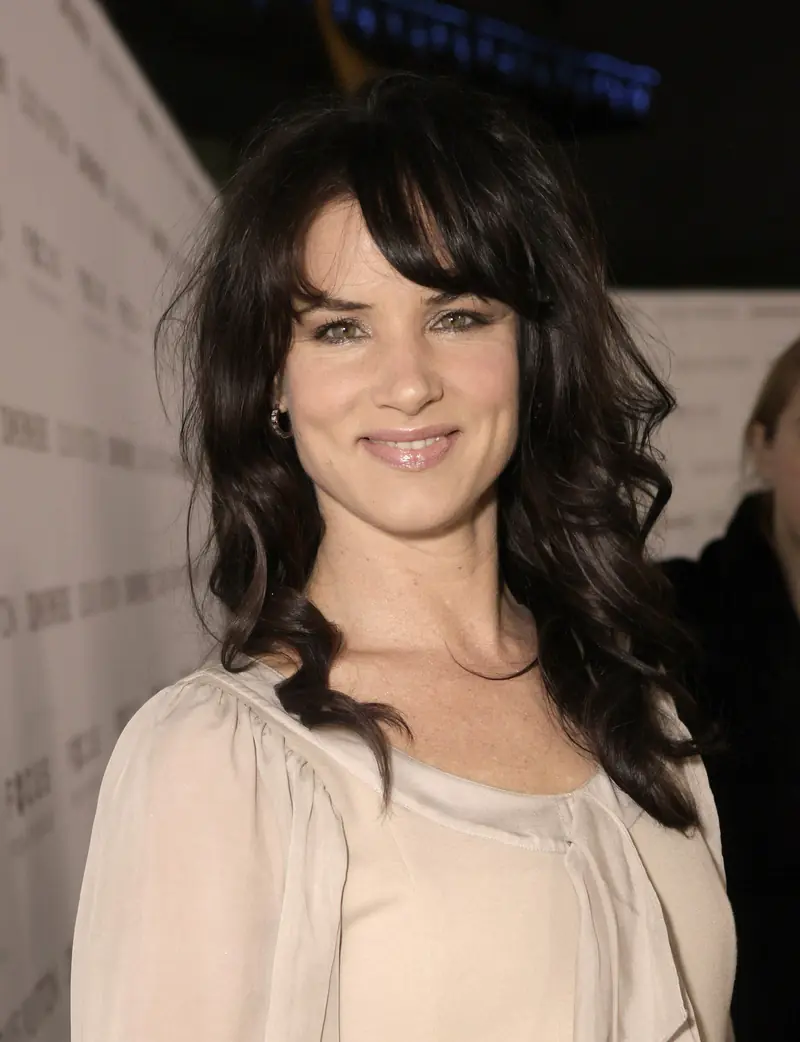
| 16 Quotes | |
| Occup. | Actress |
| From | USA |
| Born | June 21, 1973 Los Angeles, California, U.S. |
| Age | 52 years |
Juliette Lake Lewis was born on June 21, 1973, in Los Angeles, California, into a family where storytelling was both livelihood and atmosphere. Her father, actor Geoffrey Lewis, worked steadily across studio films and the New Hollywood afterglow, while her mother, Glenis Duggan Batley, worked as a graphic designer. The household was large, complicated, and creative; she grew up alongside brothers and half-siblings, including actor Lightfield Lewis, with the city itself - auditions, sets, and industry gossip - functioning as a second school.
Her parents divorced when she was young, and the frequent shifts between homes, expectations, and identities sharpened an early sense that performance was not only an art but also a survival skill. Los Angeles in the late 1970s and 1980s offered both proximity to opportunity and the pressure cooker of image, and Lewis absorbed that paradox early: the promise of being seen, and the risk of being reduced to what others projected.
Education and Formative Influences
Lewis attended Los Angeles-area schools but came of age in an environment where formal education competed with the informal curriculum of sets, rehearsals, and adult conversation. She later spoke plainly about the mismatch between classroom logic and lived experience - "All that schooling never prepares you for the reality of life". That skepticism did not read as anti-intellectual so much as pragmatic: she learned through doing, through proximity to working actors, and through the inner discipline required to be taken seriously as a young performer in a business that often confuses youth with disposability.
Career, Major Works, and Turning Points
Lewis began acting professionally as a teenager, breaking through with roles that refused sweetness as a default: Cape Fear (1991) made her a national name and earned her an Academy Award nomination, and she followed it with performances that tested the boundaries of mainstream femininity, including Natural Born Killers (1994), Strange Days (1995), and From Dusk till Dawn (1996). In the 2000s and 2010s she sustained a shape-shifting career across film and television, from indie character work to a brash comedic turn in the series The Mick, while returning to darker, more psychological material in Yellowjackets. Running parallel was her life as a musician, fronting Juliette and the Licks and later Juliette Lewis and the New Romantiques - a stage where she could convert the same intensity that electrified her screen work into something immediate, physical, and communal.
Philosophy, Style, and Themes
Lewis has often described performance less as glamour than as labor - a craft that demands stamina and honesty even when public attention becomes intrusive. Her acting style is tactile and reactive: she plays from the nerves outward, using voice, posture, and sudden shifts in affect to make characters feel as if they are thinking in real time. That approach suited the American cinema of the 1990s, when independent film and auteur-driven studio projects rewarded volatility, moral risk, and the sense that a performer might go somewhere dangerous if the scene required it. Just as important, she has consistently resisted being caged by the commodity of celebrity: "I don't want to be famous as a movie star and have the whole world love me, I want to be a creative actress". The insistence reveals a psychology oriented toward process over applause - toward becoming, not being crowned.
Many of her roles revolve around survival, appetite, and the social policing of women - themes intensified by her candor about mental health and the costs of visibility. She has spoken about the existential effort required simply to continue: "The bravest thing I ever did was continuing my life when I wanted to die". Read against her body of work, that line becomes a key: the ferocity on-screen is not ornamental; it is an argument for endurance. She also distrusts the worship of perfection, which helps explain why she gravitates to characters with jagged edges and contradictory motives - "Like everybody I have many different sides". In Lewis, multiplicity is not a brand strategy but a principle, a refusal to let the industry edit a person down to a single usable expression.
Legacy and Influence
Juliette Lewis endures as a defining performer of the 1990s edge - a bridge between classic actorly commitment and a more unvarnished, nervous modern realism - while her later work has proven that intensity can mature into precision rather than fade into self-parody. She helped normalize the idea that a young actress could be unruly, unsettling, and still profoundly sympathetic, and her example continues to matter in an era of curated personas: a career can be built not on being liked, but on being unmistakably alive in the moment, whether in a Scorsese thriller, a cult genre film, an indie drama, or a stadium-loud chorus.
Our collection contains 16 quotes who is written by Juliette, under the main topics: Witty One-Liners - Learning - Deep - Parenting - Art.
Other people realated to Juliette: Oliver Stone (Director), Mark Ruffalo (Actor), Tommy Lee Jones (Actor), Leonardo DiCaprio (Actor), Christina Ricci (Actress), Lasse Hallstrom (Director), Woody Harrelson (Actor), Tom Sizemore (Actor), Gena Rowlands (Actress), Mike Figgis (Director)
Source / external links